Wire Dog Cage Testing Methods: Laboratory & Field Tests
Wire dog cage testing methods verify product performance, safety, and durability before mass production. Comprehensive testing programs prevent costly quality failures and ensure your products meet market requirements. This guide covers laboratory and field testing protocols that validate quality for B2B buyers.
Understanding proper testing helps buyers establish quality standards, evaluate supplier capabilities, and prevent defective products from reaching customers. Whether you’re verifying sample quality or implementing batch testing protocols, systematic testing provides objective data for informed sourcing decisions.
Implementing comprehensive testing reduces quality-related returns by 60-80% and prevents average losses of $15,000-50,000 from bulk order failures.

Why Testing Methods Matter
Quality testing transforms subjective assessments into objective, measurable data. Without proper testing, buyers rely on visual inspections that miss critical performance issues. Systematic testing protocols identify weaknesses before they become customer complaints or safety hazards.
Testing provides multiple business benefits beyond quality assurance. Documented test results create negotiation leverage with suppliers, support warranty claims, and demonstrate compliance with industry standards. Buyers who implement testing programs typically see significant improvements in product quality and customer satisfaction.
Professional testing validates structural integrity, material quality, and manufacturing consistency. Advanced testing reveals hidden defects that visual inspection cannot detect, including weak welds, substandard coatings, and dimensional variations that affect assembly and functionality.
Testing ROI Statistics
- 60-80% – Reduction in quality returns from implementing systematic testing programs
- $15K-$50K – Prevented losses per failure from average cost savings
Testing Categories
Comprehensive testing combines laboratory precision with real-world field validation.
Laboratory Tests
Controlled environment testing for precise measurements of strength, corrosion resistance, and material properties
Field Tests
Real-world testing for assembly, functionality, durability, and user experience validation
Testing ROI for B2B Buyers
Investing $500-1,500 in comprehensive testing prevents average losses of $15,000-50,000 from bulk order failures. Testing costs represent 0.5-2% of typical order values while reducing defect rates by 60-80%.
Laboratory Testing: Precision Quality Verification
Laboratory testing provides controlled, repeatable measurements of critical performance characteristics. These tests simulate stress conditions that cages encounter during their service life, revealing potential failure points before products reach customers. Professional laboratories follow standardized testing protocols that ensure consistent, comparable results.
While third-party lab testing costs $200-500 per test cycle, the investment delivers objective data that supports quality negotiations and compliance documentation. In-house testing capabilities can reduce ongoing costs and provide faster feedback for quality improvements.
Laboratory testing methods include tensile strength testing, corrosion resistance evaluation, load capacity verification, and impact resistance assessment.
Laboratory Testing Benefits
- Controlled environment ensures consistent results
- Standardized protocols enable comparison across suppliers
- Objective data supports quality negotiations
- Documentation facilitates compliance requirements
Tensile Strength Testing: Verifying Structural Integrity
Tensile strength testing measures the force required to break wire connections or deform cage components. This critical test validates that welds, wire joints, and frame connections meet strength requirements for safe pet containment.
Weak welds represent the most common safety hazard in manufacturing. They typically fail at 50-80kg while quality welds exceed 150kg. Regular tensile strength testing ensures consistent weld quality across production batches.
Testing procedures apply controlled pulling forces to sample connection points using calibrated equipment. Standard requirements typically specify minimum breaking strengths:
- Frame welds must withstand 150-200kg pull force
- Door latches require 50-80kg retention force
- Wire mesh connections need 80-120kg strength
Advanced tensile testing equipment provides real-time force measurements and failure mode analysis. Documented test results enable buyers to track supplier performance trends and identify quality degradation before it affects entire shipments.
Tensile Strength Test Standards
| Component | Minimum Strength | Testing Method |
|---|---|---|
| Frame Corner Welds | 150-200 kg | Destructive pull test |
| Door Latch Mechanism | 50-80 kg | Retention force test |
| Wire Mesh Connections | 80-120 kg | Point load test |
| Floor Support Frame | 200+ kg | Compression test |
Testing frequency: Test 3-5 samples per production batch for consistent quality validation. Document all test results for supplier performance tracking.
Salt Spray Testing: Corrosion Resistance Validation
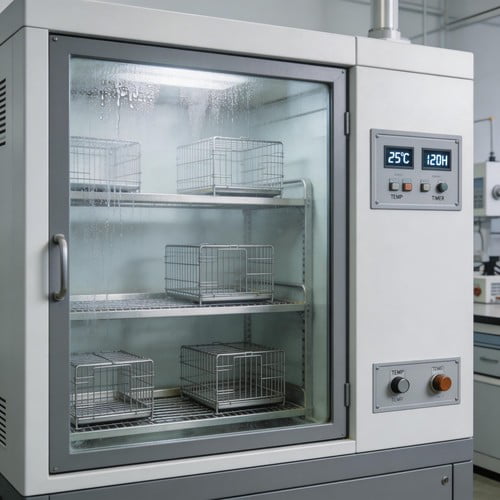
Salt spray testing (ASTM B117) accelerates corrosion exposure to evaluate coating quality and material durability. This 24-96 hour test simulates months of real-world exposure in humid or coastal environments. Corrosion resistance testing is essential for products destined for markets with high humidity or salt exposure.
Testing procedures place cage samples in a controlled chamber with continuous salt fog exposure at 35°C. Inspectors evaluate samples at 24, 48, 72, and 96-hour intervals for rust formation, coating degradation, and base metal corrosion.
Quality coatings should show minimal corrosion after 96 hours of salt spray testing. Coating thickness measurements complement salt spray testing to ensure adequate protection levels.
Coating Standards
Standard powder coating thickness ranges from 60-100 microns, while electroplated finishes typically measure 15-25 microns. Combining thickness verification with accelerated corrosion testing provides comprehensive coating quality assessment.
Load Testing: Weight Capacity Verification
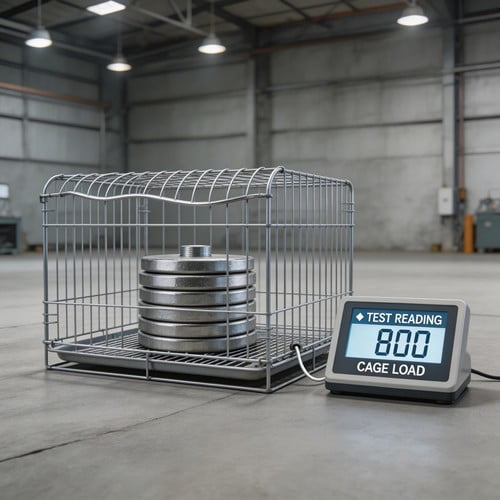
Load testing validates that cage floors and frames support rated weight capacities without permanent deformation. This test ensures cages safely contain pets of specified sizes without structural failure. Load testing should be conducted on floor panels, support frames, and overall cage assembly.
Testing procedures apply static loads equivalent to 150% of rated capacity for 5 minutes. For example, a cage rated for 30kg pets undergoes 45kg load testing. Inspectors measure deflection during loading and check for permanent deformation after unloading.
Maximum allowable deflection typically ranges from 5-10mm depending on cage size and design. Distributed load testing simulates pet weight distributed across cage floors, while point load testing evaluates localized stress from concentrated weight.
Load testing at 150% of rated capacity for 5 minutes ensures structural safety. Cages rated for 30kg pets should withstand 45kg loads without permanent deformation.
Load Testing Types
- Static Load: 150% of rated capacity for 5 minutes
- Distributed Load: Simulates pet weight across floors
- Point Load: Evaluates localized stress points
Impact Testing: Durability Under Stress
Impact testing simulates accidental drops, collisions, and rough handling that occur during shipping and use. This test reveals brittle materials, weak welds, and structural vulnerabilities that static testing misses.
Testing procedures use standardized drop tests from 30-50cm heights onto concrete surfaces. Additional impact tests apply 5-10kg pendulum strikes to frame corners and door assemblies. Inspectors evaluate for cracking, weld failure, or permanent deformation.
Quality cages should withstand impact testing without structural damage. Impact testing helps identify packaging requirements and shipping methods that prevent damage during transit. Documenting impact resistance performance supports warranty claims and helps establish realistic product usage expectations for customers.
Field Testing: Real-World Performance Validation
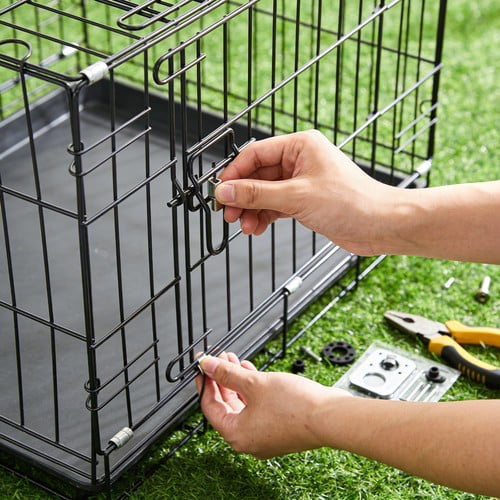
Field testing validates laboratory results in real-world conditions. While lab tests provide precise measurements, field testing reveals practical issues with assembly, operation, and durability that controlled environments miss. Comprehensive field testing programs simulate actual customer experiences from unboxing through extended use.
Field testing identifies usability issues, design flaws, and quality inconsistencies that affect customer satisfaction and product returns. Testing should include assembly by untrained users, extended durability testing under actual use conditions, and operational testing of all cage features.
Field Testing Advantages
- Validates real-world usability and assembly
- Reveals practical issues lab tests miss
- Simulates actual customer experiences
- Provides insights on user behavior and satisfaction
Assembly Testing: User Experience Evaluation
Assembly testing evaluates how easily cages assemble using provided instructions and hardware. This test reveals design flaws, missing components, and instruction clarity issues that frustrate customers. Assembly testing should be conducted by users representative of target customers to identify real-world usability challenges.
Assembly Test Checklist
Systematic assembly testing identifies design and manufacturing issues before mass production.
Time Measurement
Target: 10-15 minutes
Excessive assembly time indicates design complexity
Tool Requirements
Should require minimal tools
Required power tools indicate design problems
Fit Quality
Components should align perfectly
Gaps or misalignment indicate tolerance issues
Functionality Testing: Operational Verification
Functionality testing validates that all cage features operate smoothly and reliably. This test checks door mechanisms, latches, dividers, and accessories for proper operation under normal use conditions. Functionality testing should include repeated operation cycles to identify wear issues and mechanical failures.
Door mechanism testing evaluates latch engagement, door alignment, and opening/closing force. Quality latches should secure doors with positive engagement and require moderate force to operate. Door mechanism testing typically requires 100-200 opening cycles to validate durability.
Durability Testing: Long-Term Performance Simulation
Durability testing accelerates wear patterns to simulate months of use in compressed timeframes. This testing reveals material fatigue, coating wear, and component degradation that develop over extended use. Durability testing provides confidence in product longevity and supports warranty claims.
Accelerated durability testing includes cyclic loading, environmental exposure, and repeated mechanical operations. Testing protocols typically simulate 3-6 months of use in 1-2 weeks of accelerated testing. Quality cages should show minimal degradation after completing durability testing programs.
Testing Standards and Certification Requirements
Industry standards provide testing frameworks that ensure consistent quality evaluation. Understanding these standards helps buyers specify appropriate testing requirements and interpret test results correctly. Compliance with recognized standards enhances product credibility and facilitates market entry.
Key Testing Standards for Quality Control
| Standard | Application | Test Type |
|---|---|---|
| ASTM B117 | Corrosion resistance | Salt spray testing |
| ASTM D3359 | Coating adhesion | Tape adhesion test |
| ISO 9227 | International corrosion | Neutral salt spray |
| GB/T 10125 | Chinese market | Salt spray testing |
Testing Equipment and Investment Considerations
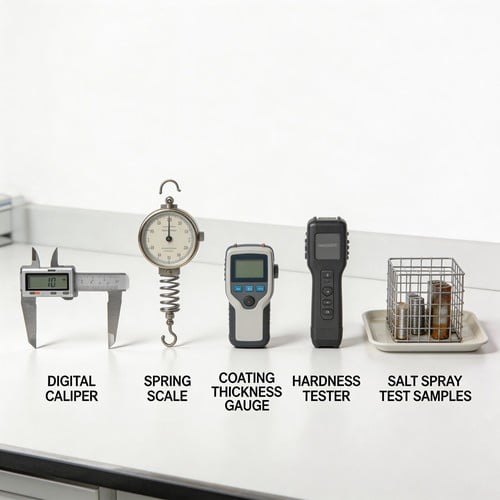
Investing in testing equipment enables in-house quality verification without relying solely on supplier reports or expensive third-party labs. Basic testing capabilities provide immediate quality feedback and reduce dependency on external testing services. Testing equipment investments pay for themselves through reduced returns and improved supplier negotiations.
Essential testing equipment includes digital calipers for dimensional verification ($20-50), spring scales for load testing ($15-30), coating thickness gauges ($80-150), and hardness testers for material verification ($100-200). This basic toolkit covers 90% of routine quality checks and costs $150-280 total.
Equipment Investment Options
- Basic Equipment ($150-280): Digital calipers, spring scales, coating thickness gauges, hardness testers
- Advanced Equipment ($4,000-9,500): Tensile testing machines, salt spray chambers, impact testing equipment
Building Cost-Effective Testing Capabilities
Start with basic testing equipment for immediate quality improvements, then expand capabilities based on testing volume and quality requirements. Many buyers begin with dimensional and load testing, adding corrosion and material testing as quality programs mature. Strategic investment in testing capabilities creates sustainable competitive advantages.
Essential testing equipment costs $150-280 and covers 90% of routine quality checks: digital calipers ($20-50), spring scales ($15-30), coating thickness gauges ($80-150).
Advanced testing capabilities include tensile testing machines ($2,000-5,000), salt spray chambers ($1,500-3,000), and impact testing equipment ($500-1,500). While expensive, these tools enable comprehensive in-house testing and reduce long-term third-party testing costs. Consider shared testing facilities or regional labs for occasional advanced testing needs.
Conclusion: Testing as Quality Assurance Foundation
Testing methods provide objective quality validation that protects your business and customers. Laboratory testing delivers precise performance measurements, while field testing validates real-world usability and durability. Combining both approaches creates comprehensive quality assurance programs that prevent costly failures.
Implementing systematic testing programs requires initial investment but delivers significant returns through reduced defects, improved supplier accountability, and enhanced customer satisfaction. Start with basic testing protocols and expand capabilities as your quality program matures.
Continuous testing improvement based on test data creates sustainable quality advantages. Remember that testing is not a one-time activity but an ongoing quality assurance process. Regular testing, documented results, and continuous improvement create sustainable quality advantages in competitive markets.
Key Takeaways
- Laboratory testing provides precise, controlled measurements
- Field testing validates real-world performance and usability
- Comprehensive testing programs prevent costly failures
- Investing in testing delivers 60-80% reduction in quality returns
Comprehensive testing programs build customer trust and support business growth through consistent product quality. Quality testing is an investment, not an expense, that pays dividends through reduced returns, enhanced reputation, and increased customer loyalty.
Complete Your Quality System
Testing works best when integrated with comprehensive quality management:
- Quality Control Framework – Master guide for implementing IQC/IPQC/FQC/OQC systems
- 20-Point Inspection Checklist – Practical inspection checklist for systematic quality checks
- Manufacturer Certifications – Understanding ISO 9001, CE marking, ASTM and BSCI requirements
Frequently Asked Questions
Click questions below to view answers
Tensile strength testing is the most critical method. This test validates weld integrity and structural strength, ensuring cages safely contain pets without failure. Weak welds represent the most common safety hazard and typically fail at 50-80kg while quality welds exceed 150kg. Regular tensile testing prevents structural failures that could injure pets or damage property.
<
Ready to Source Quality Wire Dog Crates?
Our 25+ years of OEM manufacturing experience ensures consistent quality for your wire dog crate needs. Request a sample or get a custom quote today.

Mr. Deng Jiang
Hi, I'm Mr. Deng Jiang, a professional in the pet products industry. With years of experience in designing and manufacturing pet crates, I focus on helping brands improve product quality and meet industry standards. My work is driven by a passion for pets and innovation, and I’m committed to sharing insights that help both manufacturers and consumers make informed decisions.