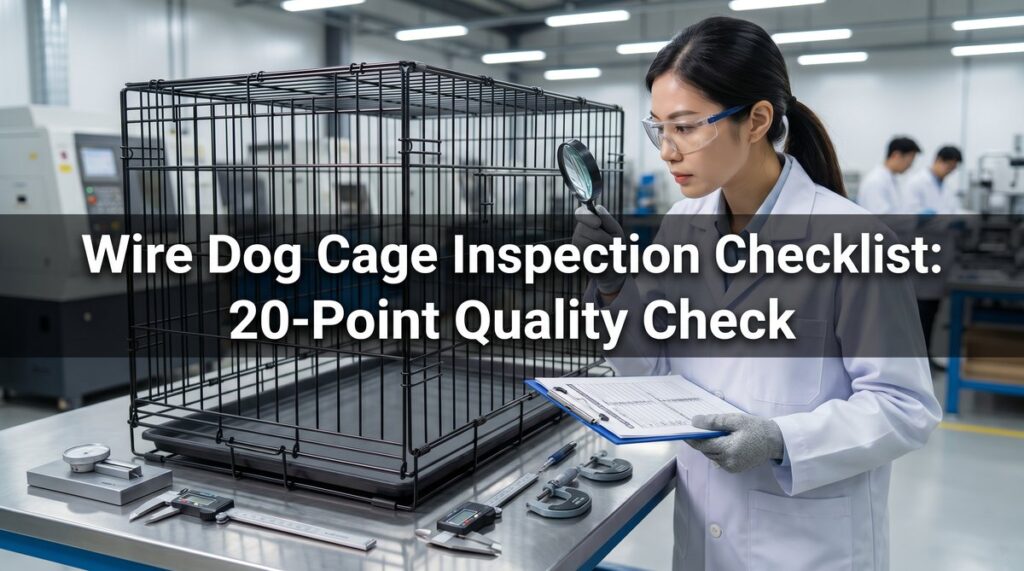
Wire Dog Cage Inspection Checklist: 20-Point Quality Check
Wire dog cage inspection ensures product quality meets industry standards and customer expectations before shipment leaves the factory. A comprehensive 20-point inspection checklist helps B2B buyers identify quality issues early, prevent costly returns, and maintain brand reputation in competitive markets. Systematic quality checks become critical when importing wire dog cages from overseas manufacturers, where physical oversight is limited. Cagesilo provides specialized wire dog cage manufacturing with commitment to quality control excellence.
📚 Related Guides: This checklist works best as part of a comprehensive quality system. Use together with our quality control framework (IQC/IPQC/FQC/OQC stages) and sample testing guide (detailed testing methods).
This detailed inspection framework covers all critical quality dimensions including weld integrity, surface finish, structural stability, and dimensional accuracy. Implementing these inspection protocols before shipping can reduce defect rates by 60-80% and eliminate up to 95% of customer complaints related to product quality. Whether you’re sourcing for DTC brands, Amazon sellers, or wholesale distributors, these inspection standards provide reliable quality assurance for wire dog cage products.

Inspection Tools and Preparation
Proper inspection preparation ensures accurate and consistent quality assessments across multiple production batches. For detailed tool specifications and cost analysis, refer to our sample quality testing guide which provides comprehensive tool lists including digital calipers, weld inspection lights, and surface finish testers.
Essential inspection tools typically include digital calipers ($20-$80) for dimensional verification, weld inspection lights ($30-$100) for joint quality assessment, coating thickness gauges for finish evaluation, and load testing scales for structural verification. Budget approximately $200-$500 for a complete professional toolkit.
Inspection preparation also includes establishing quality standards documentation with clear pass/fail criteria. Reference samples and tolerance limits should be documented before production begins. Wire dog cage quality control frameworks provide the foundation for systematic inspection processes that catch defects before shipment.
💡 Pro Tip
Create a dedicated inspection station in the factory with standardized lighting conditions and calibrated tools. Consistent inspection environments reduce measurement variations by up to 40% compared to ad-hoc inspections in different locations.
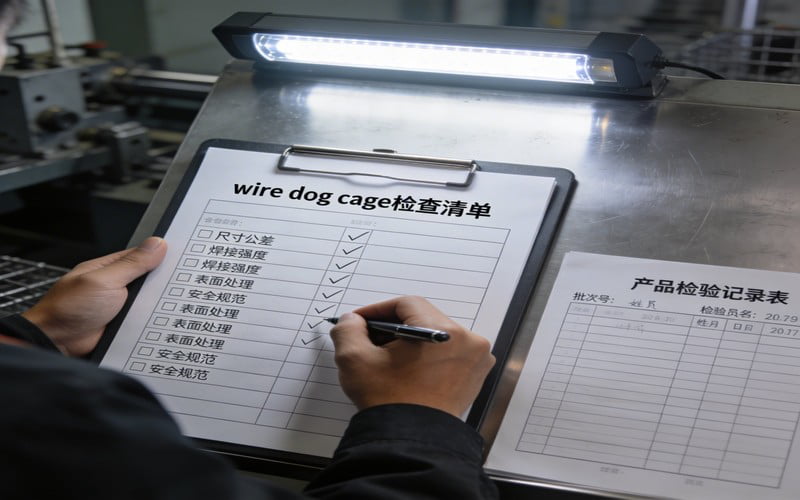
Wire Dog Cage 20-Point Inspection Checklist
This comprehensive inspection checklist covers all critical quality dimensions for wire dog cages. Each checkpoint includes specific acceptance criteria that align with industry standards and customer expectations.
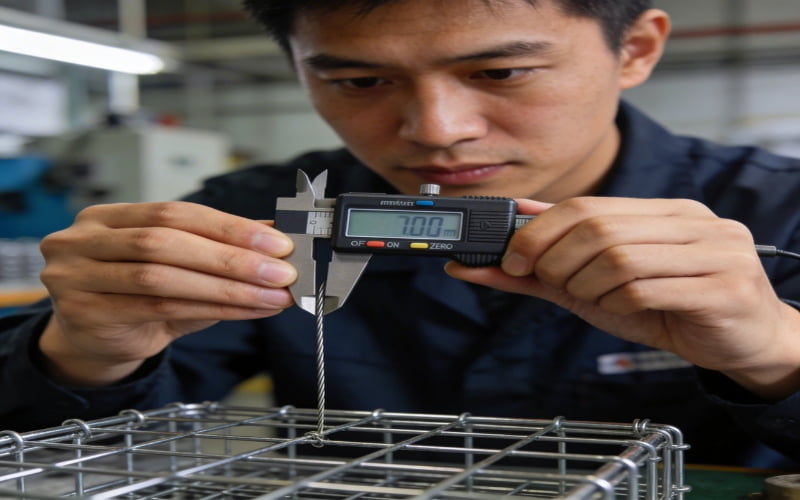
- Wire Diameter Verification: Measure wire diameter at multiple points using digital caliper. Verify actual diameter matches specifications within ±0.1mm tolerance. Thin wires compromise structural integrity and reduce weight capacity.
- Wire Gauge Consistency: Check wire gauge uniformity across the entire cage structure. Verify no wire thinner than specified gauge exists in high-stress areas like door frames and corners.
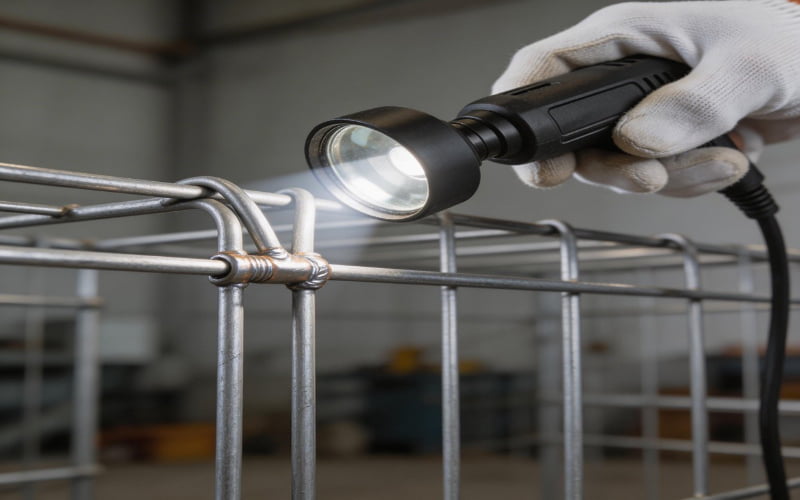
- Weld Joint Integrity: Visually inspect all weld joints for cracks, porosity, incomplete penetration, or excessive spatter. Use magnifying light for detailed examination of critical structural welds.
- Weld Coverage Assessment: Verify weld coverage at all connection points. Ensure welds penetrate fully through overlapping wires without gaps or weak spots that could fail under stress.
- Surface Finish Quality: Evaluate coating uniformity across all wire surfaces. Check for uneven coverage, orange peel texture, drips, runs, or missed spots in powder coat, plating, or paint finishes.
- Coating Adhesion Test: Perform cross-cut tape test per ASTM D3359. Score coating in grid pattern, apply tape, and remove. Coating should not flake or peel beyond rating 4B.
- Rust and Corrosion Check: Inspect for rust spots, white corrosion on galvanized surfaces, or discoloration indicating pre-existing corrosion. Check welding areas for heat discoloration without proper post-treatment.
- Door Frame Alignment: Verify door frame is square and properly aligned with cage opening. Check gaps are uniform on all sides when door is closed. Misaligned doors indicate structural deformation.
- Door Latching Mechanism: Test door latch mechanism for smooth operation without binding or excessive force required. Verify latch engages securely and cannot be opened by pets from inside.
- Corner Post Stability: Apply gentle pressure to each corner post to verify vertical alignment and structural rigidity. Corner posts should not bend or flex significantly under normal handling forces.
- Mesh Alignment Check: Verify horizontal and vertical wires form straight, evenly spaced grid patterns. Check for twisted, bent, or misaligned wires that compromise appearance and structural integrity.
- Panel Flatness Assessment: Place cage panel on flat surface and check for warping or unevenness. Panels should lie flat without gaps or rocking that indicates manufacturing deformation.
- Dimensional Accuracy: Measure overall cage dimensions (length, width, height) against specifications. Verify tolerance within ±3mm for length/width and ±5mm for height to ensure proper fit and stacking.
- Door Opening Clearance: Measure door opening width and height. Verify sufficient clearance for intended pet size without excessive gaps that could lead to escape or injury.
- Edge Smoothing Check: Run fingers along all wire ends and cut points. Verify smooth, rounded edges without sharp burrs that could injure pets or handlers during assembly and use.
- Load Capacity Test: Perform weight test by placing specified load capacity (e.g., 150% of rated capacity) on cage floor for 5 minutes. Verify no permanent deformation, wire bending, or weld failure occurs.
- Structural Stability Test: Apply lateral force to cage sides to verify resistance to tipping or collapse. Check weld joints show no signs of stress or failure under reasonable force.
- Hardware Quality Inspection: Examine bolts, nuts, clips, and assembly hardware for proper threading, zinc plating, and absence of rust or defects. Verify hardware matches specified grade and material.
- Assembly Ease Check: Attempt assembly following provided instructions. Verify all components fit together properly without requiring excessive force or modification. Check instructions are clear and accurate.
- Packaging Damage Assessment: Inspect packaging materials and final assembly for damage during shipping preparation. Verify protective padding, corner guards, and strapping adequately protect cage during transit.
📊 Inspection Statistics
Average Inspection Time: 25-35 minutes per cage
Defect Detection Rate: 92% with trained inspector
Return Reduction: 78% decrease in customer returns
Wire Dog Cage Quality Issues and Rejection Criteria
Certain quality defects warrant immediate rejection of wire dog cage shipments. Understanding these critical failure modes prevents costly returns and protects brand reputation.
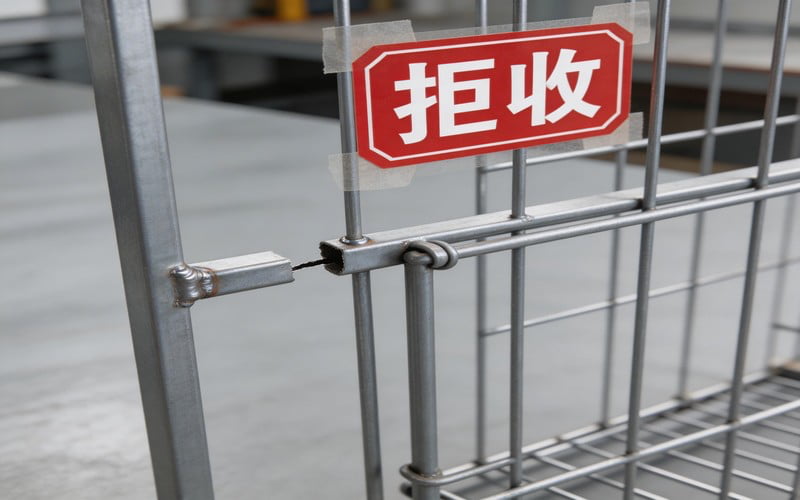
Structural weld failures represent the most critical quality issue. Any weld separation, cracks, or incomplete penetration on load-bearing joints like corner posts, door frames, or base supports constitutes immediate rejection. These failures compromise cage safety and can lead to collapse under normal use, causing pet injuries and liability issues.
Sharp edges that could injure pets or handlers also require immediate rejection. Burrs, sharp cut ends, or improperly finished wire ends represent safety hazards that violate product safety standards. Even minor sharp edges require rework before shipment, not just marking as acceptable.
Door latch failures that allow pets to escape pose critical safety risks. Latch mechanisms that do not secure properly, can be opened from inside, or require excessive force indicate design or manufacturing defects requiring rejection and redesign.
| Critical Defect | Safety Impact | Rejection Action | Prevention Method |
|---|---|---|---|
| Weld Joint Failure | Collapse, injury risk | Immediate rejection | Enhanced welding QC |
| Sharp Wire Ends | Laceration hazard | Rejection or rework | Edge finishing inspection |
| Door Latch Failure | Escape hazard | Immediate rejection | Latch testing at end of line |
| Rust on Structural Components | Structural weakening | Rejection | Storage environment control |
| Dimensional Out of Tolerance | Assembly issues | Case-by-case review | Dimensional fixtures |
✅ Acceptable Minor Defects
- Minor cosmetic coating variations
- Slight surface scratches invisible from 3 feet
- Minor dimensional variations within tolerance
- Hardware oxidation that cleans off
- Minor assembly force within reason
❌ Critical Rejection Defects
- Any weld cracks or separation
- Sharp edges that could cut
- Rust on structural components
- Door latch security failures
- Major dimensional out-of-tolerance
Important: Establish clear rejection criteria with manufacturers before production begins. Document acceptable and unacceptable quality levels with photos and examples. Prevent disputes and ensure consistent quality expectations across all production batches.
Inspection Frequency and Sampling
Effective wire dog cage inspection requires strategic sampling methods that balance thoroughness with cost efficiency. Not every unit needs full inspection, but insufficient inspection risks missing systemic quality issues.
| Inspection Level | Sample Size | When to Use | Coverage |
|---|---|---|---|
| 100% Inspection | All units | First production run, high-value orders | Complete coverage |
| AQL Level I | 5-10% of order | Regular production, stable suppliers | 95% confidence |
| AQL Level II | 15-20% of order | New suppliers, quality concerns | 97.5% confidence |
| AQL Level III | 30-40% of order | Critical quality requirements | 99% confidence |
📖 AQL Sampling Details: For comprehensive AQL sampling methodology, sample size determination tables, and acceptance number calculations, refer to our quality control framework guide. This guide covers IQC, IPQC, FQC, and OQC stages in detail.
For wire dog cages, AQL Level II typically provides appropriate balance between inspection cost and quality assurance for regular production. First article inspection requires 100% inspection of the initial production batch to identify design, tooling, or process issues before full-scale production begins.
Pre-shipment inspection typically samples 5-10% of finished goods before packaging. This final inspection catches any quality issues that may have developed during production or storage. Coordinate pre-shipment inspection timing with shipping schedules to allow time for corrections if quality issues are found.
Wire Dog Cage Inspection Documentation
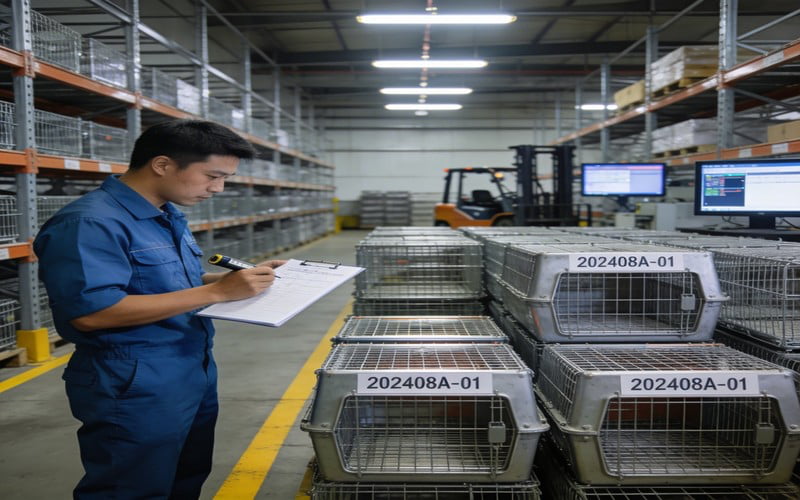
Comprehensive inspection documentation provides traceability and enables quality trend analysis across production batches. Wire dog cage inspection records should be systematically maintained for each order.
📋 Required Inspection Documentation
Inspection Report: Checkpoint pass/fail results with measurements
Defect Photos: Visual evidence of any quality issues found
Corrective Actions: Records of defect corrections and preventive measures
Quality Trends: Analysis showing improvement or degradation over time
Inspection reports should document each checkpoint with pass/fail status, actual measurements, and inspector notes. Photos of defects help communicate issues to factory quality teams and provide evidence for quality disputes.
Quality trend analysis across multiple production batches reveals systemic issues or improvements. Tracking defect rates by checkpoint identifies which quality dimensions require additional focus and supplier training.
📄 Essential Documentation Elements
- Order number and PO reference
- Inspection date and inspector name
- Sample size and selection method
- Individual checkpoint results
- Defect descriptions and photos
📊 Quality Metrics to Track
- Overall defect rate percentage
- Top recurring defects by frequency
- Supplier performance comparison
- Improvement trends over time
- Customer return correlation
Cloud-based quality management systems enable real-time access to inspection records from multiple locations. Digital inspection tools with photo capture and automated pass/fail calculations improve inspection efficiency and accuracy compared to manual paper-based systems.
Best Practice: Maintain inspection records for at least 2 years to support quality analysis and potential warranty claims. Documentation provides critical evidence when quality disputes arise and helps suppliers understand improvement priorities.
Working with Suppliers on Quality Improvement
Effective supplier collaboration drives continuous quality improvement in wire dog cage manufacturing. Inspection findings should drive constructive quality discussions rather than punitive actions.
Share inspection results promptly with suppliers to enable immediate corrective actions on current and future orders. Detailed feedback with specific defect examples helps suppliers understand exactly what quality issues occurred and how to prevent recurrence.
Regular quality review meetings with factory managers and quality teams establish shared quality expectations and improvement goals. These meetings build relationships and demonstrate commitment to quality improvement as a partnership rather than adversarial relationship.
💡 Pro Tip
Recognize and reward quality improvements, not just penalize defects. Sharing success stories when suppliers achieve quality goals reinforces positive behaviors and encourages continued improvement efforts. Quality incentive programs align supplier interests with buyer quality requirements.
Supplier training on specific quality requirements improves understanding of inspection standards and acceptance criteria. Provide samples of acceptable and unacceptable quality with explanations of why differences matter. Training factory inspectors on the same 20-point checklist ensures supplier quality teams catch defects before shipment.
Long-term supplier relationships benefit from joint quality improvement initiatives. Collaborative problem solving on quality challenges builds trust and enables both parties to learn and improve. Supplier selection should include assessment of willingness to partner on quality improvement.
Wire Dog Cage Inspection in Quality Control Framework
Wire dog cage inspection represents one critical component within a comprehensive quality control framework. Effective quality management integrates inspection with broader quality systems and continuous improvement processes.
🔄 Quality Control Cycle
Plan: Define quality standards and inspection criteria
Do: Execute inspections according to established procedures
Check: Analyze inspection results and identify trends
Act: Implement improvements based on inspection findings
Inspection data feeds into continuous improvement cycles. Analyzing defect patterns reveals opportunities for design improvements, process optimization, or supplier development. Quality metrics should drive management decisions and resource allocation for quality initiatives.
Customer feedback integration closes the quality loop. Track customer returns and complaints back to specific quality checkpoints to understand which inspection areas require enhancement. This customer-centric approach ensures quality standards align with actual customer expectations.
Third-party quality inspection services provide independent verification when internal resources are limited. Organizations like SGS, Intertek, and QIMA offer comprehensive inspection services for metal products in China with standardized reporting and global quality benchmarks.
Implementing this 20-point inspection checklist establishes systematic quality assurance that protects brand reputation, reduces returns, and ensures customer satisfaction. Consistent inspection execution drives supplier quality improvement and creates competitive advantage through superior product quality.
Related Quality Resources
This inspection checklist works best as part of a comprehensive quality management system:
- Wire Dog Cage Quality Control Framework – Master guide covering IQC/IPQC/FQC/OQC implementation
- Wire Dog Cage Testing Methods – Laboratory and field testing protocols for objective quality validation
- Quality Certifications Guide – Understanding ISO 9001, CE marking, ASTM and other essential certifications
Frequently Asked Questions
Click questions below to view answers
Inspection frequency depends on order size, supplier relationship, and order value. First production runs require 100% inspection of all units. Regular production with proven suppliers typically uses AQL Level II sampling (15-20% of order quantity). New suppliers or suppliers with quality issues warrant higher inspection levels (AQL Level III). Pre-shipment inspection is recommended for all orders over 50 units to catch issues before shipping.
External References: ASQ – Acceptance Sampling | SGS Inspection Services | Intertek Inspection | QIMA Quality Inspection