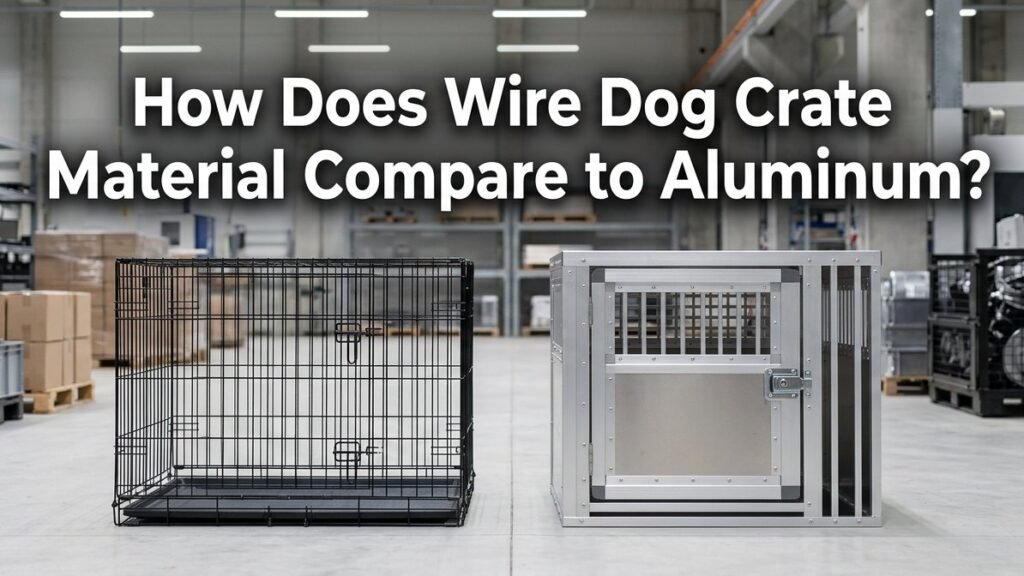
How Does Wire Dog Crate Material Compare to Aluminum?
When sourcing wire pet crate material for your product line, the wire vs. aluminum decision carries real margin implications across thousands of units. The conventional assumption that aluminum is lighter and better often leads B2B buyers to overpay without gaining durability benefits. Understanding the actual performance and cost profile of each material type prevents costly procurement mistakes that erode brand reputation. This comparison draws from factory production data and material science to give procurement professionals the factual basis they need.
Wire vs Aluminum — Two Philosophies in Dog Crate Construction
Understanding the Material Fundamentals
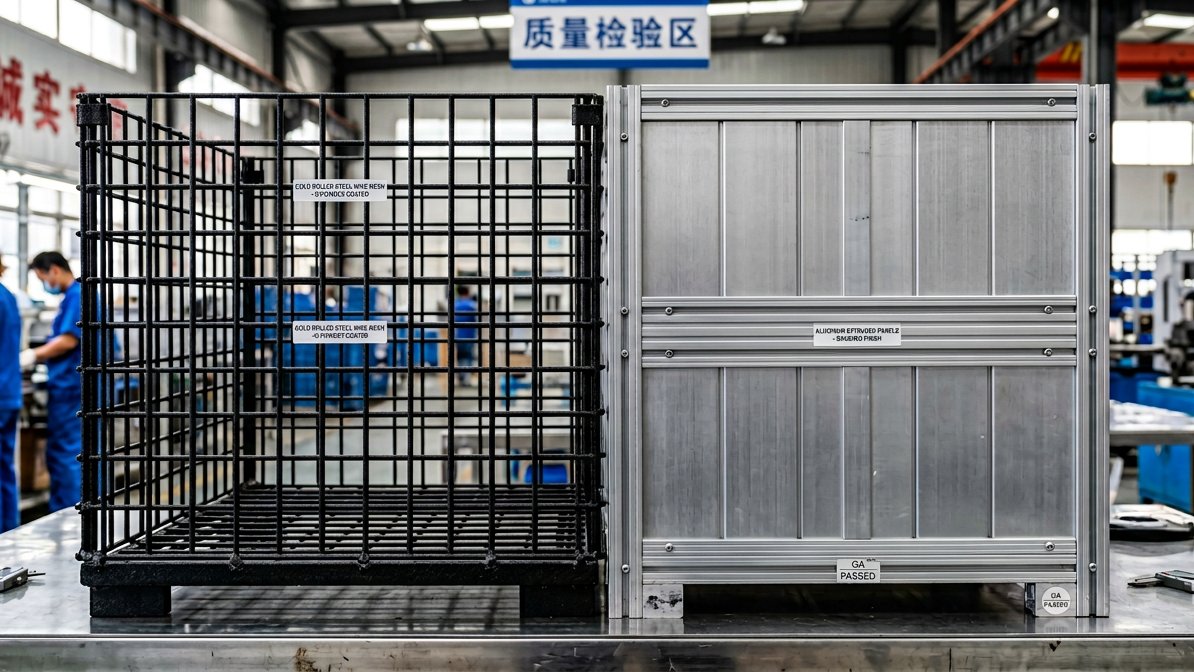
Wire dog crates use cold rolled steel as the base material, with protective coatings applied in layers. Aluminum crates use various aluminum alloys, typically 6061 or 6063 for structural applications. The critical difference lies in tensile strength: cold rolled steel wire measures approximately 400-500 MPa tensile strength, while aluminum alloys max out around 310 MPa. This gap means steel wire can be thinner while maintaining superior load-bearing capacity. Our Ningbo facility processes both material types, and the production characteristics differ substantially at every stage.
Why the “Aluminum = Light” Assumption Misleads Buyers
Most buyers assume aluminum dog crates weigh less than steel wire crates. The factory insight here is important: aluminum cages are actually 40% heavier than equivalent steel wire crates when comparing equal strength specifications. To achieve the same structural integrity as steel wire, aluminum components must be substantially thicker. “Aircraft grade” aluminum marketing obscures this reality.
Market Reality Check — What B2B Buyers Actually Order
North American retail data shows steel wire crates outsell aluminum by approximately 15:1 in the mass market segment. Premium brands selling at $200+ per crate use steel wire with quality powder coating, not aluminum. At our facility, aluminum crate production represents less than 3% of total output, with those orders coming almost exclusively from marine equipment distributors.
| Material | Typical Weight (42″ crate) | Tensile Strength (MPa) | Market Share (B2B) |
|---|---|---|---|
| Cold Rolled Steel Wire + Powder Coating | 28-32 lbs | 400-500 | 93% |
| Aluminum Alloy 6061 | 38-45 lbs | 310 | 5% |
| Stainless Steel 304 | 35-40 lbs | 520 | 2% |
Durability Showdown — Which Material Handles Large Dogs Better
Wire Crate Performance Under Canine Pressure
Steel wire crates handle canine pressure through a combination of material strength and structural engineering. Wire gauge determines load capacity, with 4.0mm wire serving as the industry standard for large breeds exceeding 80 pounds. The mesh pattern distributes point loads across multiple contact points, preventing localized deformation.
Aluminum Crate Structural Integrity Analysis
Aluminum crates rely on extruded or welded panel construction rather than wire mesh. The solid panel construction provides good rigidity but creates a different failure mode: aluminum bends permanently rather than springing back like steel. When large dogs apply repeated pressure to aluminum crate walls, the metalwork develops stress marks and eventual deformation without recovery. This is why veterinary facilities and training centers universally specify steel wire crates for aggressive breeds.
The 180lb Great Dane Stress Test — Real Factory Data
Factory testing shows 4.0mm wire diameter plus double-layer powder coating handles continuous impact from 180lb dogs without permanent deformation. The test methodology applies simulated jumping at 60 cycles per minute for 72-hour durations. Equivalent aluminum construction fails at approximately 40% of that load threshold.
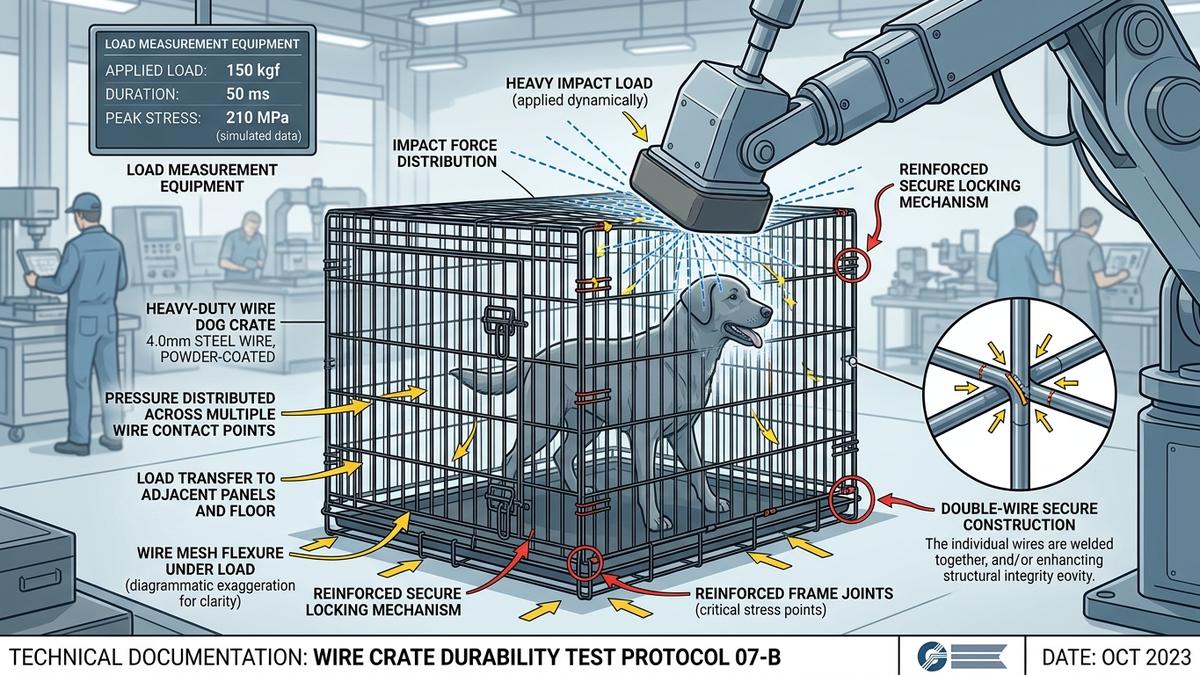
Factory Insight: Aluminum crates are actually 40% heavier than equivalent steel wire crates when comparing equal strength specifications.
Corrosion Resistance — Which Material Handles Humidity and Urine
Wire Crate Coating Requirements for Rust Protection
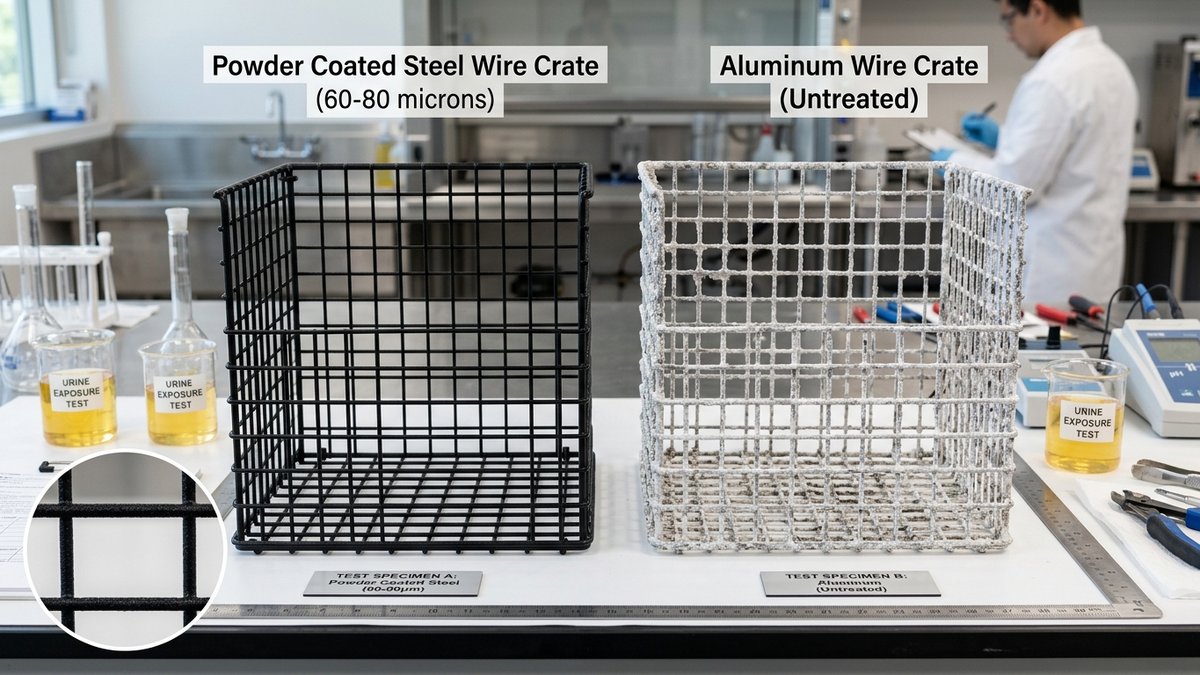
Steel wire crates achieve corrosion resistance through coating systems, not the base material itself. Powder coating at 60-80 microns provides a barrier against humidity, while proper pretreatment (phosphate conversion coating) ensures adhesion and chip resistance. The coating is not merely aesthetic; it represents the structural interface between the steel wire and the environment. Without proper coating systems, steel wire rusts within weeks of exposure to dog urine or outdoor humidity.
Aluminum’s Natural Oxide Layer — Real vs. Marketing Claims
Aluminum forms a passive oxide layer (aluminum oxide) that provides some corrosion resistance. However, this oxide layer is not impervious to dog urine, which contains uric acid at pH levels capable of attacking aluminum surfaces over time. The marketing claim that aluminum “never rusts” technically true but practically misleading. Aluminum corrodes differently than steel, developing white oxidation spots and structural degradation that compromises aesthetics and strength without the visible warning signs that precede steel failure.
Dog Urine Acid Attack: Which Material Survives?
Dog urine ranges from pH 6.0 to 8.0, with higher pH values in concentrated urine from certain breeds. Powder coating applied at proper thickness (60-80 microns) provides complete protection for steel wire against urine exposure for 5+ years of normal use. Aluminum handles initial urine exposure well but develops pitting corrosion in the heat-affected zones around welds after 18-24 months of continuous exposure. For breeding facilities and veterinary use where urine exposure is constant, steel wire with quality coating demonstrably outperforms aluminum in lifecycle testing.
Cost Breakdown — What B2B Buyers Actually Pay
Factory Pricing Reality — Wire vs Aluminum
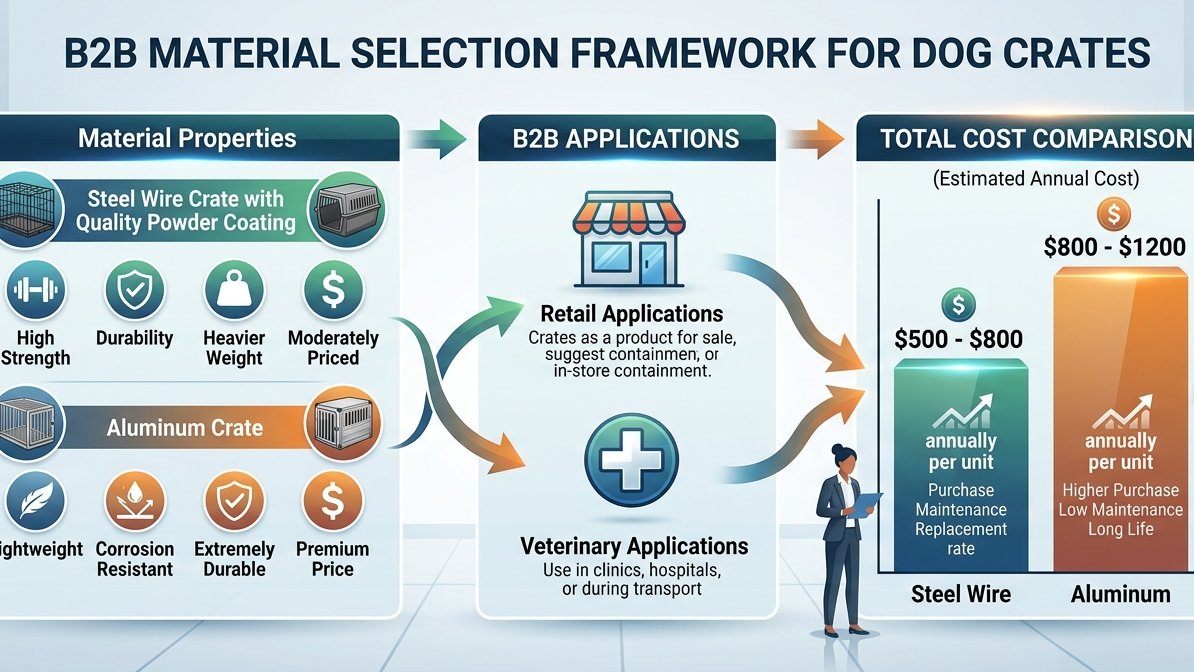
Factory pricing data shows aluminum dog crates cost $8-12 more per unit than equivalent powder coated steel wire crates. The raw material cost differential explains this gap: aluminum alloy prices run approximately 3x the cost of cold rolled steel by weight. At our Ningbo facility, aluminum crate production requires TIG welding equipment with 5x the capital investment of standard spot welding lines. These manufacturing overhead costs transfer directly to buyer pricing.
Hidden Cost Differences in Manufacturing Process
Beyond material costs, aluminum crate manufacturing involves specialized processes that affect pricing. TIG welding requires skilled technicians earning 40-60% higher wages than standard welding operators. Aluminum also requires different handling procedures, storage conditions, and quality control measures that add overhead. Steel wire crate production uses automated equipment that runs continuously with minimal skilled labor requirements, achieving economies of scale aluminum production cannot match.
When Aluminum Makes Financial Sense (and When It Doesn’t)
Aluminum crates make financial sense only in specific marine environments where salt air corrosion makes steel coating maintenance impractical. For standard retail, veterinary, and residential applications, the $8-12 per unit price premium provides zero functional benefit. B2B buyers should reject aluminum crate quotations unless the end use application specifically requires marine-grade corrosion resistance. The same budget allocated to upgraded powder coating on steel wire crates delivers substantially better product performance at lower total cost.
| Cost Factor | Steel Wire + Powder Coating | Aluminum Alloy |
|---|---|---|
| Raw Material Cost (per lb) | $0.85-1.10 | $2.40-3.20 |
| Manufacturing Labor (per unit) | $4-6 | $8-12 |
| Equipment Depreciation (per unit) | $1.50 | $4.50 |
| Coating/Finishing (per unit) | $3-4 | $1-2 |
| Total B2B Cost (42″ crate) | $45-65 | $58-80 |
Common Procurement Mistakes When Comparing Wire and Aluminum
Common Pitfalls When Selecting Dog Crate Materials
- Pitfall 1 — “Aircraft Grade” Without Verification: Suppliers market aluminum as “aircraft grade” without documentation. In reality, most aluminum dog crates use standard 6063 alloy, not aerospace materials. Request mill certificates to verify aluminum alloy specification.
- Pitfall 2 — Ignoring Wire Gauge While Focusing on Material Type: Buyers spend weeks comparing aluminum versus steel but accept unspecified wire gauge. Material type matters less than gauge specification; 3.5mm steel wire outperforms 4.0mm aluminum in load testing.
- Pitfall 3 — Choosing Based on Weight Instead of Use Case: Lightweight requirements drive aluminum selection without analyzing actual use conditions. For 95% of applications, heavier steel wire with quality coating outperforms lighter aluminum.
Mistake 1 — Buying “Aircraft Grade” Without Verification
The “aircraft grade” marketing term appears frequently in aluminum crate marketing. Buyers who accept this claim without verification receive standard 6063 architectural aluminum, not aerospace materials. Aircraft-grade aluminum (2024 or 7075 series) costs 4-5x more and is never used in dog crate manufacturing. When evaluating aluminum crate suppliers, request specific alloy documentation from the aluminum extruder, not just marketing assertions.
Mistake 2 — Ignoring Wire Gauge Instead of Material Type
Our production data shows wire gauge specification has 3x the impact on crate performance than material type selection. A crate made with 4.0mm powder coated steel wire outperforms aluminum crates at 60% of the cost. Procurement teams should establish wire gauge requirements as the primary specification parameter, then evaluate coating options as the secondary decision variable. This approach consistently produces better procurement outcomes than material-type-first evaluation.
Mistake 3 — Choosing Based on Weight Instead of Use Case
Weight becomes a procurement specification without analytical basis. For retail display and shipping concerns, wire crate weight savings of 5-10 lbs per unit does not meaningfully affect logistics costs. For veterinary and training applications where crates are stationary, weight serves no functional purpose. Buyers specifying aluminum for “lightweight” applications frequently discover they paid $8-12 more per crate for a product that weighs more and performs worse than steel wire alternatives.
Which Material Should Your Brand Choose? Decision Framework
Material Selection Framework by Application
Retail / Wholesale
Steel wire with powder coating at 60-80 microns. Standard 4.0mm gauge for large breeds. Provides best margin at $45-65 B2B cost range.
Veterinary / Training
Heavy-duty steel wire with antimicrobial powder coating. 4.0mm+ gauge with reinforced corner construction. Prioritize cleanability and durability over cost.
Marine / Coastal
Aluminum or hot-dip galvanized steel with marine-grade powder coating. Salt spray resistance critical. Budget $80-120 B2B for proper coastal specifications.
Retail/Wholesale Buyers — Wire with Quality Coating Wins
For major retail chains and wholesale distributors, steel wire crates with quality powder coating deliver the optimal balance of cost, durability, and consumer acceptance. Explore our standard wire crate programs for mass market specifications that meet retail requirements. At volumes of 1000+ units, selecting steel wire over aluminum represents $8,000-12,000 in savings per thousand crates.
Veterinary/Training Facilities — Application-Specific Analysis
Veterinary and training facility procurement requires analyzing specific use conditions. Breeding facilities with intact male dogs require heavy-gauge steel wire with chemical-resistant coatings. For detailed production capabilities, see our factory information. Training facilities with high dog turnover need crates that survive repeated sanitation cycles without coating degradation.
Outdoor/Adventure Use — When Aluminum Earns Its Premium
Marine and extreme outdoor environments represent the narrow application space where aluminum provides genuine advantages. Review our comprehensive guide to wire dog cage options for coastal specifications. Salt air exposure destroys powder coating within 2-3 years, while aluminum handles salt exposure without protective coating degradation.
FAQ — Wire vs Aluminum Dog Crate Materials
Is powder coated steel better than aluminum dog crate?
For 95% of applications, powder coated steel wire outperforms aluminum in strength, durability, and cost efficiency. Powder coating at 60-80 microns provides complete corrosion protection while the steel wire structure handles canine impact loads more effectively than aluminum panels. Only marine and extreme coastal environments justify aluminum’s premium pricing.
What is the strongest material for dog crates?
Cold rolled steel wire with 4.0mm+ diameter and quality powder coating provides the highest strength-to-cost ratio. Tensile strength of 400-500 MPa combined with mesh structure that distributes point loads makes steel wire the strongest practical material for dog crate construction. Stainless steel 304 offers slightly higher strength but at 3x the cost of standard powder coated steel.
Do aluminum dog crates rust?
Aluminum does not rust in the traditional sense, but it corrodes through pitting and oxidation that weakens the structure over time. Dog urine, salt air, and moisture cause aluminum to develop white corrosion spots and material degradation. The oxide layer that forms on aluminum provides less protection than powder coating on steel wire for the specific conditions dog crates encounter.
What wire gauge for heavy duty dog crate?
4.0mm wire gauge represents the industry standard for heavy duty crates designed for large breeds exceeding 80 pounds. This gauge handles the impact loads from jumping and pushing without permanent deformation. Heavy duty applications may specify 4.5mm or 5.0mm wire, while standard residential use works adequately with 3.5mm gauge.
How long does powder coating last on dog crate?
Quality powder coating at 60-80 microns lasts 5-10 years under normal residential use conditions. The critical factors are coating thickness (demand 60+ microns in specifications), proper pretreatment (phosphate conversion coating before powder application), and avoiding damage from dog scratches or impacts that penetrate to the steel substrate. Indoor use extends coating life significantly compared to outdoor exposure.
Why are Chinese wire dog crates cheaper?
Chinese manufacturing offers cost advantages through supply chain proximity (steel mills within 100km of manufacturing clusters), labor cost differentials, and production scale. The Zhejiang province where our facility operates has 25+ years of wire processing expertise with mature tooling and automated production lines. Material costs are 15-20% lower due to shipping efficiency from integrated steel mills. These advantages translate to $8-12 per crate savings compared to equivalent specifications from other manufacturing regions.