Annual Wire Pet Crate Buyer Profile Report: Who Is Buying? 4 Procurement Behaviors from Amazon FBA to Retail Chains
When it comes to wire pet crate procurement, the decision-making logic of Amazon FBA sellers and retail chain buyers can be completely opposite. Approach a wholesaler with FBA thinking and you may be shown the door; apply wholesale relationship logic to Amazon FBA and you may never land your first order. Understanding your buyers matters more than optimizing your product.
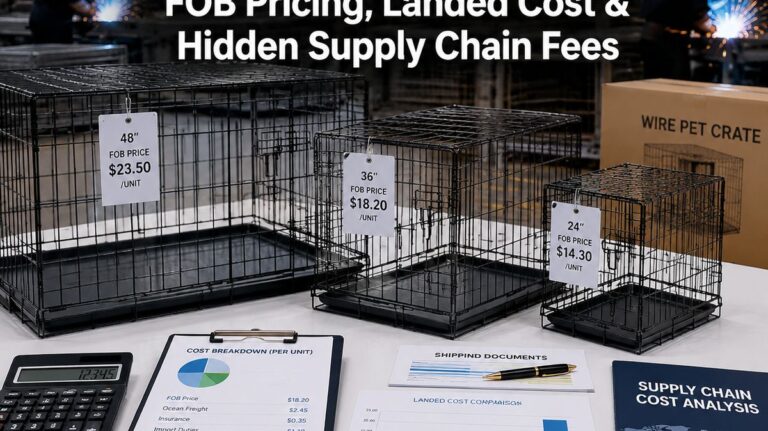
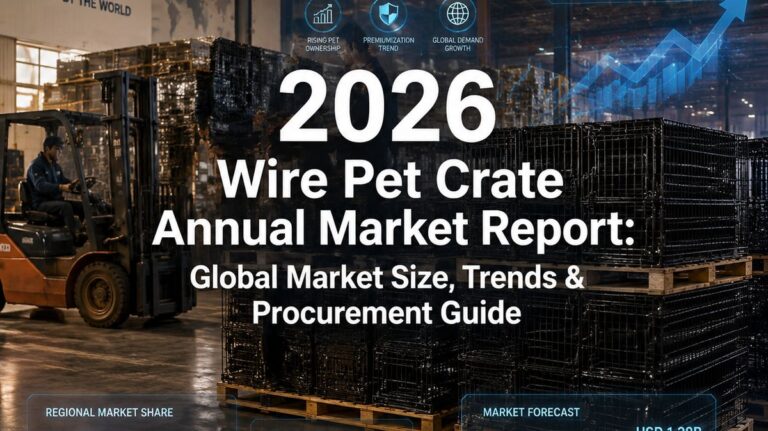
This report is the third in Cagesilo’s annual procurement analysis series. Whether you are a supplier looking to win more major clients or a buyer trying to understand what your competitors are thinking, this report breaks down the real profiles, procurement drivers, and supplier selection logic of four core buyer types. 2026 Wire Pet Crate Annual Market Report: Global Market Size, Trends & Procurement Guide Wire Pet Crate Annual Cost Report: FOB Pricing, Landed Cost & Hidden Supply Chain Fees
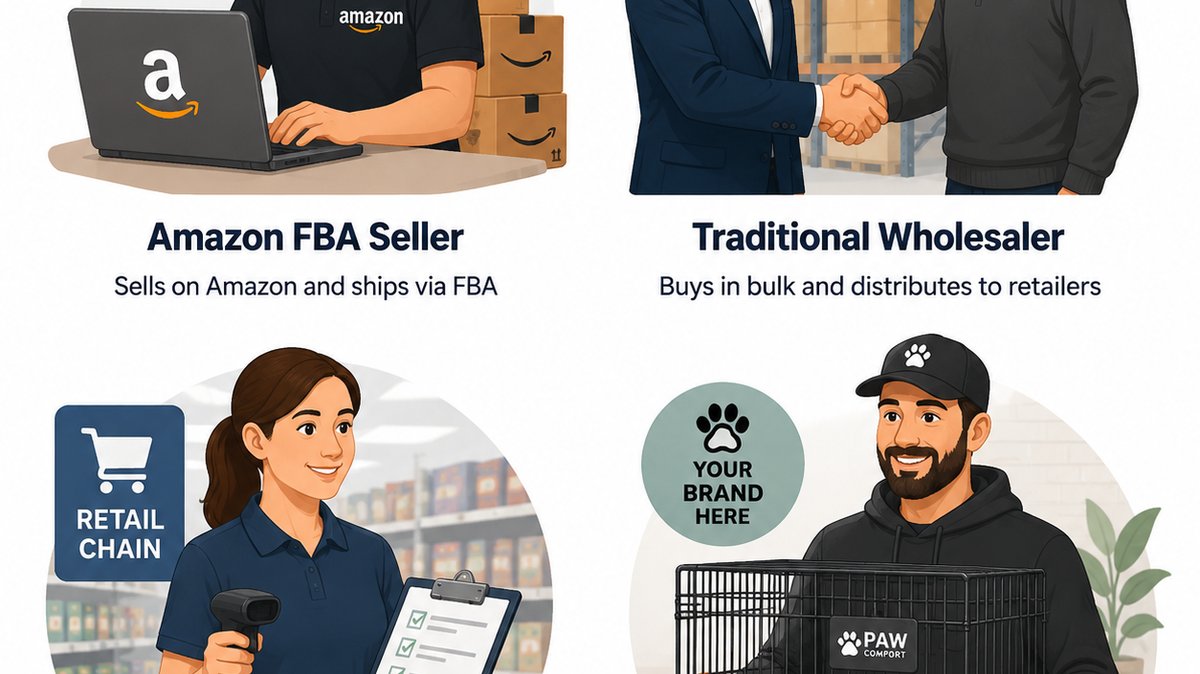
4 Buyer Types: The Full Picture
The B2B buyers in the wire pet crate market can be divided into four main segments, each with different decision drivers, MOQ preferences, and supplier requirements.
At our factory, our buyer base spans four distinct segments: Amazon FBA sellers (volume-driven, cost-sensitive), traditional wholesalers (relationship-driven, stability-focused), retail chain buyers (compliance-driven, standards-focused), and pet brand owners (customization-driven, value-focused) — each segment requires a fundamentally different approach to winning their business. Treating a pet brand owner like an Amazon FBA seller is a surefire way to lose the order.
| Buyer Type | Core Driver | Typical MOQ | Decision Cycle | Supplier Relationship | Risk Sensitivity |
|---|---|---|---|---|---|
| Amazon FBA Seller | Lowest landed cost | 500-2,000 units | 2-4 weeks | Short-term, price-driven | Stockouts, wrong goods |
| Traditional Wholesaler | Certified, stable capacity | 1,000+ units | 2-6 months | Long-term, relationship-driven | Inconsistent quality, stockouts |
| Retail Chain Buyer | Compliance docs, QC standards | SKU-scattered | 6-12 months | Annual contract | Recalls, brand crisis |
| Pet Brand Owner | Customization capability, flexibility | 200-500 units | 4-8 months | Project-based | Delivery delays, IP leakage |
Amazon FBA Sellers — Cost-Sensitive Volume Buyers
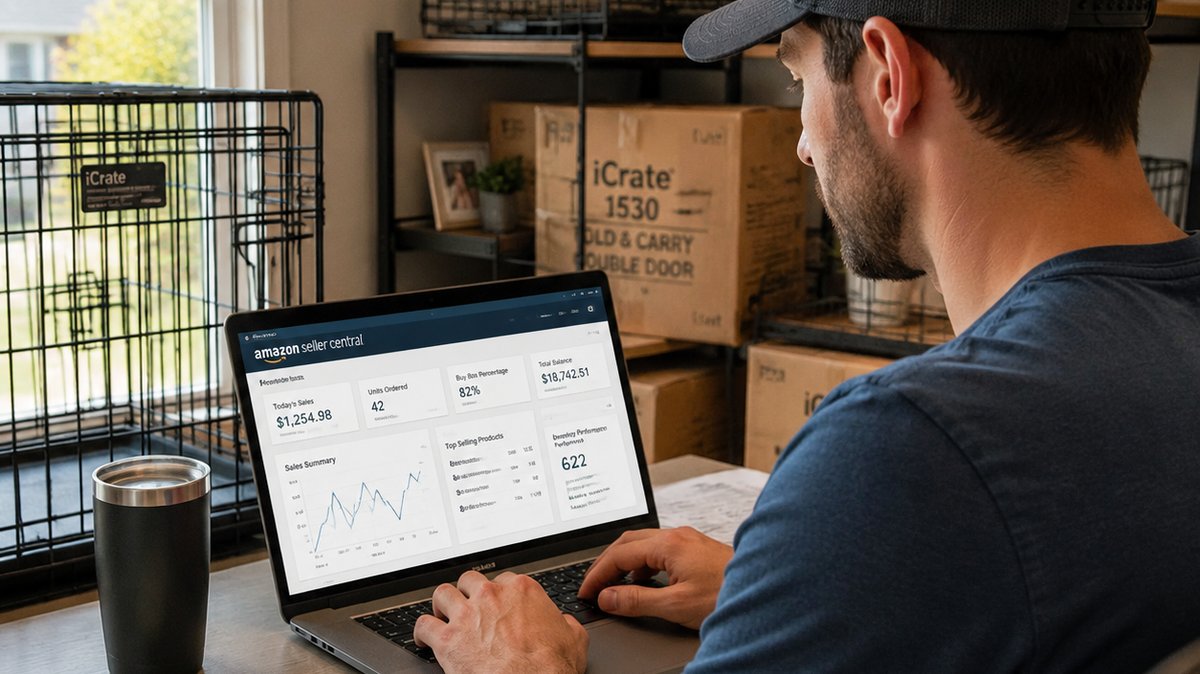
Amazon FBA sellers are the fastest-growing buyer type in the wire dog crate market.
At our factory, Amazon FBA sellers prioritize landed cost, delivery certainty, and sample consistency — in that order — they are cost-sensitive because thin margins in the Amazon marketplace demand every dollar of efficiency. A $0.50 difference in landed cost per unit compounds to $5,000 on a 10,000-unit order, which directly impacts whether their product ranks profitably or becomes dead inventory.
Profile Characteristics:
Typical Amazon FBA sellers purchase 500-2,000 units per order, with a profit margin of $3-8 per unit. They typically use FBM (self-fulfillment) or mixed fulfillment, and have extremely high requirements for delivery certainty—a stockout means Amazon algorithm demotion, with recovery cycles potentially lasting 3-6 weeks.
3 Core Decision Drivers:
1. Landed Cost: Amazon’s bidding mechanism requires sellers to control landed cost. Many sellers’ decision logic is: landed cost determines Buy Box competitiveness.
2. Delivery Certainty: Amazon’s inventory alert system requires suppliers to commit to an on-time delivery rate of 95% or higher. A 3-5 day delay may cause FBA inventory stockouts.
3. Sample Consistency: Amazon buyer reviews directly determine listing survival. If the product that arrives looks different from the sample photos, the review stars crash and recovery takes months — sample consistency isn’t a nice-to-have, it’s a survival requirement.
Procurement Rhythm:
Amazon FBA sellers’ annual procurement calendar revolves around Prime Day (July) and Holiday Season (December). Amazon FBA sellers typically start preparing 4-5 months ahead for Prime Day and 6 months ahead for Holiday Season — this means January-February orders target Prime Day, March-April orders target Holiday Season. Orders placed in May or later are at risk of missing both windows.
Traditional Wholesalers — Relationship-Driven Stability Buyers
Traditional wholesalers are the oldest channel players in the pet supplies industry, and their decision logic is fundamentally different from Amazon FBA sellers.
At our factory, traditional wholesalers prioritize certifications, production stability, and track record over price — they are building 2-3 year supplier relationships, not one-off transactions — this means if you show up with the lowest price but no certifications and a 6-month old factory, they will walk away. Traditional wholesalers view suppliers as strategic partners, not interchangeable vendors.
Profile Characteristics:
Traditional wholesalers typically purchase 1,000+ units per order, with decision cycles lasting 2-6 months. Their core clients are regional pet supply distributors and specialty pet chains, and customer relationships are the core of maintaining their business.
5 Core Decision Drivers:
1. Certifications: BSCI, ISO 9001, Sedex and other certifications are entry tickets. Factories without certifications are directly rejected by wholesalers’ legal departments.
2. Production Stability: Wholesalers need continuous replenishment capability. They will ask: what is your monthly capacity? Can you scale up during peak season?
3. Track Record: They care whether you have served wholesalers of comparable scale. Case references are more persuasive than quotation sheets.
4. Delivery Performance: They will request to see on-time delivery rates over the past 6-12 months.
5. After-Sales Service: Can they find someone to handle issues? Is there a dedicated account manager?
Procurement Rhythm:
Traditional wholesalers typically plan for the following year in Q4, with supplier contracts finalized in Q1. Traditional wholesalers plan in Q4 for the following year, with supplier contracts finalized in Q1 — this means the best time to approach them is September-November, when they’re actively evaluating next year’s supplier lineup.
Common Pitfalls When Selling to Traditional Wholesalers
- Pitfall 1: Using Amazon FBA negotiation tactics — they don’t respond to “lowest price wins” dynamics; they want relationship stability and case studies.
- Pitfall 2: Skipping certification presentation — without BSCI or ISO 9001, their procurement department won’t even schedule a meeting.
- Pitfall 3: Not offering factory visit opportunities — wholesalers often include factory audits as part of supplier qualification.
Retail Chain Buyers — Compliance-Driven Standard Buyers
Retail chains (Costco, Walmart, Target, Petco) represent the highest-barrier, highest-value customer type in pet product procurement.
At our factory, retail chain buyers require complete compliance documentation, uniform packaging standards, and on-time delivery — their procurement decisions involve legal, quality assurance, and logistics teams — winning a retail chain contract means passing their vendor qualification process, which typically takes 9-12 months and involves multiple rounds of documentation review, sample testing, and facility audits.
Profile Characteristics:
Retail chain procurement is characterized by SKU scattering—each size and each color counts as a separate MOQ, resulting in large total purchase volumes but individual SKU quantities of only 200-500 units. They have extremely high requirements for packaging consistency because products must display on large retail shelves.
Compliance Checklist:
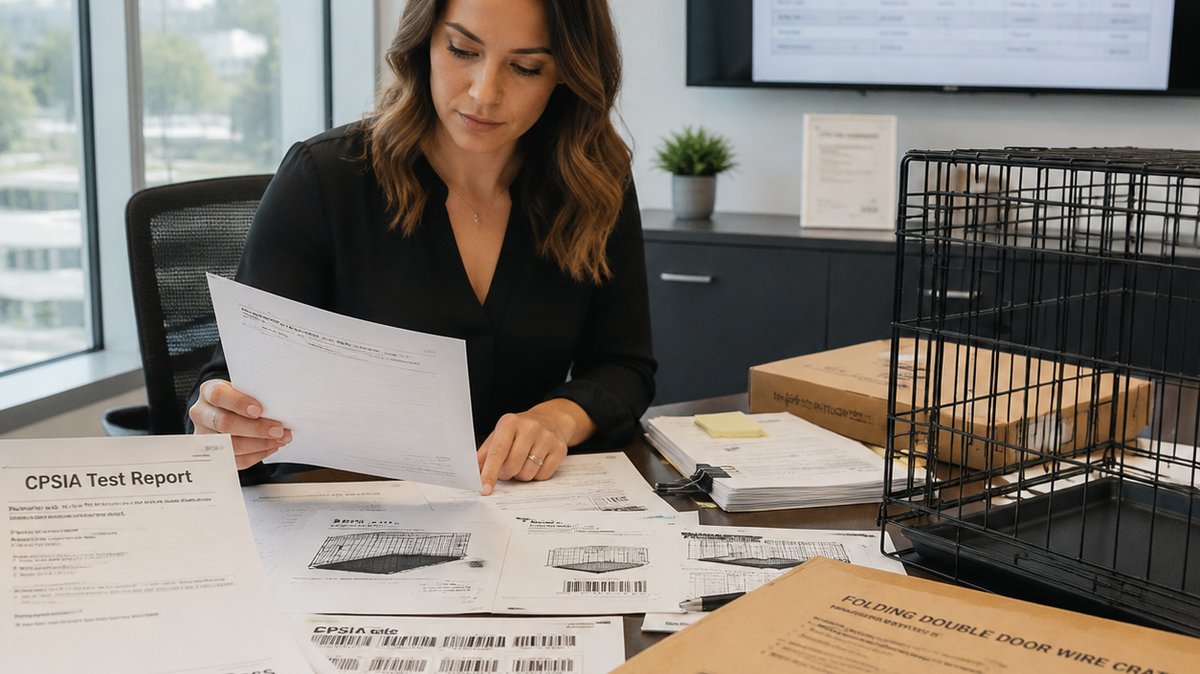
Retail chain buyers require CPSIA test reports, raw material safety certificates, packaging standards compliance, and traceability systems — beyond basic certifications like BSCI. For pet products specifically, Walmart and Target have additional requirements around heavy metal content, phthalates, and lead in metal components.
Pitfall Warning:
Many suppliers assume ISO certificates are sufficient, but retail chain compliance thresholds far exceed basic certifications. Walmart requires suppliers to complete VERS (Vendor Compliance Program), Target requires completion of IHEARTH (Vendor Standards). These compliance programs typically require 3-6 months of preparation time.
Procurement Rhythm:
Retail chains follow the Retail Calendar, with supplier qualification completed 9-12 months in advance. Retail chain procurement follows the Retail Calendar, with supplier qualification completed 9-12 months in advance — the window to start a new retail chain qualification is typically Q2 each year for the following year’s holiday season products.
Pet Brand Owners — Customization-Driven Value Buyers
Pet brand owners are the buyer type most willing to pay a premium for customization.
At our factory, pet brand owners value OEM/ODM customization capability, logo craftsmanship, and supply chain flexibility over pure price — they are building differentiated products, not competing on price — a pet brand paying $5,000 for a custom mold and $2.00 more per unit for brand-exclusive colors is not price-sensitive in the traditional sense; they are ROI-sensitive. Does the differentiation generate enough margin to justify the premium?
Profile Characteristics:
Pet brand owners typically purchase 200-500 units per order (custom models), but are willing to pay a 20-40% premium for small-batch customization. They focus on brand co-branding, IP-licensed products, and the competitive moat created by exclusive colors/specs.
OEM vs ODM vs Stock Selection Framework:
1. OEM (Original Equipment Manufacturer): Buyer provides design, factory manufactures. Suitable for brands with proprietary designs.
2. ODM (Original Design Manufacturer): Factory provides design, buyer private-labels. Suitable for brands lacking design capability but wanting differentiated products.
3. Stock: Factory existing models, direct procurement. Suitable for market testing or small-batch trials.
Procurement Rhythm:
Pet brand owners typically update their product lines 2-3 times per year. Pet brands typically update their product lines 2-3 times per year, with new product development starting 8-10 months before launch — the key windows are February-March (Q2 launch), June-July (Q3 launch), and September-October (Q4 launch). Brands sourcing for these windows need to start supplier conversations 10-12 months prior.
5-Stage Supplier Selection Framework
Regardless of which buyer type you face, a systematic supplier selection process helps you reduce risk and improve efficiency.
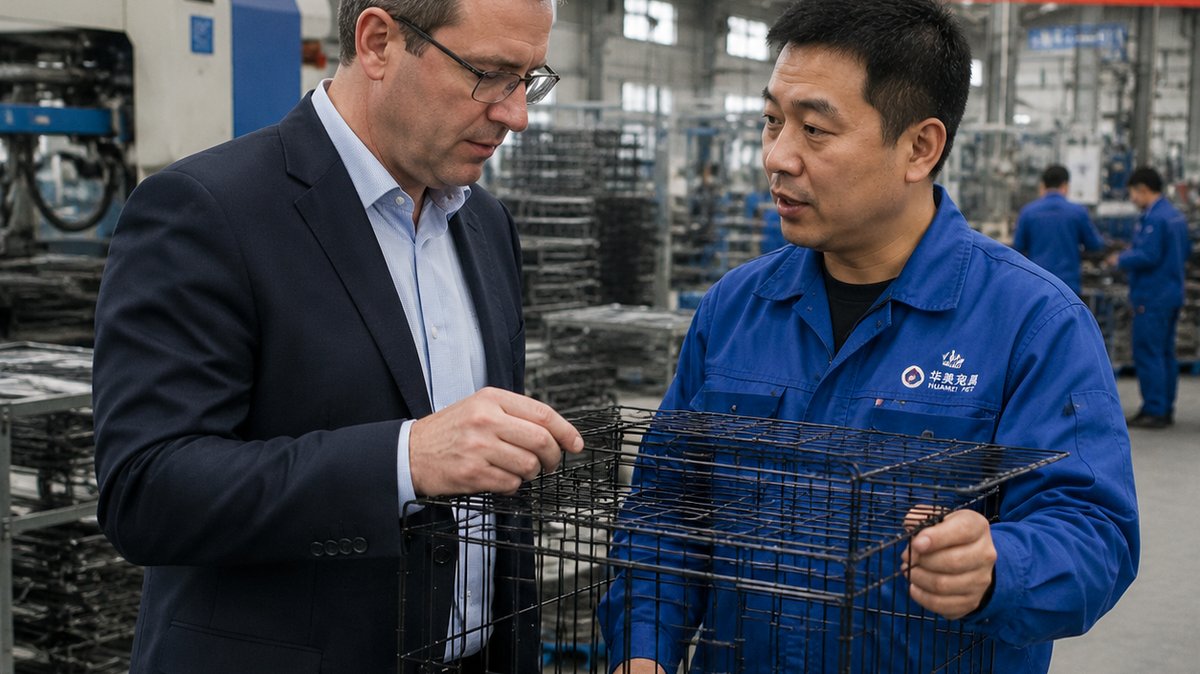
At our factory, our recommended supplier evaluation follows a 5-stage framework: pre-screening (8 red flags), first inquiry (12 technical questions), sample evaluation (pass/modify/reject criteria), quote comparison (5 key numbers), and PO confirmation (10-point safety check) — skipping stages is the primary cause of procurement disasters. Every year we hear stories of buyers who skipped straight to samples without checking red flags, only to discover the “factory” was actually a trading company.
Stage 1: Pre-Screening (8 Red Flags)
8 signals to quickly eliminate poor-quality suppliers:
1. Factory history < 5 years
2. Cannot provide B/L (Bill of Lading) samples
3. Refuses video factory audit
4. Quotes 20%+ below market price
5. Requires 100% prepayment
6. No certification documents whatsoever
7. Vague or contradictory capacity descriptions
8. Contact uses personal email (not corporate domain)
Stage 2: First Inquiry (12 Technical Questions)
After passing pre-screening, send 12 technical questions: monthly capacity, MOQ range, certification list, sample process, lead time commitment, payment terms, mold management, QC process, factory audit policy, after-sales service, packaging capability, and export experience.
Stage 3: Sample Evaluation
After receiving samples, evaluate using the following criteria:
– Dimensions consistent with specification sheet (±2mm)
– Wire gauge matches contract (measured)
– Coating adhesion (3M tape test)
– Door lock function (500 open/close cycles)
– Overall appearance (no obvious defects)
Stage 4: Quote Comparison
After collecting quotes from 3-5 suppliers, compare 5 key numbers: FOB unit price, CBM, landed cost, sample fee and audit fee, and lead time.
Stage 5: Pre-PO Confirmation
Before issuing the PO, conduct a 10-point safety check: specification confirmation, certification documents, lead time commitment, payment terms, inspection terms, inspection standards, delay penalties, force majeure clauses, IP protection, and dispute resolution mechanism.
| Evaluation Stage | Core Task | Elimination Rate |
|---|---|---|
| Stage 1: Pre-Screening | 8 Red Flags to eliminate trading companies | Filters 50-60% |
| Stage 2: First Inquiry | 12 technical questions to verify capacity and experience | Filters 20-30% |
| Stage 3: Sample Evaluation | Production-line sample testing + spec verification | Filters 10-15% |
| Stage 4: Quote Comparison | 5 key numbers side-by-side comparison | Filters 5-10% |
| Stage 5: PO Confirmation | Final contract terms confirmation | Final selection |
4 Buyer Procurement Calendars — When to Approach Suppliers
Procurement timing is an often-underestimated variable in B2B sourcing. Looking for suppliers right before peak season means either being rejected by factories or forced to accept air freight costs.
Amazon FBA Seller Procurement Calendar
Amazon FBA sellers source 4-5 months ahead for Prime Day (July) and 6 months ahead for Holiday Season (December) — this means May-June is the Prime Day window (missed), and January-February is the Holiday Season window. If you’re sourcing in May and need July stock, you should be looking at air freight options, which add $2-4 per unit to landed cost.
Traditional Wholesaler Procurement Calendar
Traditional wholesalers plan in Q4 for the following year, with supplier contracts finalized in Q1 — September-November is when they’re actively evaluating new suppliers. Cold outreach in December or January is low-efficiency because they’re in order execution mode, not supplier evaluation mode.
Retail Chain Procurement Calendar
Retail chains follow the Retail Calendar, requiring 9-12 months advance supplier qualification — if you want to supply Walmart for Holiday 2027, you need to start the vendor qualification process in Q2 2026. This timeline is non-negotiable for major retailers.
Pet Brand Owner Procurement Calendar
Pet brands run 2-3 product line updates per year, with development starting 8-10 months before launch — the sweet spot for supplier outreach is 10-12 months before their planned launch date. Key windows: January (Q2 launch), May (Q3 launch), August (Q4 launch).
2026 Buyer Behavior Trends
The B2B pet procurement market is undergoing structural changes.
Trend 1: Online Wholesale Platform Penetration Growth
Alibaba.com and 1688.com continue to see growing B2B pet product traffic. Online wholesale platform penetration is increasing, with Alibaba and 1688 seeing higher B2B pet product traffic — this gives small-volume buyers (200-500 units) direct access to factories, disintermediating traditional trading companies. For suppliers, this means the low-MOQ Amazon FBA segment is increasingly self-sourced through online platforms.
Trend 2: ESG / Sustainable Materials Demand Growth
European brands and North American retail chains are seeing significantly rising demand for sustainable materials. Recycled steel, water-based coating, and biodegradable packaging are becoming new selling points for brand differentiation. Suppliers with ESG certifications and sustainable production lines are starting to command a 5-10% price premium.
Trend 3: AI Product Selection Tools Assisting Procurement Decisions
AI product selection tools like Jungle Scout and Helium 10 are changing Amazon FBA sellers’ procurement logic. Data-driven procurement decisions mean buyers are clearer than ever about what specs and price points are competitive. Suppliers need to prepare real-time quotation data and product data sheets (PDS).
Trend 4: Southeast Asian Manufacturing Divergence
Vietnam and India are beginning to divert some orders in the pet products sector. Southeast Asian manufacturing is emerging as a partial alternative to China sourcing — primarily for lower-end products where price is the primary driver. For mid-to-high-end wire crates requiring precise welding and coating quality, China remains the dominant manufacturing base. The split is approximately 60% China / 30% Southeast Asia / 10% other regions for the wire crate category.
Common Pitfalls When Adapting to 2026 Buyer Behavior
- Pitfall 1: Ignoring online platform competition — if you’re not visible on Alibaba/1688, you’re invisible to self-sourcing FBA sellers.
- Pitfall 2: Assuming sustainability is niche — European retail chains now require ESG documentation for new supplier qualification.
- Pitfall 3: Delaying digital catalog preparation — buyers expect instant PDF quotes and PDQ sheets, not “let me get back to you in 3 days.”
Decision Framework
Key Takeaways
Identify Your Buyer Type
Amazon FBA cares about cost, wholesalers care about relationships, retail chains care about compliance, brand owners care about customization capability.
Approach Suppliers at the Right Time
5-6 months before peak season is the minimum; retail chains need 9-12 months.
Don’t Cut Corners on 5-Stage Supplier Evaluation
Pre-screening → First Inquiry → Samples → Quotes → PO, each step must be complete.
Position for 2026 New Trends
ESG certification, AI quoting, Southeast Asia backup lines.
Frequently Asked Questions
Who are the main buyers of wire pet crates?
Wire pet crate B2B buyers fall into 4 main segments: (1) Amazon FBA sellers — volume-driven, cost-sensitive, 500-2000 units/order, 2-4 week decision cycle. (2) Traditional wholesalers — relationship-driven, stability-focused, 1000+ units/order, 2-6 month decision cycle. (3) Retail chain buyers — compliance-driven, standards-focused, 6-12 month qualification process. (4) Pet brand owners — customization-driven, value-focused, 200-500 units/order for custom designs, 4-8 month cycle. Each segment requires fundamentally different supplier approach and positioning.
What do Amazon FBA sellers look for in wire crate suppliers?
Amazon FBA sellers have 3 core priorities in order: (1) Landed cost — every $0.50/unit difference compounds across 10,000-unit orders and directly affects Buy Box competitiveness. (2) Delivery certainty — 95%+ on-time delivery rate required to maintain FBA inventory levels and Amazon algorithm rankings. (3) Sample consistency — products must match listing photos exactly or review scores crash. Suppliers should prepare detailed landed cost calculators, offer production-line samples (not hand-finished golden samples), and demonstrate track record with other FBA sellers.
How do traditional wholesalers evaluate pet product suppliers?
Traditional wholesalers evaluate suppliers across 5 dimensions: (1) Certifications — BSCI, ISO 9001, Sedex are minimum requirements, not optional. (2) Production stability — monthly capacity and peak season scalability. (3) Track record — case studies of similar wholesale clients. (4) Delivery performance — on-time delivery rate over past 6-12 months. (5) After-sales support — dedicated account manager and issue resolution process. They build 2-3 year relationships, not one-off transactions. Skipping certification presentation or leading with lowest price will disqualify you immediately.
What certifications do retail chain buyers require?
Retail chains require extensive compliance documentation beyond basic social certifications: CPSIA test reports (US), REACH compliance (EU), EN 71 (European toy safety), IATA compliant crate standards (for travel products). For US retail specifically, Walmart requires VERS vendor compliance and Target requires IHEARTH standards. The qualification timeline is 9-12 months. Key documents needed: test reports (heavy metals, phthalates, lead in metal), material safety certifications, packaging standards compliance, and traceability system documentation. Without these, procurement won’t schedule a meeting.
How do pet brands approach custom/OEM wire crate sourcing?
Pet brands typically choose between OEM (they provide design, factory manufactures), ODM (factory provides design, brand private labels), or stock products (existing factory designs). For custom orders, MOQ starts at 200-500 units with 20-40% premium over standard pricing. Key evaluation criteria: OEM/ODM capability documentation, logo craftsmanship quality (screen printing vs embossing), mold exclusivity options, and IP protection policies. Development timelines are 8-10 months before planned launch. The sweet spot for supplier outreach is 10-12 months before target launch date, with key windows in January (Q2 launch), May (Q3 launch), and August (Q4 launch).
When should I start sourcing for peak season?
Peak season timing depends on your buyer segment: (1) Amazon FBA — Prime Day (July): start sourcing January-February. Holiday Season (December): start sourcing March-April. (2) Traditional wholesalers — Q4 planning starts September-November, contracts finalized Q1. Best outreach window is September-November. (3) Retail chains — 9-12 months advance qualification required. If you want Holiday 2027 retail placement, start qualification in Q2 2026. (4) Pet brands — product development starts 8-10 months before launch. Target the January/May/August windows. General rule: if you’re asking “can I still make this season?” in May or later, the answer is typically air freight or not at all.