Wire Dog Crate Stacking: How We Load Containers Without Crushing a Single Crate
A buyer asked us last month: “How do you make sure the crates don’t get crushed?” The answer isn’t stronger cartons. It’s which direction you stack them.
We ship about 50 containers of wire dog crates every month. Stacking damage is rare — maybe 2-3 claims a month out of those 50 shipments, roughly 4-6%. When it does happen, the root cause is almost always the same: cartons stacked flat instead of standing up.
Common Pitfalls When Stacking Wire Dog Crate Cartons
- Pitfall 1: Stacking cartons flat (horizontal). A flat carton with a 720mm face down distributes weight poorly. The bottom carton walls buckle under sustained load. Standing the carton up (720mm face vertical) makes it far more resistant to compression.
- Pitfall 2: Mixing sizes without ordering by weight. If you put a 36-inch crate on top of a 48-inch crate, nothing happens. Reverse that order and the bottom crate takes damage. Heavy crates always go on the bottom layer.
- Pitfall 3: Leaving the top 10% of container height empty. Some loaders stop when they run out of vertical space for another standing carton. That 10% gap adds up to wasted freight cost over a year of shipments.
Why Stacking Direction Matters More Than Carton Strength
Wire dog crate cartons are unusual. They’re flat — only 100mm thick. A 42-inch crate carton measures 1085 × 100 × 720mm.
If you stack them flat (100mm face up, 720mm face sideways), the carton walls on the bottom layer take all the weight on their narrow edge. Under a 6-8 layer stack in a container, the bottom cartons compress and buckle.
If you stand them up (720mm face up), the carton’s tallest face bears the load vertically. The corrugated board is designed to take compression in this direction. Same carton, same weight, same number of layers — completely different result.
At our facility, we learned this through trial and error. We don’t calculate BCT formulas or ECT ratings for each shipment. We stand the cartons up. That’s the rule.
The Vertical Rule: Stand Them Up
For single-size orders — say, 300 units of 42-inch crates — the stacking method is simple. Stand every carton on its 720mm face. Stack them layer by layer.
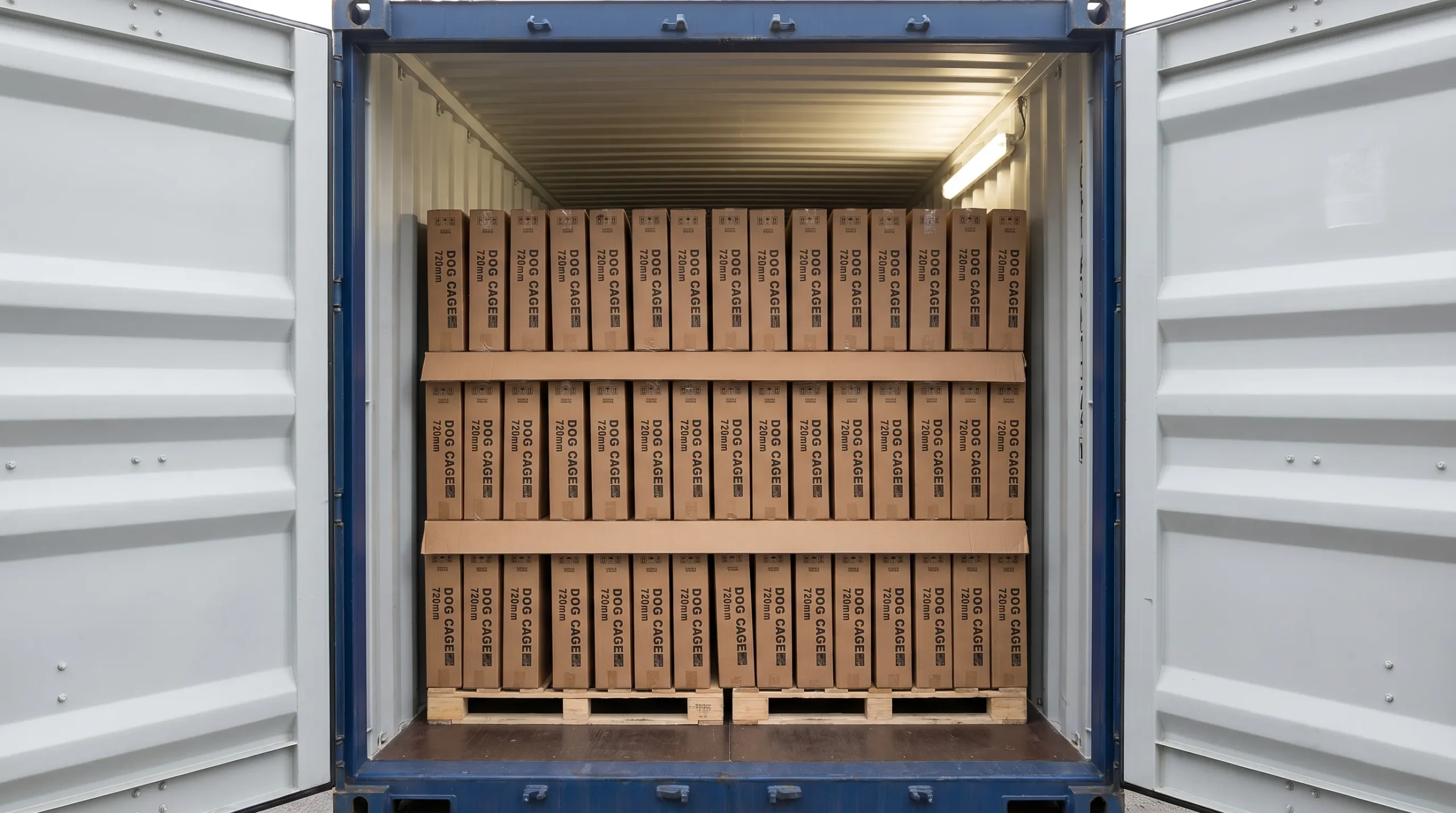
A 20GP container has about 239cm of internal height. A standing carton is 72cm tall. That gives you roughly three layers of standing cartons. At our facility, three layers of standing cartons have never caused a compression failure in 5 years of shipments.
Compare this to flat stacking: a flat carton is 10cm tall. You could theoretically stack 20+ layers. The bottom cartons would be crushed by layer 8. More layers isn’t better — it’s worse.
Mixed Sizes: Heavy Goes Bottom
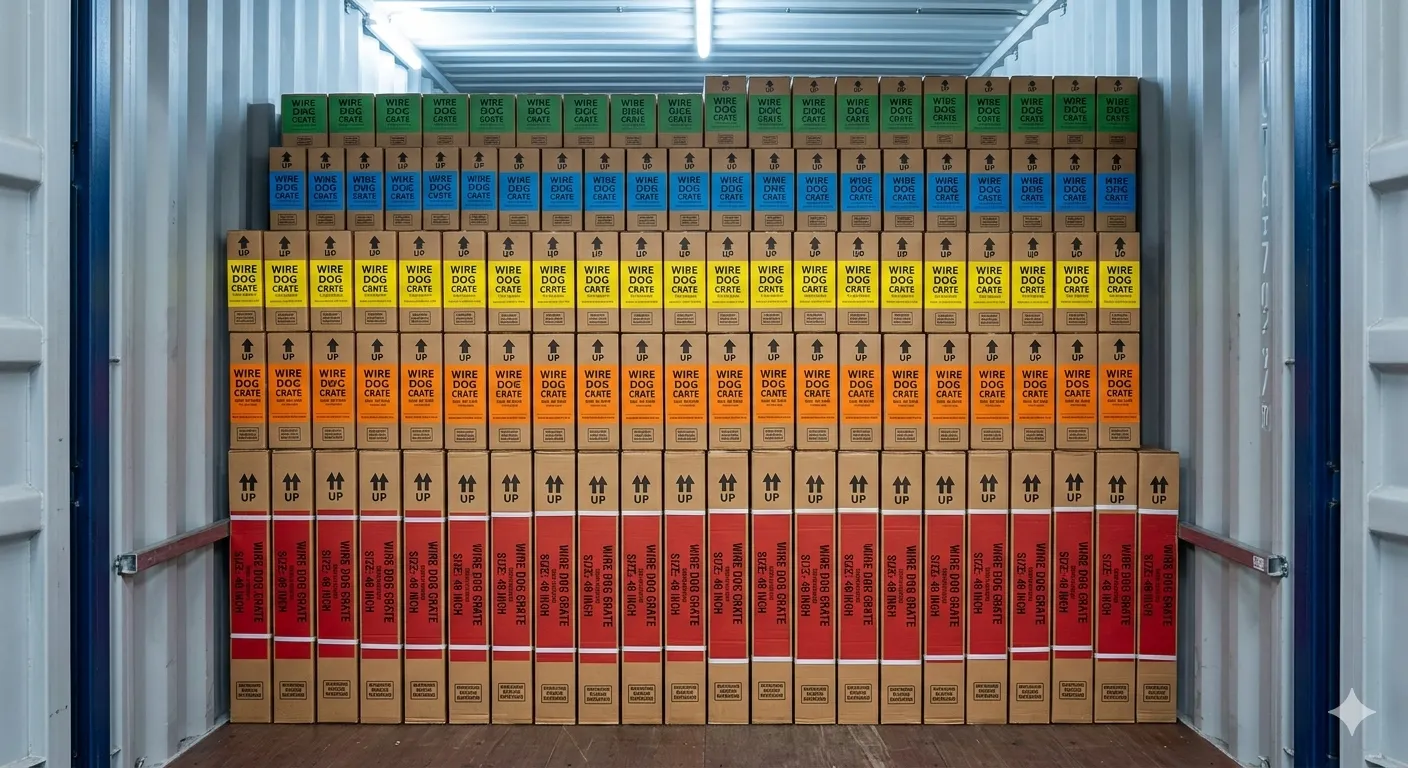
Most of our shipments contain mixed sizes. A typical order might include all five sizes: 24-inch through 48-inch.
The rule is straightforward: heaviest crates on the bottom layer, lightest on top.
Here’s the stacking order we use:
| Layer (from bottom) | Crate Size | Carton Weight (approx.) |
|---|---|---|
| Bottom layer | 48-inch | 15-16.5 kg |
| Layer 2 | 42-inch | 12.5-14 kg |
| Layer 3 | 36-inch | 9-12 kg |
| Layer 4 | 30-inch | 5.5-6.5 kg |
| Layer 5 (top) | 24-inch | 4.5-5.5 kg |
If the order only includes two or three sizes, same rule applies. Sort by weight, heaviest at the bottom.
This isn’t complicated. It’s just physics — and most stacking failures happen because someone ignored it.
Container Loading Strategy: The Section-by-Section Method
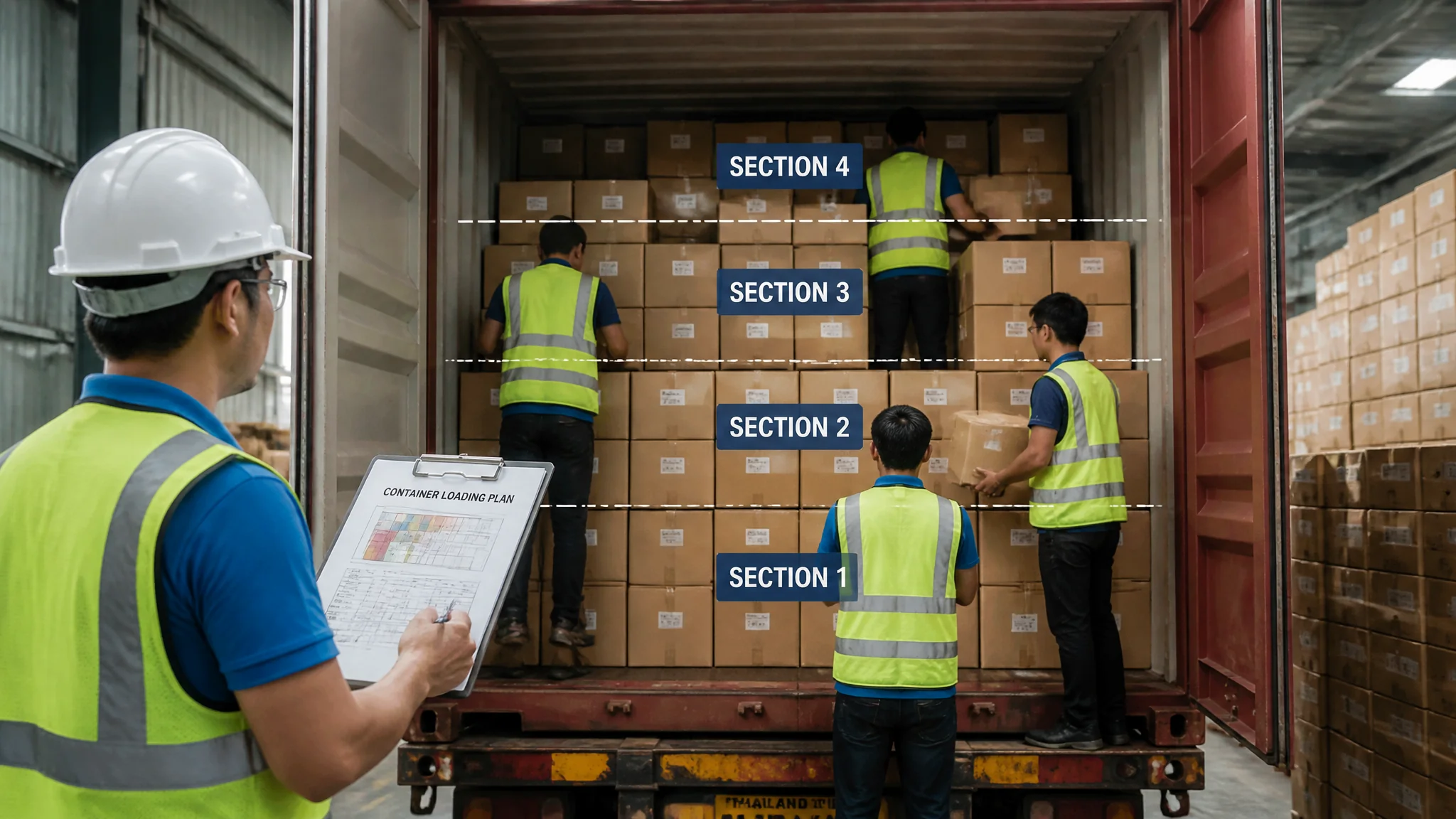
Here’s how our loading team fills a container. They don’t dump everything in and hope for the best. They work in sections, from the back of the container to the door.
The container space is divided into 10 horizontal sections (each about 10% of the container length). For each section:
- Fill vertically to 90% height. Stand cartons up, stacking them until there’s about 10% headroom left at the top.
- Use the top 10% for flat cartons. When there’s not enough vertical space to stand another carton, place one flat. Since it sits on the top layer, the weight it adds is minimal — it won’t crush anything below.
- Move to the next section. Repeat until the container is full, working toward the door.
This method does two things: it maximizes container utilization, and it ensures the bottom layers never carry excessive weight. The top 10% flat placement is the difference between a 90% full container and a 98% full container.
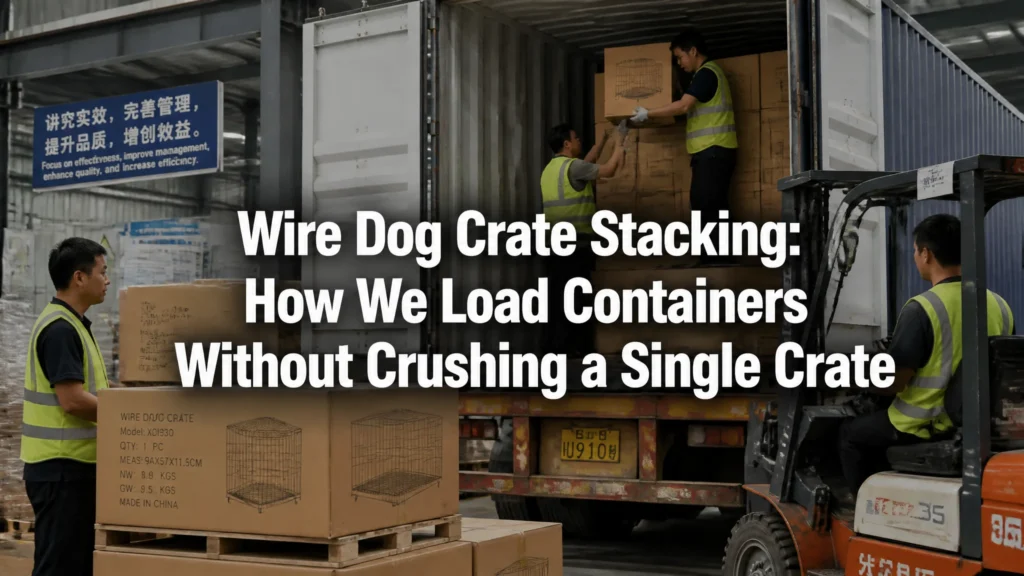
At our facility and in the manufacturing cluster around us, we have dedicated container loading teams. These workers do nothing but load containers all day. They know exactly how to pack crates tight without damaging them.
What Happens When Something Goes Wrong
Despite everything, occasional damage happens. A carton gets crushed during loading. A strap cuts into a box. Humidity in a summer shipment softens the board more than expected.
When a buyer reports damaged crates, we reship replacements. No arguments, no claims process. It’s rare enough — 2-3 incidents per month out of 50 containers — that it’s easier to send new ones than to negotiate over a few hundred dollars.
The cost of lost trust is higher than the cost of replacement crates.
ECT and Carton Specs: A Quick Note
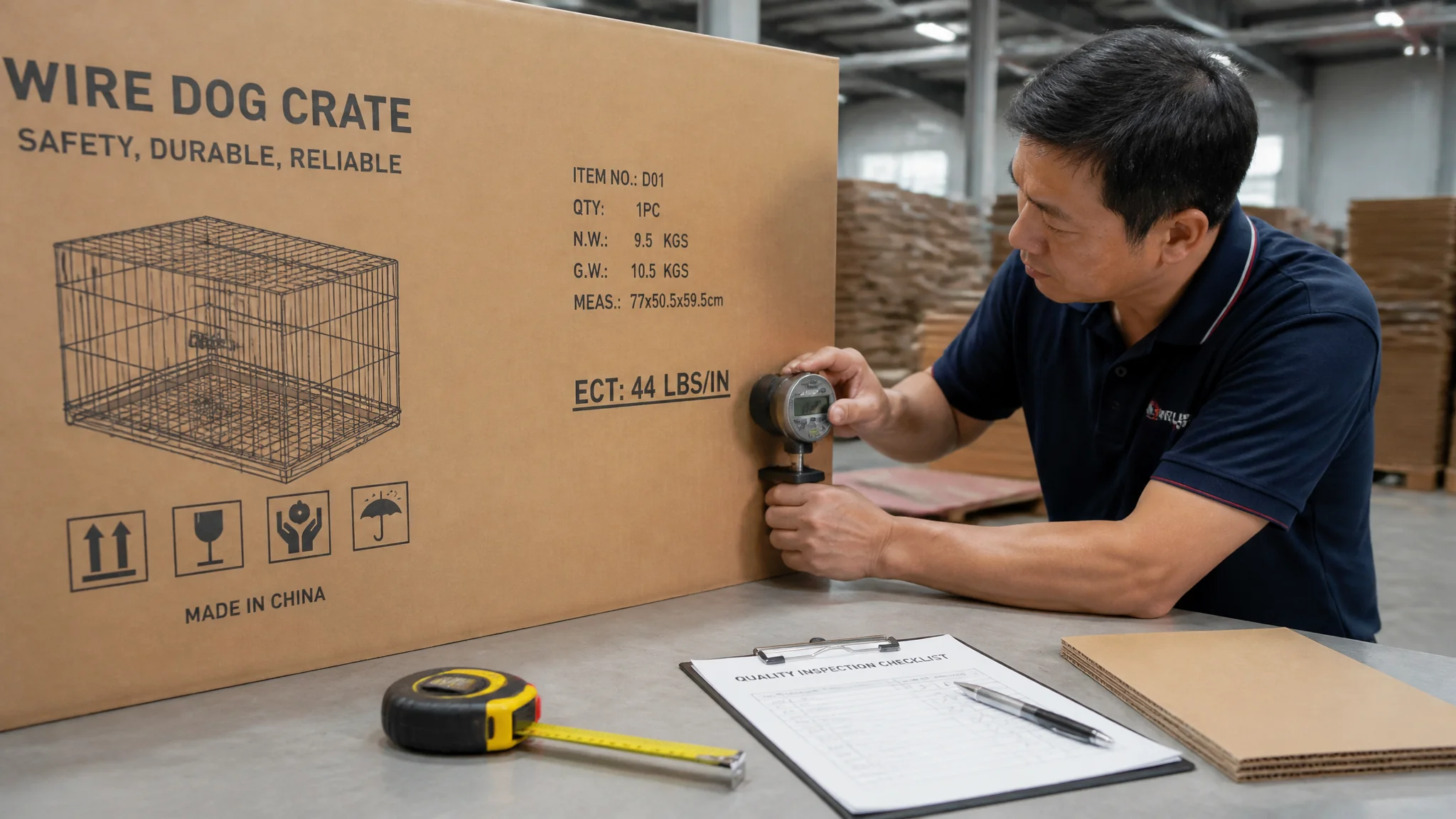
You might hear terms like ECT-44 or ECT-48 when discussing carton strength. ECT stands for Edge Crush Test — it measures how much pressure a carton’s edge can take before collapsing.
We don’t discuss ECT ratings with buyers. The factory selects the right carton based on the crate weight and size. A 24-inch crate gets a standard single-wall carton. A 48-inch crate gets a heavier board. You don’t need to specify ECT grades.
If you want reinforced cartons — double-wall or extra-thick board — we can do that. The MOQ for reinforced cartons is 500 units. Standard cartons are fine for 99% of shipments.
Stacking Decision Framework: How We Load Your Crates
Stand Cartons Up
720mm face vertical. Never stack flat. This alone prevents 90% of stacking damage.
Heavy on Bottom
48″ → 42″ → 36″ → 30″ → 24″. Sort by weight, bottom to top.
Section-by-Section Fill
90% vertical + 10% flat top per section. Maximizes container utilization.
Professional Loading Team
Dedicated workers load containers daily. They know the patterns that work.
How do I prevent my dog crate cartons from collapsing during shipping?
Stand the cartons up (720mm face vertical), not flat. For mixed sizes, put the heaviest crates (48-inch) on the bottom layer and work up to the lightest (24-inch) on top. At our factory, this method has virtually eliminated stacking damage.
How many layers can I safely stack in a container?
For single-size orders, three layers of standing cartons fit in a 20GP container. For mixed sizes, layer count depends on the size mix — typically 4-5 layers with heavier sizes on bottom. We load containers every day; we’ll tell you if your order needs special handling.
Should I use double-wall cartons for heavy crates?
Standard single-wall cartons work for most shipments. 48-inch crates already use a heavier board as standard. If you want reinforced cartons, the MOQ is 500 units. For 99% of shipments, the standard carton with proper stacking direction is enough.
What happens if crates arrive damaged?
We reship replacements. No disputes. Damage is rare — 2-3 incidents per month out of 50 containers — and it’s always cheaper to send new crates than to argue over a few hundred dollars in claims.
How do you stack mixed sizes in one container?
Heaviest on bottom, lightest on top. 48-inch crates go on the bottom layer, 42-inch on layer 2, and so on up to 24-inch on top. If your order only has two or three sizes, same rule applies — sort by weight.
Do I need to know about ECT ratings?
No. ECT (Edge Crush Test) is a carton strength measurement that the factory handles. We select the appropriate carton for each crate size. You don’t need to specify ECT-44 vs ECT-48 — we already know which one to use.