
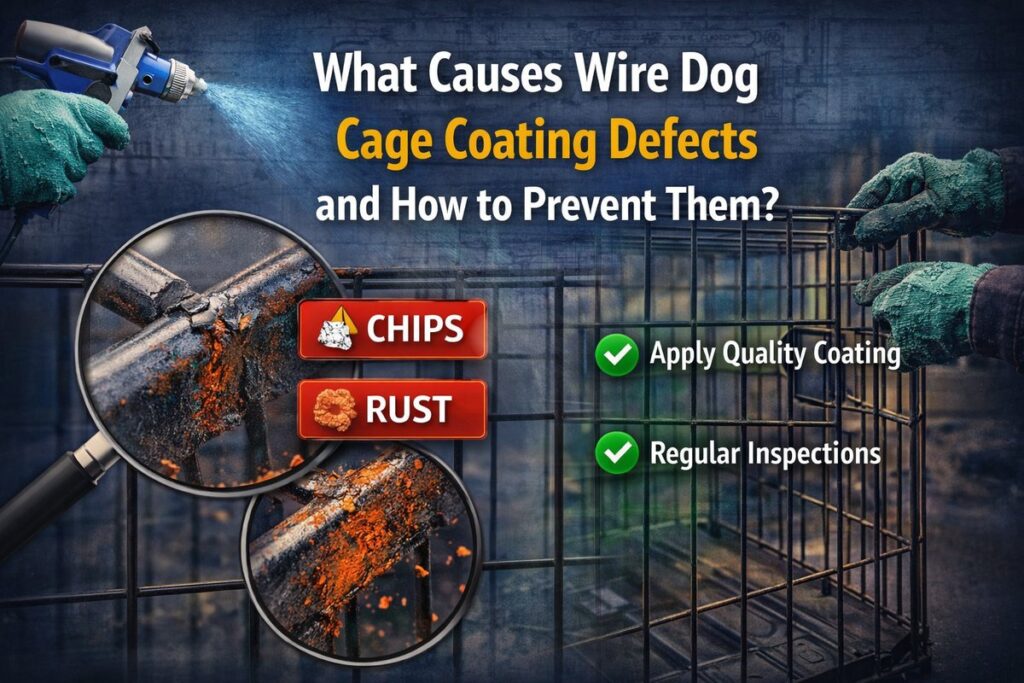
What Causes Wire Dog Cage Coating Defects and How to Prevent Them: B2B Guide
In our experience auditing dog crate manufacturers, coating defects directly impact product lifespan, appearance, and customer satisfaction. Understanding what causes coating failures and how to prevent them helps B2B importers avoid costly quality issues. For Amazon sellers and pet brands, coating problems lead to negative reviews, returns, and brand damage.
Proactive coating quality management typically reduces surface defect rates by 65-80% compared to reactive inspection approaches. Prevention-focused coating control costs 3-4% of order value but saves 12-18% by avoiding returns and rework. Mastering coating defect prevention differentiates quality suppliers from commodity manufacturers.
This guide explains common coating defects, root causes, and proven prevention strategies. Whether sourcing from Chinese manufacturers or establishing quality standards, understanding coating fundamentals ensures durable, attractive wire dog cages that meet customer expectations.
What We Usually See
Among major manufacturers, powder coating represents approximately 85% of wire dog cage finishing. Unlike liquid paint, powder coating requires precise application and curing parameters. Small process variations create visible defects affecting both appearance and corrosion protection.
Understanding Powder Coating Fundamentals
Understanding the powder coating process helps buyers identify which suppliers have proper equipment and controls. Powder coating applies dry polymer powder to metal surfaces using electrostatic attraction. The coated parts then enter curing ovens where heat melts and flows the powder into a continuous protective film.

Electrostatic spray guns charge powder particles as they exit the nozzle. Charged particles adhere to grounded metal parts, creating even coverage before curing. Gun voltage, powder flow rate, and spray distance all affect coating quality.
Curing transforms powder from solid particles into continuous film. Oven temperature and time determine coating flow, adhesion, and final properties. Under-curing causes poor adhesion and soft coating. Over-curing creates brittleness and color shift.
Key Process Parameters Affecting Coating Quality
| Parameter | Standard Range | Defect Risk if Outside Range |
|---|---|---|
| Gun Voltage | 60-90 kV | Orange peel, thin coating |
| Spray Distance | 15-25 cm | Uneven thickness, misses |
| Oven Temperature | 180-200°C | Poor flow, under-cure |
| Cure Time | 15-20 minutes | Adhesion failure, discoloration |
| Film Thickness | 60-120 microns | Corrosion, orange peel |
What we usually check first: During factory audits, request to see parameter logs and witness oven temperature verification. Suppliers with documented daily checks typically deliver more consistent coating quality.
Identifying Common Wire Dog Cage Coating Defects
From our quality inspections, orange peel and pinholes account for approximately 70% of coating complaints, while peeling indicates systematic failure requiring immediate supplier intervention. Understanding these differences enables targeted quality control strategies.

Orange peel texture resembles citrus fruit skin with wavy, uneven surface appearance—while not affecting durability, it signals poor process control and triggers customer complaints about appearance. This defect results from insufficient powder flow before curing. Causes include low oven temperature, short cure time, or high-viscosity powder formulations.
Pinholes appear as small bubbles or craters in the coating surface. Trapped air, moisture, or solvents escape during curing, rupturing the coating film. Pre-existing rust, oil contamination, or inadequate surface preparation commonly cause pinholes.
Orange Peel, Pinholes, and Peeling Issues
Peeling and flaking indicate complete adhesion failure between coating and substrate. The coating lifts off in pieces, exposing bare metal underneath. Poor surface preparation, incompatible coatings, or severe under-curing cause this catastrophic failure.
Color inconsistency appears as shade variations between parts or within the same component. Different cure temperatures, powder batches, or contamination create visible color differences. Premium products require tight color tolerances matched to standard samples.
Common Buyer Mistake
Peeling or flaking coatings indicate systematic process failures requiring immediate action. Halt shipment, conduct root cause analysis with supplier, and require process validation before resuming orders. Do not accept shipments with peeling defects—repair is not feasible at scale.
The Role of Surface Pre-Treatment in Coating Quality
In our experience, surface preparation determines approximately 80% of coating performance—making pre-treatment line audits critical during supplier qualification. Even premium powder coating fails when applied over contaminated, rusty, or improperly prepared surfaces.

The standard pre-treatment sequence includes degreasing, rinsing, phosphating or zirconium treatment, and final rinsing. Each step serves specific purposes in creating ideal surfaces for coating adhesion. Skipping or shortening any step compromises final quality.
Degreasing removes oils, lubricants, and shop dirt from manufacturing. Alkaline or acidic cleaners break down organic contaminants preventing coating adhesion. Inadequate degreasing causes fish eyes, poor adhesion, and premature coating failure.
Phosphating and Degreasing Process Standards
Phosphating creates crystalline conversion coatings on steel surfaces that improve adhesion and corrosion resistance. Iron phosphate provides basic protection for indoor cages, while zinc phosphate offers superior performance for outdoor or high-humidity applications.
Zirconium-based nano-ceramic treatments represent newer technology performing comparably to zinc phosphate without heavy metals. This environmentally friendly alternative achieves excellent coating adhesion and corrosion resistance. Leading manufacturers transition to zirconium pre-treatment for sustainability.
Tools for Coating Thickness and Adhesion Testing
Objective measurement tools transform subjective quality assessments into pass or fail criteria. Digital thickness gauges (essential, $200-500) and cross-hatch adhesion tests (essential, $50-100) should be minimum requirements in your quality protocol.

Digital coating thickness gauges measure dry film thickness (DFT) non-destructively. Magnetic gauges work on steel substrates while eddy current gauges measure aluminum. Standard requirements are 60-80 microns for indoor applications and 80-120 microns for outdoor exposure.
Cross-hatch adhesion testing uses multi-blade cutters to create grid patterns in the coating. Adhesive tape applied and removed from the grid reveals coating adhesion quality. ASTM D3359 rates adhesion from 0B (complete failure) to 5B (perfect adhesion).
| Test Type | Equipment | Acceptable Standard |
|---|---|---|
| Thickness | Digital mil gauge | 60-120 microns (ASTM D7091) |
| Adhesion | Cross-hatch cutter | 4B-5B rating (ASTM D3359) |
| Hardness | Pencil hardness tester | 2H minimum (ASTM D3363) |
| Impact Resistance | Impact tester | No cracking at 50 in-lbs |
Critical thresholds: Thickness below 60 microns risks early corrosion; adhesion below 4B indicates pre-treatment failure requiring supplier corrective action.
Coating Defect Prevention Strategies
From our supplier audits, environmental control and powder handling account for most preventable defects. Systematic process controls at manufacturing level prevent coating defects rather than catching them after formation.

Environmental control significantly impacts coating quality. Humidity above 70% causes moisture-related defects like pinholes and poor adhesion. During audits, verify suppliers maintain hygrometers and document daily readings. Temperature fluctuations affect powder flow and cure characteristics. Quality manufacturers maintain controlled environments in coating areas.
Powder handling and storage require attention to detail. Moisture-absorbed powder causes application problems and surface defects. Powder should be stored in climate-controlled conditions and fluidized properly before application. First-in-first-out inventory management ensures fresh powder with optimal flow characteristics.
Operator training significantly impacts coating quality consistency. Skilled operators recognize subtle process variations and make appropriate adjustments. Quality manufacturers invest in ongoing operator education and certification programs.
Our Practical Recommendation
For new suppliers: require environmental monitoring logs and operator training records before sample approval.
For production orders: tie payment milestones to coating test reports from accredited labs.
For multi-market programs: specify coating materials by application (indoor vs outdoor) rather than one-size-fits-all.
Establishing Coating Acceptance Criteria
Understanding repair feasibility helps buyers establish acceptance criteria: minor scratches under 5mm may be touch-up eligible, while larger defects or systematic issues require shipment rejection.

For accepted minor defects, require suppliers to provide matching touch-up materials and application instructions as part of delivery. Small scratches and chips can be touched up using matching liquid touch-up paint or aerosol spray cans when properly prepared.
For larger damaged areas or systematic defects like orange peel or pinholes, post-production repair is not practical. These issues require supplier process improvements or rejection of affected shipments. Complete re-coating typically costs 30-50% of original product value.
Establish clear acceptance criteria in purchase orders: define maximum acceptable defect size, frequency per unit, and location restrictions (visible surfaces vs hidden areas). Document criteria with reference photos showing borderline cases.
Supplier Qualification for Coating Quality
Evaluating supplier coating capabilities prevents quality problems before production begins. Critical audit items include pre-treatment chemical monitoring (must have documented logs), oven temperature uniformity (±5°C tolerance), and powder storage conditions (climate-controlled).

On-site audits should inspect pre-treatment line configuration and chemical maintenance. Verify spray zones, rinse stages, and drying ovens meet industry standards. Check chemical concentration monitoring and change schedules.
Review powder coating application equipment including spray guns, recovery systems, and curing ovens. Verify oven temperature uniformity and monitoring systems. Examine powder storage conditions and handling procedures.
Quality documentation review includes coating specifications, test reports, and defect tracking. Capable suppliers maintain detailed records of process parameters and quality measurements. Request historical defect rates and corrective action documentation.
Selecting the Right Coating Materials for Your Application
Different coating materials offer varying performance characteristics for specific applications. For indoor retail cages, specify hybrid epoxy-polyester (best cost-performance). For outdoor kennels, require polyester (UV-stable). For veterinary use, consider epoxy (chemical-resistant).

Epoxy powders provide excellent chemical resistance and adhesion but limited UV stability. These coatings excel for indoor applications where chemical cleaning occurs frequently. Epoxy-coated cages resist disinfectants and cleaning agents used in veterinary environments.
Polyester powders offer superior UV resistance and color retention for outdoor applications. These materials maintain appearance longer when exposed to sunlight and weather. Most outdoor dog kennels use polyester or polyester-epoxy hybrid coatings.
Hybrid epoxy-polyester formulations balance properties for general-purpose applications. These versatile coatings provide adequate UV resistance for occasional outdoor exposure while maintaining good chemical resistance. Most retail wire dog cages use hybrid coatings for optimal cost-performance balance.
Specialty Coating Options
Antimicrobial coatings incorporate silver ions or other agents that inhibit bacterial growth. These specialty coatings typically add 15-25% to coating costs but reduce cleaning frequency and support premium positioning in veterinary markets.
Texture powders create slip-resistant surfaces on platforms and ramps. These coatings improve pet safety while providing attractive appearance. Texture coatings require specific application techniques and gun settings to achieve consistent results.
FAQ: Common Dog Cage Coating Questions
Conclusion: Achieving Durable Coating Quality
Key Takeaways
• Specify testing requirements: Require thickness and adhesion tests with documented acceptance criteria
• Match materials to application: Indoor cages need different coatings than outdoor kennels
• Establish clear acceptance criteria: Define maximum defect size and frequency in purchase orders
Mastering wire dog cage coating quality requires understanding defect types, surface preparation, and testing methods. By specifying appropriate coating materials, requiring proper pre-treatment, and conducting thorough quality verification, B2B buyers typically reduce surface defect rates by 65-80%.
Prevention costs 3-4% of order value through supplier audits and testing, while coating failures cost 12-18% through returns, rework, and brand damage. The investment in coating quality control delivers measurable returns through improved customer satisfaction and reduced warranty claims.
Build supplier relationships through quarterly quality reviews, shared defect data, and joint improvement projects. Suppliers who receive constructive feedback typically reduce defects 30-40% within 6 months. Document improvement trends to justify continued partnership and negotiate better terms.
Coating quality standards evolve as new materials and processes emerge. Stay current through industry associations, supplier technical seminars, and testing lab updates. Regular communication with coating suppliers about field performance helps both parties improve products and processes.
External References: ASTM International Standards | Powder Coating Institute | SSPC Coating Standards
Related Reading: Dimension Accuracy Guide | Weld Quality Standards | Quality Issues Overview


