Folding vs Fixed Wire Dog Crate: B2B Buyer’s Guide (2026)
“Fixed wire dog crates can’t be folded for shipping.” This is the most persistent misconception we hear from new B2B buyers — and it causes a lot of unnecessary confusion when they’re choosing SKUs.
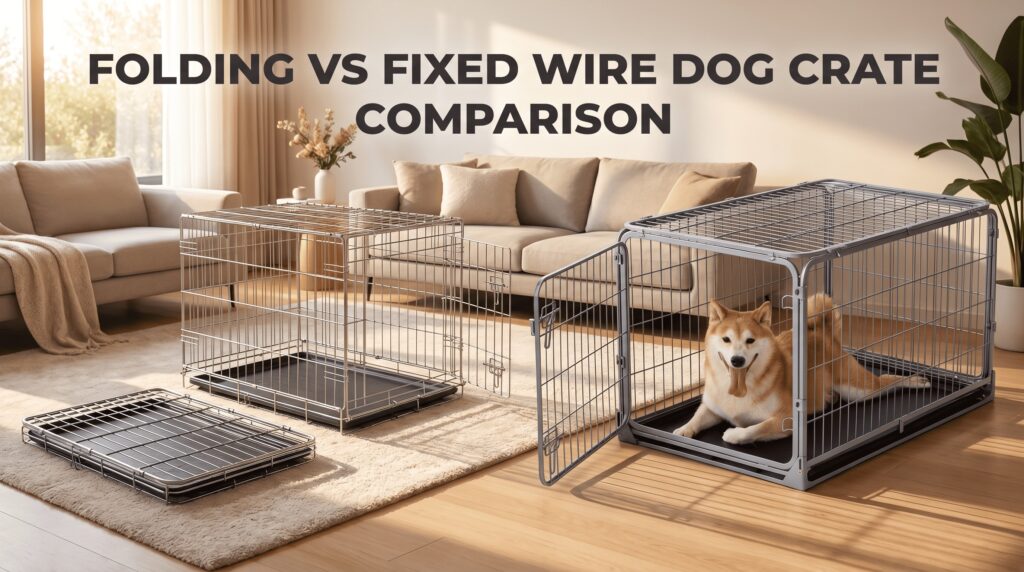
The reality: both folding and fixed crates ship flat. The difference isn’t in how they’re packed — it’s in how the end user sets them up. Folding crates have wire clips (jia ma kou) that let the end user unfold the crate in 10 seconds. Fixed crates ship as separate wire panels that the end user must assemble with screws (15-20 minutes).
In this guide, we’ll break down the real mechanical differences, failure rate data from our production floor, assembly time impact, and which type B2B buyers in different markets actually prefer.
Clearing the Confusion: What “Folding” and “Fixed” Actually Mean
There’s a lot of muddy terminology in the market. Let’s define exactly what we mean:
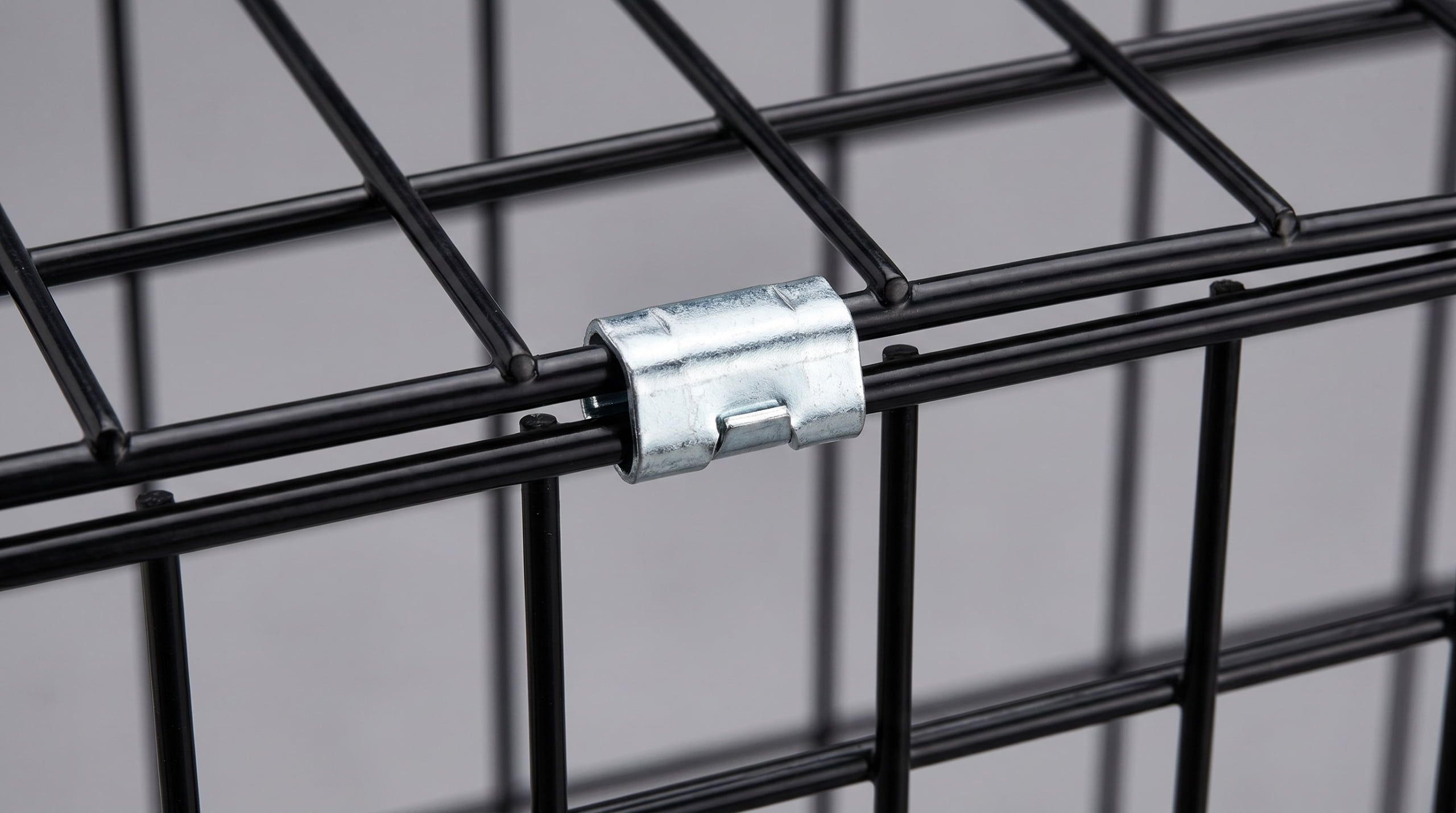
Folding: The crate uses wire clips (jia ma kou) — small metal fasteners that fix two adjacent horizontal frame wires together, allowing the wires to rotate relative to each other so the crate folds flat in seconds. No tools required.
Fixed : No hinges. The crate ships disassembled — wire panels are separate. The end user must attach panels with screws (provided). Assembly time: 15-20 minutes.
Here’s what the factory floor data actually shows: The folding mechanism (wire clips) adds $0.30-0.50 to the FOB cost per corner — so $1.20-2.00 total for a 4-door crate. Fixed crates save this cost, but the tradeoff is a 15-20 minute assembly time that many end users hate.
An important clarification: both types ship flat. “Fixed” doesn’t mean “pre-assembled and bulky.” Both fold (or disassemble) for shipping. The difference is in how the end user sets it up.
Folding Mechanism: How It Works and How Long It Lasts
The folding action is enabled by wire clips (jia ma kou) — small metal fasteners that fix two adjacent horizontal frame wires together. Because the two wires can rotate relative to each other at the clip, the entire panel folds flat. This is a completely different part from the Grid & Tray Locking Clip (the U-shaped metal piece at the crate base).
What We Track on the Production Line
| Specification | Folding (Wire Clips) | Fixed (Screw Assembly) |
|---|---|---|
| Mechanism type | Wire clips (jia ma kou) | Screw + bolt |
| End-user setup time | 10 seconds | 15-20 minutes |
| Tools required by end user | None | Phillips screwdriver (included) |
| Mechanism lifespan (frequent folding) | 1-2 years | N/A (no mechanism) |
| Failure rate (per 1,000 units) | 10-20 units (1-2%) | 0 units (mechanism-related) |
The 1-2 year lifespan for wire clips assumes the end user folds and unfolds the crate regularly (e.g., for car travel, storage). If the crate stays set up permanently, the clips can last 3-5 years.
Pitfall: Assuming Folding Means “Fragile”
Many B2B buyers reject folding crates because they assume the hinges are the weak point. Our data says: yes, the failure rate is 1-2% higher — but 98-99% of units have zero mechanism issues. The bigger issue is usually that buyers overestimate how often end users actually fold the crate. If it sits in one spot for 2 years, the latch lifespan is irrelevant.
Fixed Assembly: What 15-20 Minutes Actually Looks Like
Fixed crates ship with the wire panels separate. The end user needs to:
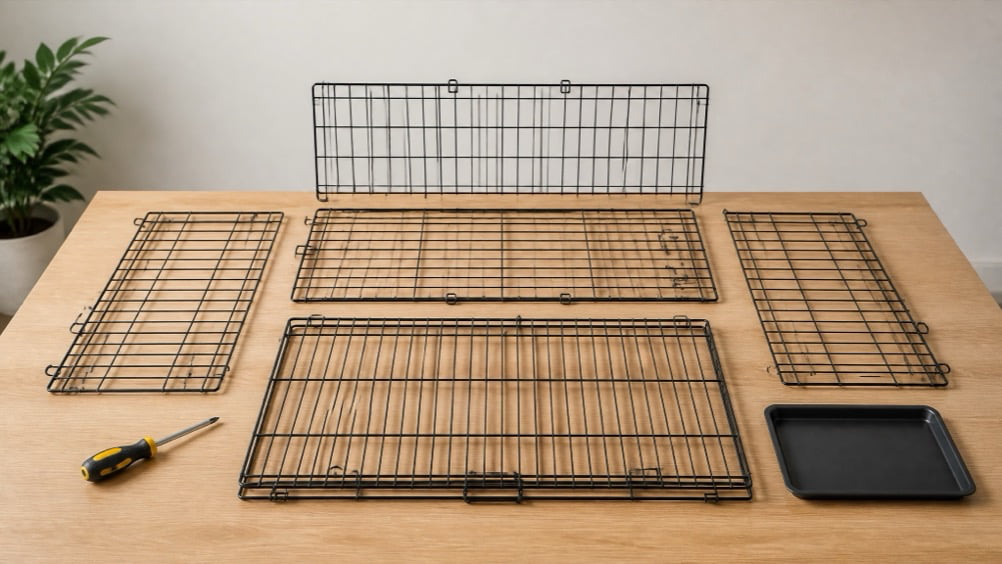
- Lay out all panels (front, back, left, right, top)
- Attach side panels to the front panel with screws
- Attach the back panel
- Attach the top panel
- Check that all screws are tight
Assembly error rate at the end-user level: 1-2%. The most common mistakes: attaching the door backwards, or using the wrong screw length for the top panel.
From a B2B perspective, the assembly friction creates two problems:
- Higher return rate on Amazon: Products requiring assembly have a 3-5% higher return rate than foldable products (Amazon data across pet furniture category)
- Lower review scores: “Difficult to assemble” is the #2 negative review reason for fixed crates (after “too small for my dog”)
What we usually check first with new clients: Are you selling through Amazon FBA, or through pet specialty retailers? FBA buyers are more sensitive to assembly friction. Pet specialty staff can demo the assembly in-store, which reduces returns.
Failure Rate Comparison: The Real Numbers
We track failure rates by mechanism type across our production. Here’s the breakdown:

| Failure Type | Folding Crate (per 1,000) | Fixed Crate (per 1,000) | Root Cause |
|---|---|---|---|
| Mechanism / hinge failure | 10-20 units | 0 units | Wire clips wears out after repeated folding |
| Screw loosening | Not applicable | 6-12 units | End user doesn’t retighten screws periodically |
| Wire frame bending | 2-4 units | 2-4 units | Large dog impact — same for both types |
| Coating chipping | 2-4 units | 2-4 units | Shipping damage — same for both types |
| Total failure rate | 14-28 / 1,000 (1.4-2.8%) | 10-20 / 1,000 (1-2%) | Folding has slightly higher failure rate |
The difference is small enough that it shouldn’t be the primary decision driver for most B2B buyers. The bigger question is end-user experience.
Market Preference: What B2B Buyers Actually Order
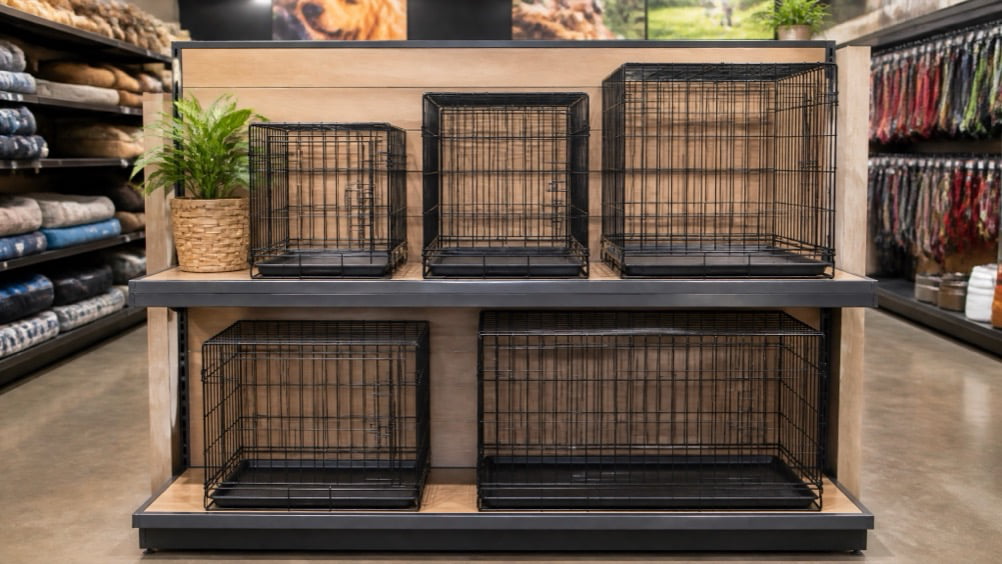
We track order volume by crate type across our client base (120,000+ units/year). The data aligns with global wire dog crate market trends — US and European buyers show consistent preferences.
| Buyer Type | Prefers Folding | Prefers Fixed | Why |
|---|---|---|---|
| Amazon FBA sellers | 78% | 22% | End users hate assembly; folding = better reviews |
| Pet specialty retailers | 55% | 45% | Mixed; in-store demo reduces assembly friction |
| Wholesale distributors | 60% | 40% | Depends on their end-customer mix |
| Private label brands | 70% | 30% | Folding = premium positioning (“easy setup”) |
The clear pattern: if the end user is an individual pet owner, folding wins. If the crate is for a professional setting (vet clinic, boarding facility) where it gets assembled once and stays that way, fixed is acceptable.
What we see at the factory: Clients targeting the US Amazon market almost always choose folding. The 1-2% higher failure rate is far outweighed by the review benefit — folding crates average 4.3 stars, fixed crates average 3.9 stars on Amazon (based on our clients’ listing data).
Cost Analysis: Is Folding More Expensive?
Short answer: almost no price difference at FOB level.
The wire clips cost $0.30-0.50 each, so $1.20-2.00 total per crate. But this cost is offset by lower assembly labor at the factory — folding crates are pre-assembled (the latches are installed at the factory), while fixed crates require the factory to pack panels separately (slightly lower labor cost).
Net result: FOB prices are within $0.50-1.00 of each other for the same size crate.
There is no meaningful price premium for folding crates from a manufacturing standpoint. If you’re seeing a large price gap from a supplier, it may be due to other factors (wire gauge, coating quality, etc.) rather than the folding mechanism itself.
FAQ: Folding vs Fixed Wire Dog Crate
How long does the folding mechanism last?
1-2 years with frequent folding (daily or weekly). If the crate stays set up permanently, the wire clips can last 3-5 years. The failure mode is usually the latch becoming loose, not breaking completely.
Is 15-20 minute assembly a deal-breaker for end users?
For Amazon FBA sales, yes — assembly friction increases return rates by 3-5%. For pet specialty retail, no — store staff can demo the assembly. It depends entirely on your sales channel.
Which type has fewer quality complaints?
Fixed crates have a slightly lower mechanism-related failure rate (1-2% vs 1.4-2.8%). But the real-world difference is small. The bigger quality driver is wire gauge and coating quality, which apply equally to both types.
Do Amazon customers prefer folding crates?
Yes. 78% of our Amazon FBA clients choose folding crates. The main reason: folding crates average 4.3 stars on Amazon vs 3.9 stars for fixed crates, driven by “easy setup” positive reviews and “hard to assemble” negative reviews respectively.
Is folding more expensive at FOB level?
No. The wire clip adds $1.20-2.00 per crate, but this is offset by lower factory labor. FOB prices are within $0.50-1.00 of each other. Any large price gap is likely due to other factors (wire gauge, coating), not the folding mechanism.
Related Reading
For more product comparison guides, explore our related articles:
- Wire vs Wood-Combo Dog Crate: Which Is Right for Your Market? — Compare wire crates with furniture-style wood-combo crates.
- Wire vs Plastic Dog Crate: Complete B2B Comparison — Which material is right for your market?
- Dog Crate Divider Panel: Is It Worth the Extra Cost? — Analyze the ROI of divider panels.
External references: ASTM International | US FDA