Wire vs Wood-Combo Dog Crate: Which Is Right for Your Market?
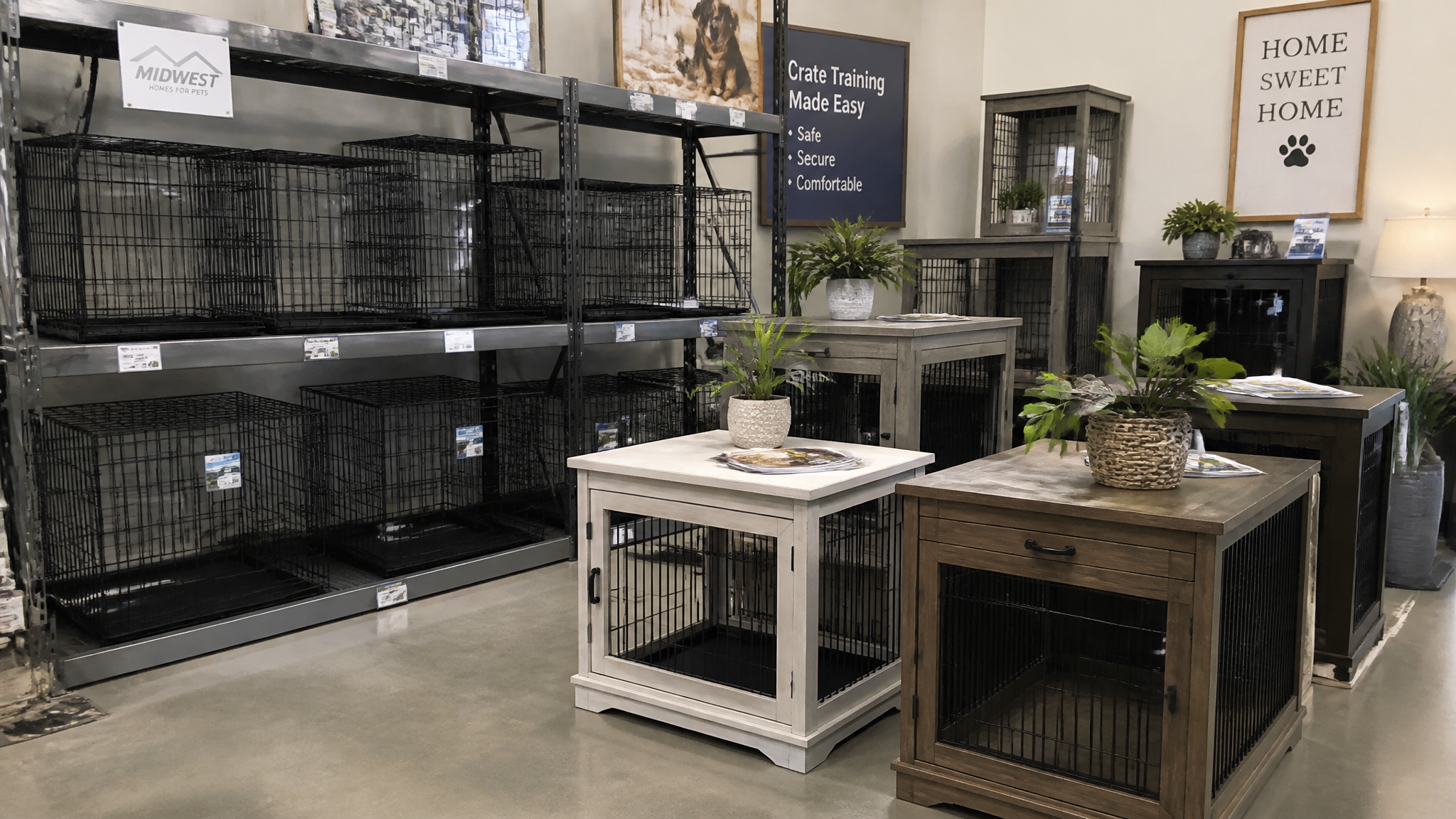
Searches for “dog crate furniture” on Google have grown 40% year-over-year since 2022. The driver: pet owners in the US and Europe want crates that don’t look like cages — they want furniture that blends into a living room.
At our Ningbo facility, Wood-Combo crates (wire body + wooden top/base) have grown from 5% to 12% of our production volume in two years. But this product isn’t right for every importer — and the 80% higher FOB cost is only part of the reason.
In this guide, we’ll break down the real cost difference, market preference data, packaging impact, and profit margin analysis — so you can decide whether Wood-Combo belongs in your product line.
What Is a Wood-Combo Dog Crate?
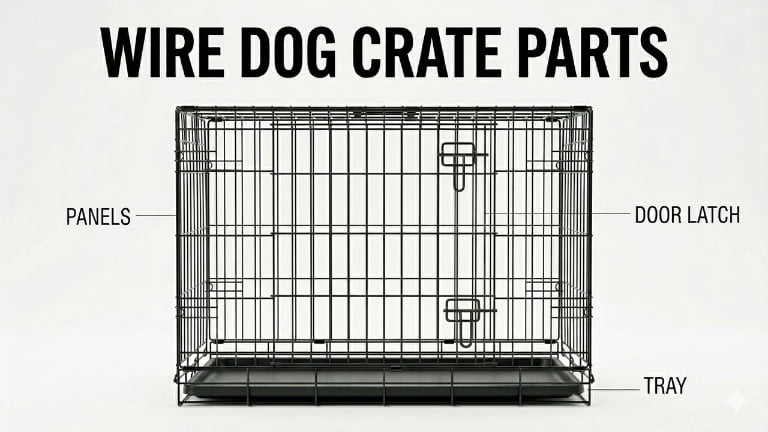
A Wood-Combo dog crate combines a wire mesh body (for ventilation and visibility) with a wooden top and base panel (for furniture-like appearance). The wire part is essentially the same as a standard crate — same wire gauge, same door design, same powder coating.
The difference lies in the top and base panels:
- Top panel: MDF board with wood veneer or laminate finish, reinforced with metal frame
- Base panel: MDF board or plywood, sometimes with plastic feet for floor protection
- Connection method: Metal brackets welded to the wire frame, screws to secure wooden panels
The result is a crate that looks like furniture, not a cage. It can double as a side table, nightstand, or TV stand — which is exactly why it’s gaining traction in the US and European markets.
What we see at the factory: Wood-Combo accounts for about 12% of our total production volume, up from 5% two years ago. The growth is driven almost entirely by US and European clients who target home decor-conscious pet owners.
Cost Comparison: Wire vs Wood-Combo (Manufacturing + FOB)
Let’s talk numbers. The cost difference isn’t just “wood is more expensive than wire” — it’s a combination of materials, labor, and quality control.
Material Cost Breakdown
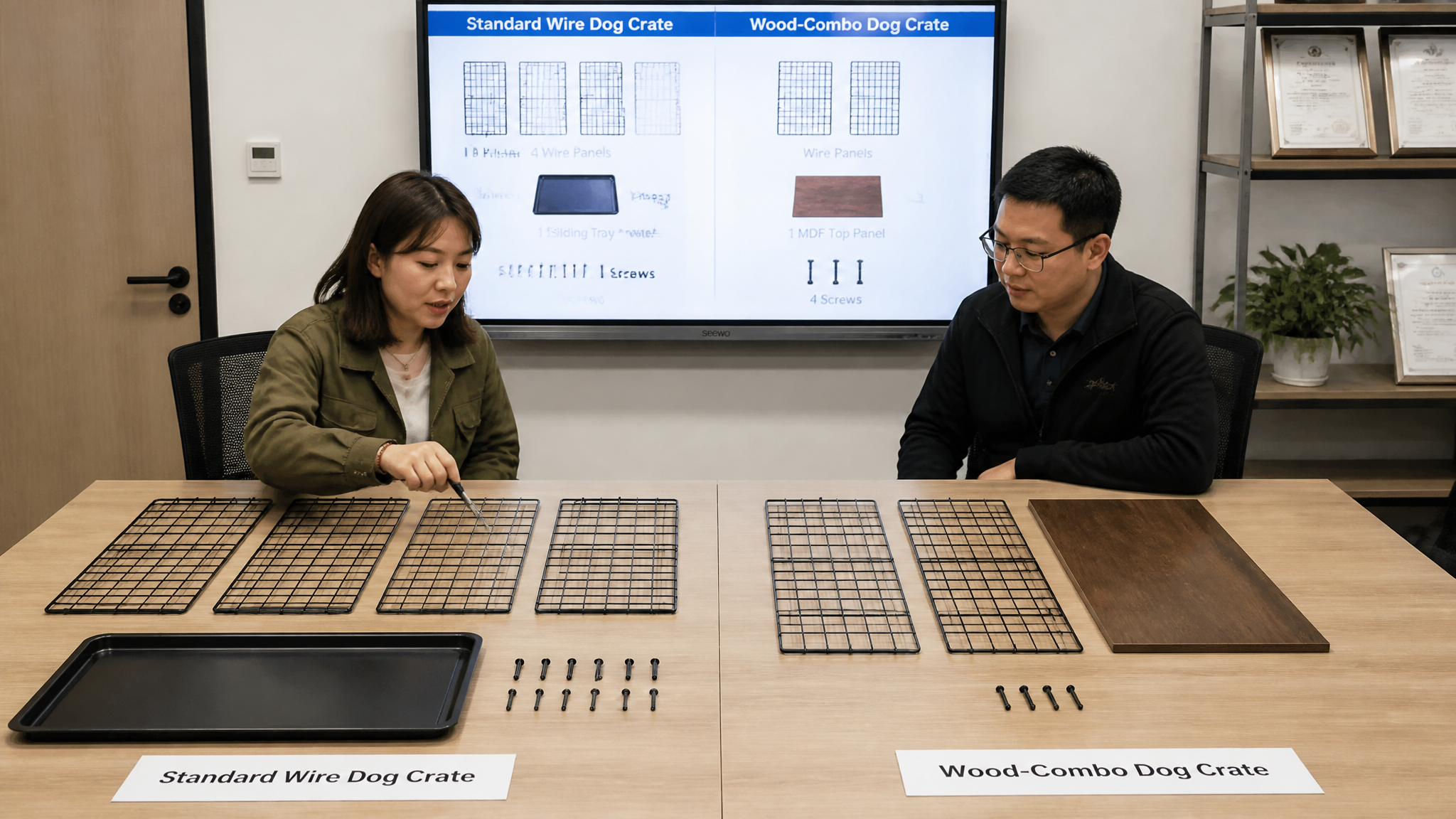
| Component | Standard Wire Crate (M size) | Wood-Combo (M size) | Cost Increase |
|---|---|---|---|
| Wire mesh body | $8.50 | $8.50 (same) | 0% |
| Top panel (MDF + veneer) | N/A | $6.20 | New cost |
| Base panel (MDF or plywood) | $1.80 (wire base) | $4.50 | +150% |
| Metal brackets & hardware | N/A | $1.10 | New cost |
| Assembly labor (additional) | $2.50 | $4.20 | +68% |
| Total FOB (ex-factory) | $15.80 | $28.50 | +80% |
The numbers above are based on our actual production data for an M-size crate (36″ x 24″ x 27″). Here’s what drives the 80% cost increase:
- MDF panels: $6.20 for top + $4.50 for base = $10.70, compared to $1.80 for a wire base alone
- Additional labor: Wood-Combo requires 10-12 minutes of additional assembly time per unit (attaching brackets, securing panels)
- Hardware: Metal brackets, screws, plastic feet — small parts that add up
- Quality control: Wood panels require separate inspection (flatness, veneer defects, screw hole alignment)
What buyers often miss: The wire body of a Wood-Combo is often the same as our standard crate — same wire gauge, same door, same coating. You’re not paying for “better wire” — you’re paying for the wood.
Market Preference: Why US & EU Buyers Choose Wood-Combo
The 80% cost increase only makes sense if the market accepts it. Here’s what our order data shows:
Regional Preference
| Market | Wire Crate Preference | Wood-Combo Preference | Key Driver |
|---|---|---|---|
| United States | 65% | 35% | Home decor trend, “crate as furniture” |
| Germany | 70% | 30% | Practicality focus |
| UK | 60% | 40% | Small living spaces, multi-function furniture |
| Australia | 75% | 25% | Backyard-friendly culture |
| Japan | 80% | 20% | Space constraints, simplicity |
The US market shows the strongest preference for Wood-Combo (35% of orders), driven by the “pet furniture” trend — crate as a piece of home decor, not a cage to hide in the garage.
Customer Segment
Within the US market, Wood-Combo buyers cluster in specific segments:
- Amazon FBA sellers: List Wood-Combo as “Furniture-Style Dog Crate”, charge $120-180 vs $50-80 for wire
- Pet specialty retailers: Position Wood-Combo in the “Premium” section, target apartment dwellers
- Private label brands: Use Wood-Combo to differentiate from generic wire crates
Here’s what the numbers actually show: Clients who add Wood-Combo to their product line typically see 40-50% higher margins per unit, even though the sales volume is 30-40% lower than wire crates. It’s a classic “low volume, high margin” play.
Packaging & Shipping: Volume Impact of Wood-Combo
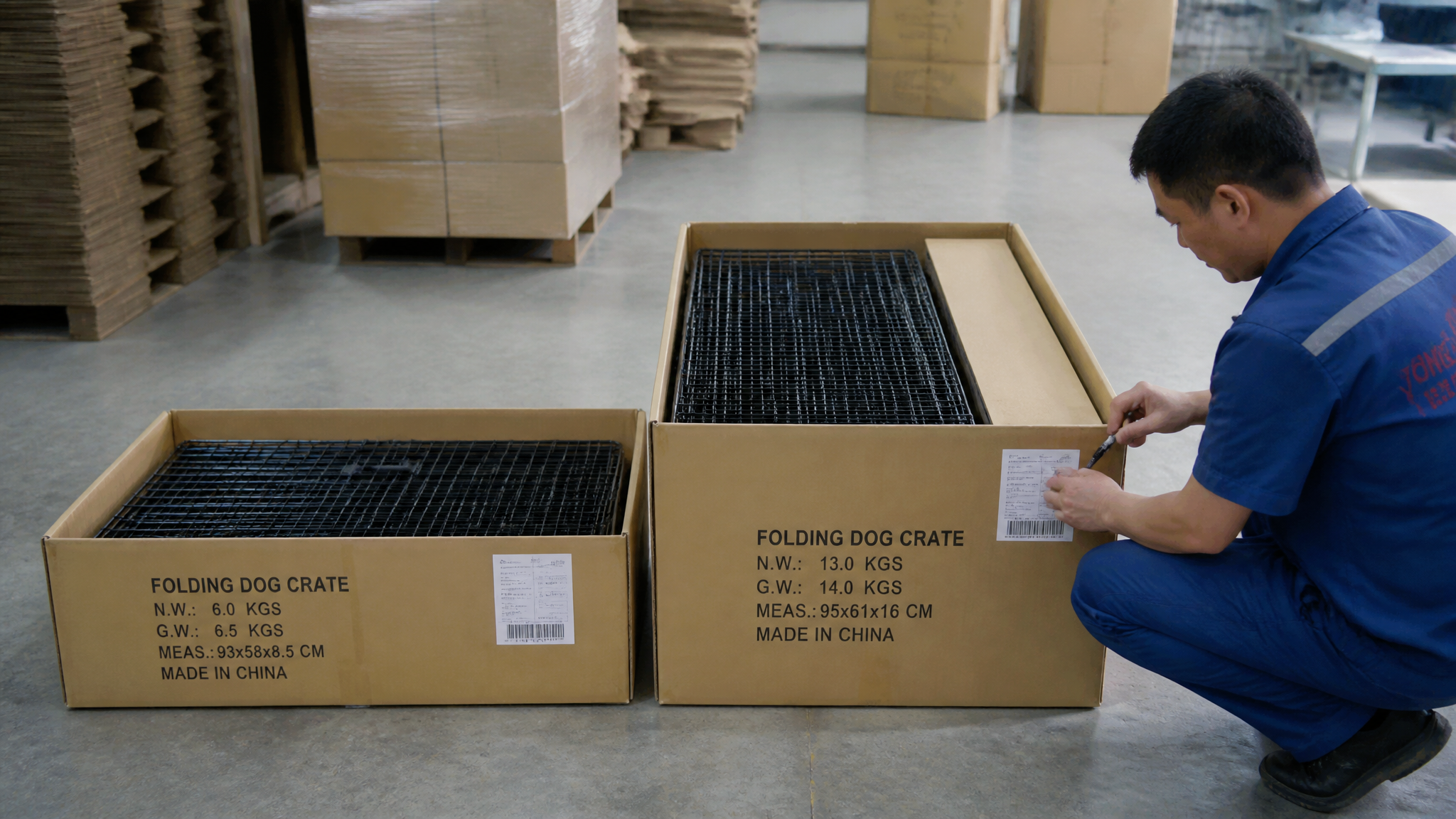
Higher FOB price isn’t the only cost. Wood-Combo also increases packaging volume — which means higher ocean freight costs.
Packaging Comparison (M Size, 36″ x 24″ x 27″)
| Specification | Standard Wire Crate | Wood-Combo | Difference |
|---|---|---|---|
| Packaging dimensions (L x W x H) | 38″ x 26″ x 4″ | 38″ x 26″ x 5.5″ | +1.5″ in height |
| Packaging volume (CBM/unit) | 0.063 | 0.082 | +30% |
| Units per 40HQ container | 1,050 | 810 | -240 units (-23%) |
| Ocean freight cost per unit (US West Coast) | $2.10 | $2.73 | +30% |
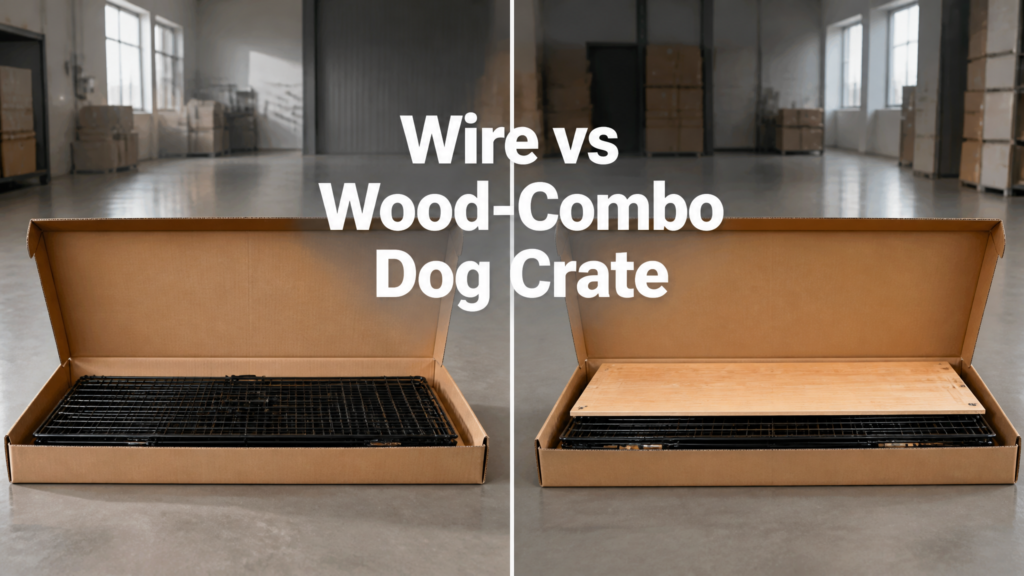
The 30% packaging volume increase comes from the wooden panels — they can’t be nested as tightly as folded wire. The MDF top panel is 0.6″ thick, and even though it’s placed flat inside the package, it adds 1.5″ to the total height. This directly increases landed cost per unit, not just FOB price.
Common Pitfalls When Choosing Between Wire and Wood-Combo
- Pitfall 1: Only calculating FOB price difference — Forgetting to factor in the 30% ocean freight increase, which adds $0.63/unit to US West Coast shipments.
- Pitfall 2: Underestimating customer assembly friction — Wood-Combo requires 15-20 minutes of assembly time, vs 2 minutes for wire. This increases Amazon return rates by 3-5%.
- Pitfall 3: Ignoring humidity complaints — MDF panels in humid markets (Florida, Southeast Asia) have a 12% higher return rate due to warping.
Common Complaints: What Can Go Wrong with Wood-Combo?
Wood-Combo isn’t without problems. Based on our after-sales data from the past 18 months, here are the top 3 complaint categories:

1. Wood Panel Warping (28% of complaints)
MDF is sensitive to humidity. If the crate is placed in a damp area (basement, near a window with condensation), the wooden top can warp by 2-5mm over 6-12 months.
Factory solution: We’ve switched to multi-layer plywood (3-ply or 5-ply) for clients targeting humid markets (Southeast US, coastal regions). It costs $0.80 more per panel but reduces warping complaints by 85%.
2. Veneer Peeling (19% of complaints)
Low-quality veneer or laminate can start peeling at the edges after 12-18 months, especially if the dog chews on the wooden edges.
Factory solution: Use hot-press laminate (not cold glue) and add a clear PU edge banding to seal the edges. This adds $0.50 to the cost but extends veneer life to 3-5 years.
3. Screw Hole Stripping (15% of complaints)
The metal brackets are secured to the wooden panel with screws. After 3-5 assembly/disassembly cycles, the screw holes in MDF can strip, making the bracket loose.
Factory solution: Add metal inserts (threaded inserts pressed into the MDF) instead of direct screws. This allows 20+ assembly cycles without stripping. Cost increase: $1.20 per panel.
What we usually check first with new Wood-Combo clients: Which markets are you targeting, and what’s the typical indoor humidity level? If it’s Arizona or Nevada, warping isn’t a concern. If it’s Florida or Southeast Asia, we strongly recommend the plywood upgrade.
Profit Margin Analysis: Which Has Higher ROI?
Let’s calculate the return on investment (ROI) for a typical US Amazon FBA seller, comparing wire crate vs Wood-Combo (M size).
Assumptions
- FOB price: Wire $15.80, Wood-Combo $28.50
- Ocean freight: Wire $2.10, Wood-Combo $2.73
- Amazon FBA fee: Wire $12.50, Wood-Combo $14.20 (slightly higher due to larger package)
- Amazon selling price: Wire $65.00, Wood-Combo $135.00
- Monthly sales volume: Wire 120 units, Wood-Combo 75 units (lower volume, higher margin)
Margin Calculation (Per Unit)
| Item | Wire Crate | Wood-Combo | Difference |
|---|---|---|---|
| Amazon selling price | $65.00 | $135.00 | +$70.00 |
| FOB + freight | $17.90 | $31.23 | +$13.33 |
| Amazon FBA fee | $12.50 | $14.20 | +$1.70 |
| Profit per unit | $34.60 | $89.57 | +$54.97 (+159%) |
| Monthly volume | 120 units | 75 units | -45 units (-38%) |
| Monthly profit | $4,152 | $6,718 | +$2,566 (+62%) |
The calculation shows: even though Wood-Combo sells at lower volume (75 vs 120 units/month), the higher profit per unit ($89.57 vs $34.60) more than compensates. Monthly profit is 62% higher with Wood-Combo.
FAQ: Wire vs Wood-Combo Dog Crate
Is Wood-Combo dog crate more profitable than wire?
Yes, for most B2B buyers. While the FOB price is 80% higher, the retail price premium is typically 100-120%, resulting in 40-50% higher profit margins. However, sales volume is usually 30-40% lower.
How much more expensive is Wood-Combo FOB price?
Based on our production data, Wood-Combo is 80% more expensive than standard wire crates. For an M-size crate, the FOB price increases from $15.80 to $28.50. The increase comes from MDF panels, additional hardware, and longer assembly time.
Does Wood-Combo really save space as a side table?
Yes. The flat wooden top provides a stable surface for lamps, books, or decorative items. In our client’s Amazon listings, the top 3 positive reviews for Wood-Combo consistently mention “looks like furniture, not a cage.” However, the crate itself is heavier (M size: 28 lbs vs 22 lbs for wire), so it’s less portable.
What are the most common complaints about Wood-Combo?
The top 3 complaints from our after-sales data: (1) Wood panel warping in humid environments (28% of complaints), (2) Veneer peeling at edges (19%), (3) Screw holes stripping after multiple assemblies (15%). All three have factory-level solutions (plywood upgrade, PU edge banding, metal inserts) at additional cost.
Can I customize the wood color and finish?
Yes. MOQ is 500 units per color/finish. Popular options: (1) Walnut veneer (premium, +$3.50/unit), (2) White laminate (modern, +$2.80/unit), (3) Natural oak veneer (mid-range, +$3.00/unit). Custom RAL colors are available but require a 300-piece MOQ for the powder coating on the metal frame to match the wood finish.
Related Reading
For more product comparison guides, explore our related articles:
- Folding vs Fixed Wire Dog Crate: B2B Buyer’s Guide — Understand the real difference between folding and fixed crates.
- Wire vs Plastic Dog Crate: Complete B2B Comparison — Which material is right for your market?
- Dog Crate Divider Panel: Is It Worth the Extra Cost? — Analyze the ROI of divider panels.
External references: ASTM International | US FDA | EU Regulatory Updates