How Long Does Wire Dog Crate Shipping Take from Factory to Warehouse?
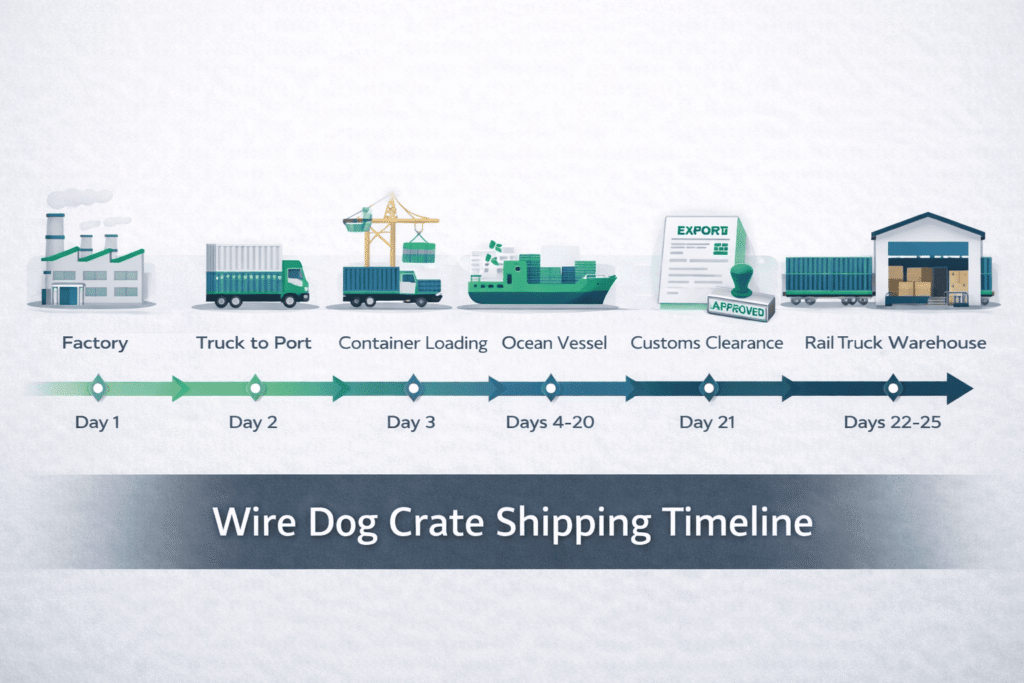
As a B2B buyer planning to import wire dog cages from China, understanding the complete shipping timeline is crucial for maintaining inventory levels and meeting customer demand. The typical wire dog cage shipping journey takes 30-45 days from factory production completion to warehouse delivery, encompassing multiple critical milestones across inland logistics, ocean freight, customs clearance, and domestic transportation. Without accurate timeline planning, you risk stockouts, delayed product launches, and missed sales opportunities during peak seasons.
By mapping out each shipping milestone and understanding potential delays, you can build buffer time into your planning, coordinate with suppliers more effectively, and ensure your wire dog cage shipments arrive when you need them. This comprehensive guide breaks down the complete shipping timeline into seven critical milestones, helping you anticipate bottlenecks and optimize your inventory management strategy.
Understanding the Wire Dog Cage Shipping Timeline
Timeline Overview
Why Dog Crate Shipping planning matters for inventory management cannot be overstated. Your ability to meet customer demand, maintain cash flow, and optimize warehouse operations depends on accurately predicting when your wire dog cage shipments will arrive. Stockouts result in lost sales and damaged customer relationships, while early deliveries tie up valuable working capital in excess inventory.
For B2B buyers, the key is understanding that wire dog cage shipping is not a simple point-to-point journey but rather a complex multi-stage process involving multiple stakeholders: Chinese factories, freight forwarders, shipping lines, customs brokers, trucking companies, and warehouse teams. Each stage presents unique challenges and potential delays that must be factored into your planning.
Milestone 1: Production Completion and Factory Preparation
Milestone 1: Factory Readiness
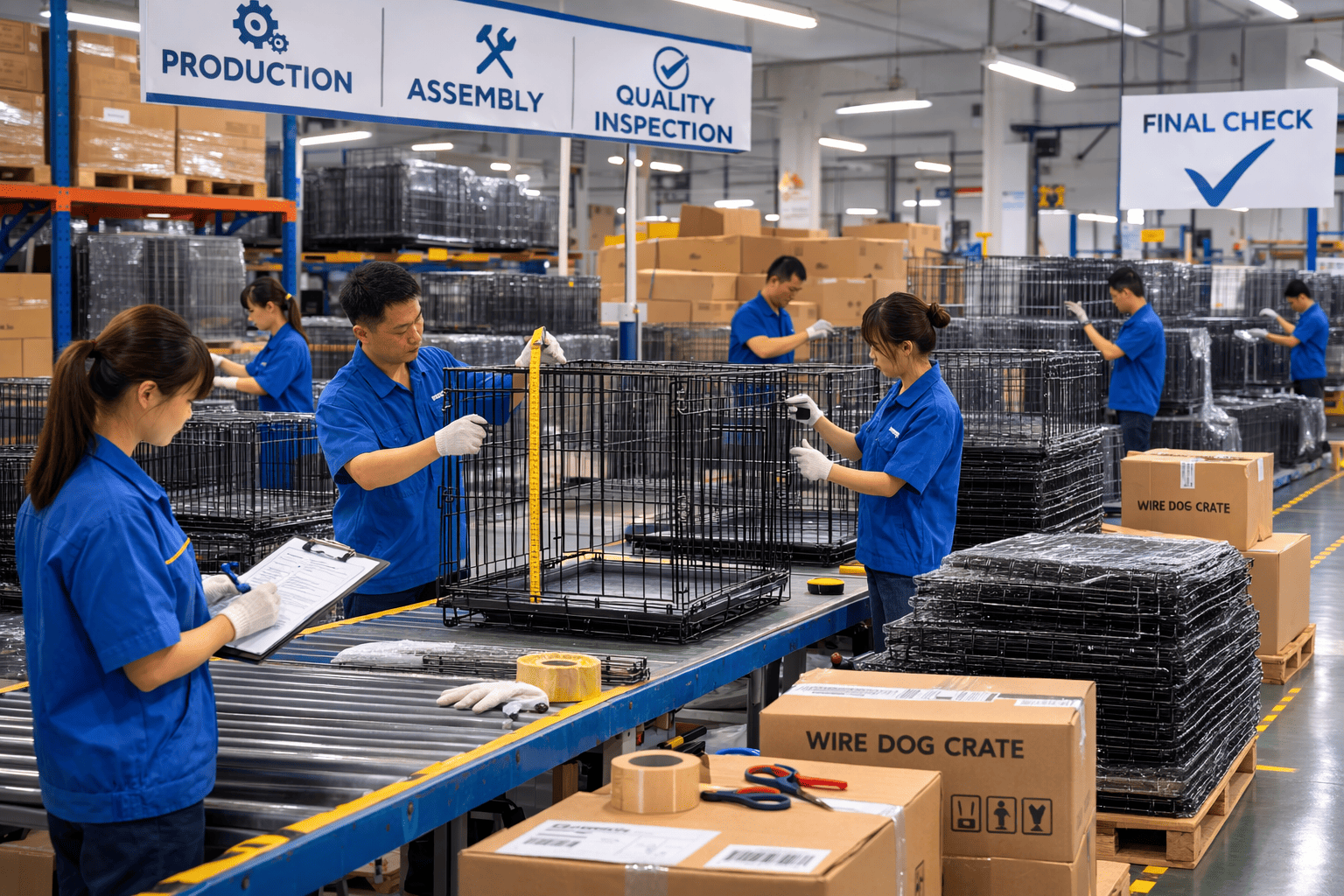
The wire dog cage shipping timeline officially begins when production is complete, but this milestone encompasses critical preparation activities that significantly impact downstream shipping efficiency. Final quality inspection before wire dog cage shipping ensures your shipment meets specifications and reduces the risk of rejections at destination ports or warehouse receiving.

During this phase, factory workers conduct comprehensive quality checks including dimensional accuracy, weld integrity, powder coating finish, and door mechanism functionality. Any units failing inspection are repaired or replaced before packaging begins. This quality gate prevents shipping delays caused by destination rejections or customer complaints later in the process.
Packaging and labeling for international transport follows quality inspection. Wire dog cages must be carefully packed to prevent damage during ocean freight and inland transit. This typically involves individual wrapping, stackable packaging design, and palletizing for efficient container loading. Each package receives shipping labels containing destination information, handling instructions, and tracking barcodes.
Coordination with your freight forwarder during this phase is essential. Your forwarder needs advance notice of shipment readiness to book space on vessels and arrange inland transportation. Providing accurate shipment details including weight, dimensions, and commodity information allows your forwarder to secure optimal shipping schedules and avoid last-minute booking delays.
Milestone 2: Inland Transit to Port of Loading
Milestone 2: Inland Logistics
Once packaged and ready for shipping, wire dog cages must be transported from the factory to the port of loading, typically Ningbo or Shanghai for wire dog cage manufacturers in China’s eastern coastal region. This inland transit phase typically requires 5-7 days and involves trucking logistics that can introduce timing uncertainties.
Trucking from factory to Ningbo/Shanghai port involves coordination between multiple parties. Your freight forwarder or the factory arranges container pickup from the port and delivery to the factory for loading. The container arrives at the factory, where workers load pallets of wire dog cages using forklifts or manual loading equipment. Once loaded, the container is sealed and returned to the port.
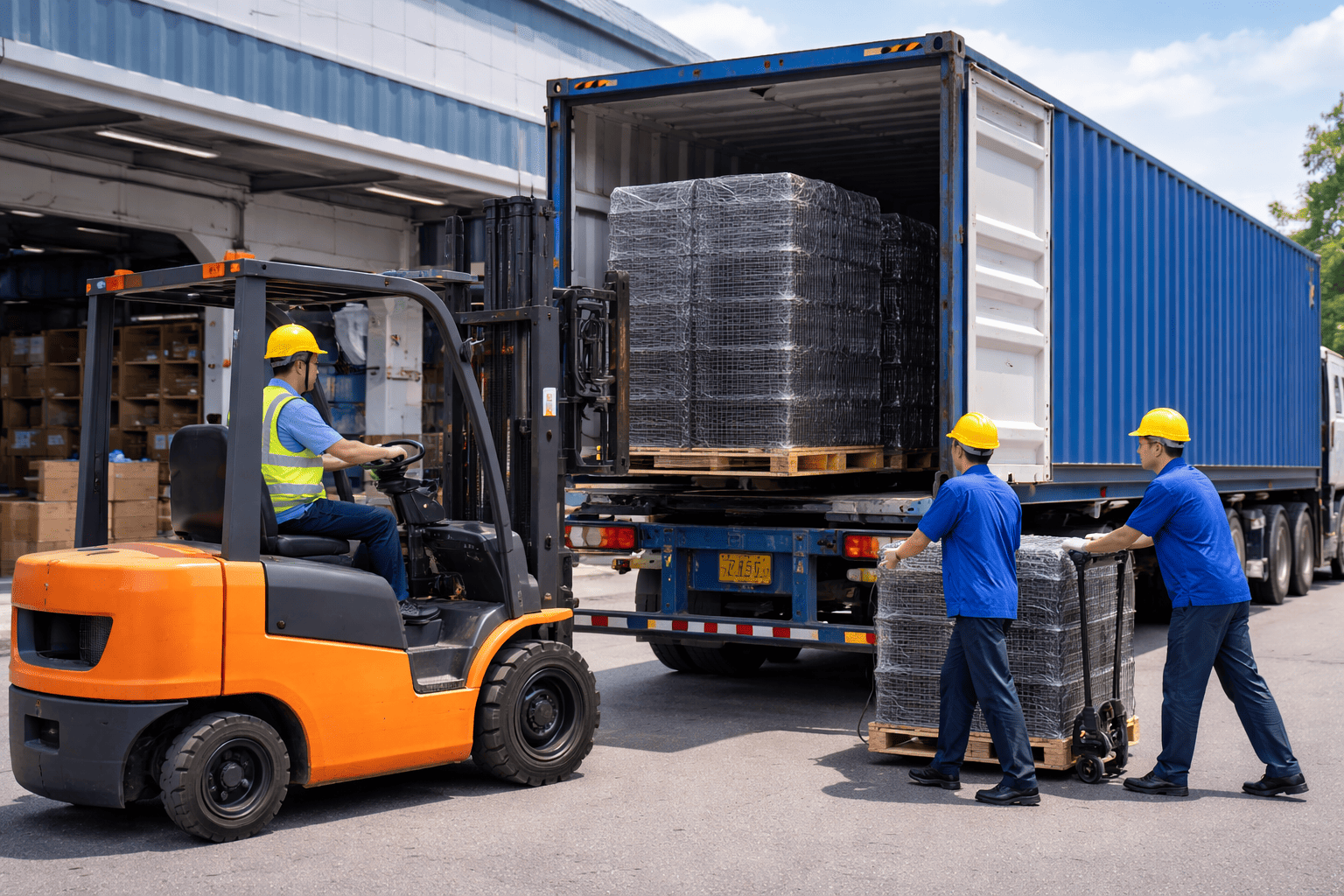
Container booking and CY closing date are critical timing considerations. The CY (Container Yard) closing date represents the last day you can deliver a loaded container to the port for a specific vessel sailing. Missing the CY closing date means your shipment rolls to the next sailing, adding 7-10 days to your wire dog cage shipping timeline. Experienced forwarders book containers well in advance and monitor CY dates closely to ensure on-time delivery.
Loading dog cages into 20ft or 40ft containers requires strategic planning. Most wire dog cage shipments use 40ft high-cube containers, which offer maximum cubic capacity. Efficient loading patterns, including stacking configurations and weight distribution, help maximize container utilization while ensuring safe transportation. Overloading a container can result in inspection delays or rejected loads at port facilities.
Milestone 3: Port Clearance and Customs Export
Milestone 3: Export Processing
After container delivery to the port, your wire dog cage shipment enters the port clearance and customs export phase. This stage typically requires 3-4 days and involves official procedures before your cargo can be loaded onto the vessel. While generally streamlined in major Chinese ports, export clearance can introduce unexpected delays.
China customs export declaration for wire dog cage export requires accurate documentation including commercial invoice, packing list, and export license if applicable. Your Chinese customs broker submits these documents electronically and physically to Chinese customs authorities. Customs verifies that the goods are properly declared for export and that all required export licenses and certifications are in place.

Container gate-in and terminal processing begins once export customs clearance is obtained. The container moves from the truck to the terminal’s container yard, where it undergoes terminal processing including documentation verification, physical inspection if selected, and assignment to a specific vessel. Terminal operations run on tight schedules, and containers must be delivered well before vessel cut-off times.
During this waiting period, your container sits in the terminal yard awaiting the scheduled vessel. While some ports offer expedited processing for containers arriving close to vessel departure times, delays are common during peak seasons when terminal capacity is stretched thin. Monitoring container status through your freight forwarder helps you track progress and identify potential issues early.
Milestone 4: Ocean Transit and Dog Cage Freight Duration
Milestone 4: Ocean Freight
The ocean transit phase represents the longest single segment of your wire dog cage shipping timeline, spanning 15-20 days depending on your destination port and chosen shipping route. During this period, your container travels aboard an ocean container vessel from China to the United States, crossing the Pacific Ocean and making scheduled port calls along the way.
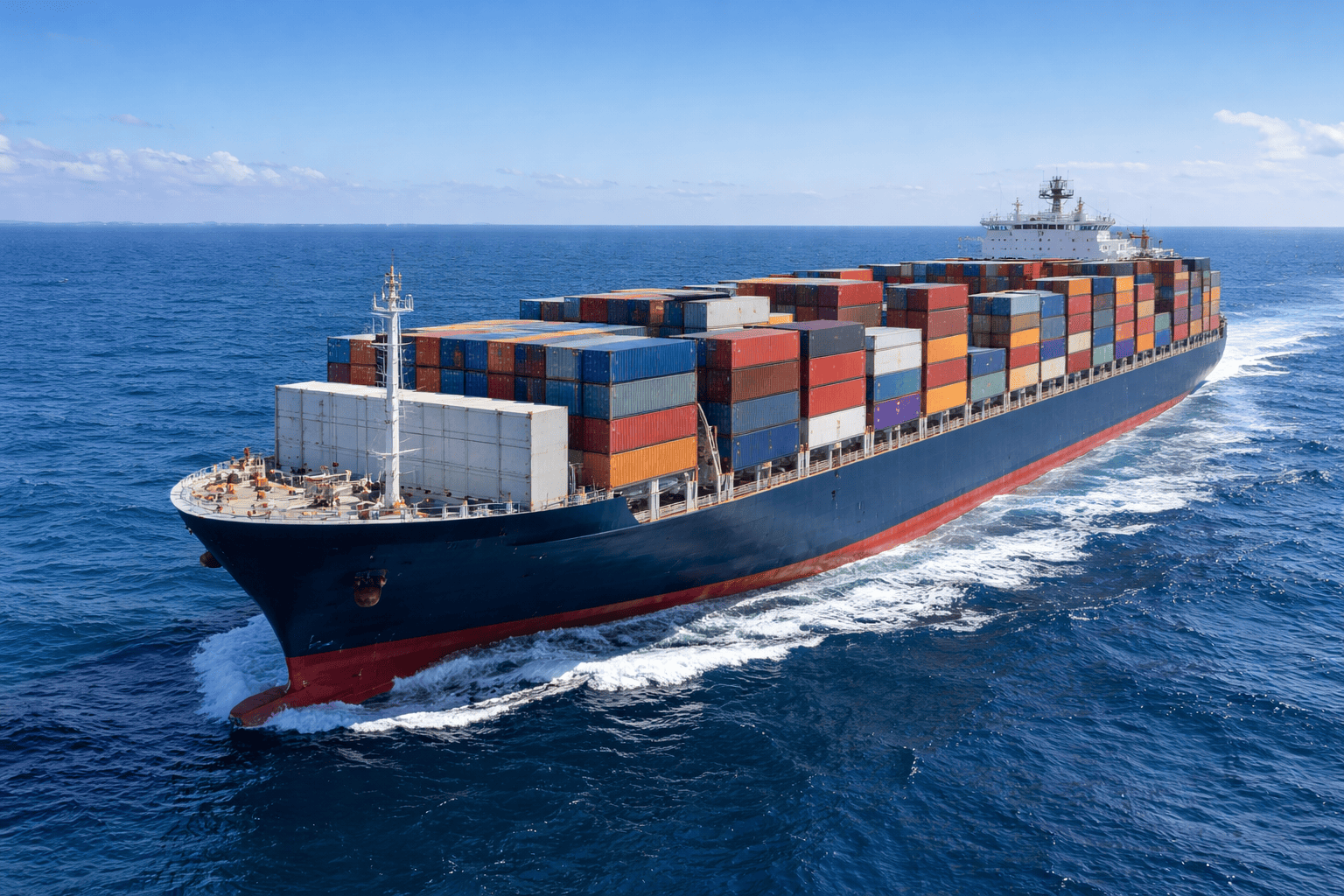
Transit time to US West Coast ports including Los Angeles, Long Beach, and Oakland typically ranges from 15-20 days from major Chinese ports. These routes are generally the fastest options for wire dog cage imports destined for western states or distribution to nationwide networks. West Coast ports also offer extensive rail connections for inland distribution.
| Destination Port | Typical Transit Time | Best For |
|---|---|---|
| Los Angeles/Long Beach | 15-18 days | California, Western US |
| Oakland | 16-20 days | Northern California, Pacific Northwest |
| New York/New Jersey | 28-35 days | Eastern US, Northeast distribution |
| Savannah | 30-38 days | Southeast US, East Coast distribution |
Transit time to US East Coast ports including New York/New Jersey, Savannah, and Charleston typically ranges from 28-38 days. While longer than West Coast options, East Coast ports may offer advantages for buyers in eastern states seeking reduced inland transportation costs and time. Your choice between West Coast and East Coast delivery should consider total landed cost and time to your warehouse.
During ocean transit, your container undergoes regular vessel tracking updates through the shipping line’s tracking system. Your freight forwarder monitors the vessel’s progress and provides regular status updates. While ocean freight is generally reliable, weather events, mechanical issues, or port congestion at intermediate stops can extend transit time by 2-5 days in rare cases.
Milestone 5: Port of Discharge and Import Customs
Milestone 5: Import Clearance
Upon arrival at the US port, your wire dog cage shipment enters the import customs clearance phase, which typically requires 3-5 days depending on port workload and inspection requirements. This critical stage determines whether your cargo can be released from the port and proceed to inland transportation.
Container unloading at US port occurs within 24-48 hours of vessel arrival, depending on port capacity and vessel priority. Stevedores unload containers using cranes and move them to the terminal yard. Your container receives a gate-in date and becomes available for pickup once customs clearance is obtained. During high-volume periods, unloading delays of 1-2 days can occur.

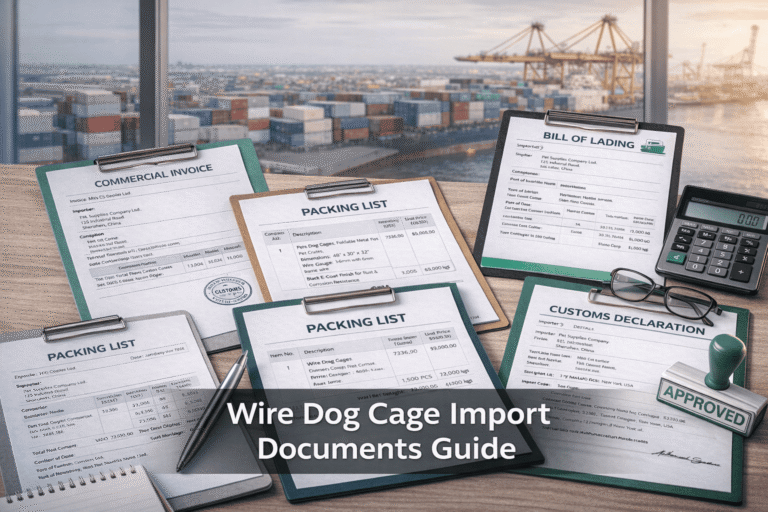
US customs clearance for dog crate import involves submitting import documentation including commercial invoice, packing list, bill of lading, and tariff classification to US Customs and Border Protection (CBP). Your customs broker prepares and submits these documents electronically through the Automated Commercial Environment (ACE) system. CBP reviews the documentation and may select your shipment for physical examination.
Duty and tax assessment follows documentation review. Based on the tariff classification (HS code) for wire dog cages, CBP determines applicable duty rates and calculates duties owed. Your broker pays these duties on your behalf and invoices you for payment. Duty rates for metal dog cages typically range from 0-5% depending on country of origin and trade agreements. Accurate classification is critical to avoid penalties and delays.
Milestone 6: Inland Wire Cage Transportation to Warehouse
Milestone 6: Domestic Transport
After customs clearance and duty payment, your wire dog cage shipment moves from the port to your warehouse through inland transportation. This phase typically requires 3-5 days depending on distance, mode of transport, and weather conditions. For West Coast ports serving western states, trucking is often the fastest option. For East Coast destinations or inland facilities, rail may offer cost advantages.
Rail or truck transport from port depends on your location and cost-time preferences. Trucking offers flexibility and faster transit times for distances under 500 miles from the port. Rail transport provides significant cost savings for longer distances but requires additional handling at rail terminals and extends transit time. Your freight forwarder can help you evaluate total costs including drayage, linehaul, and final mile delivery.
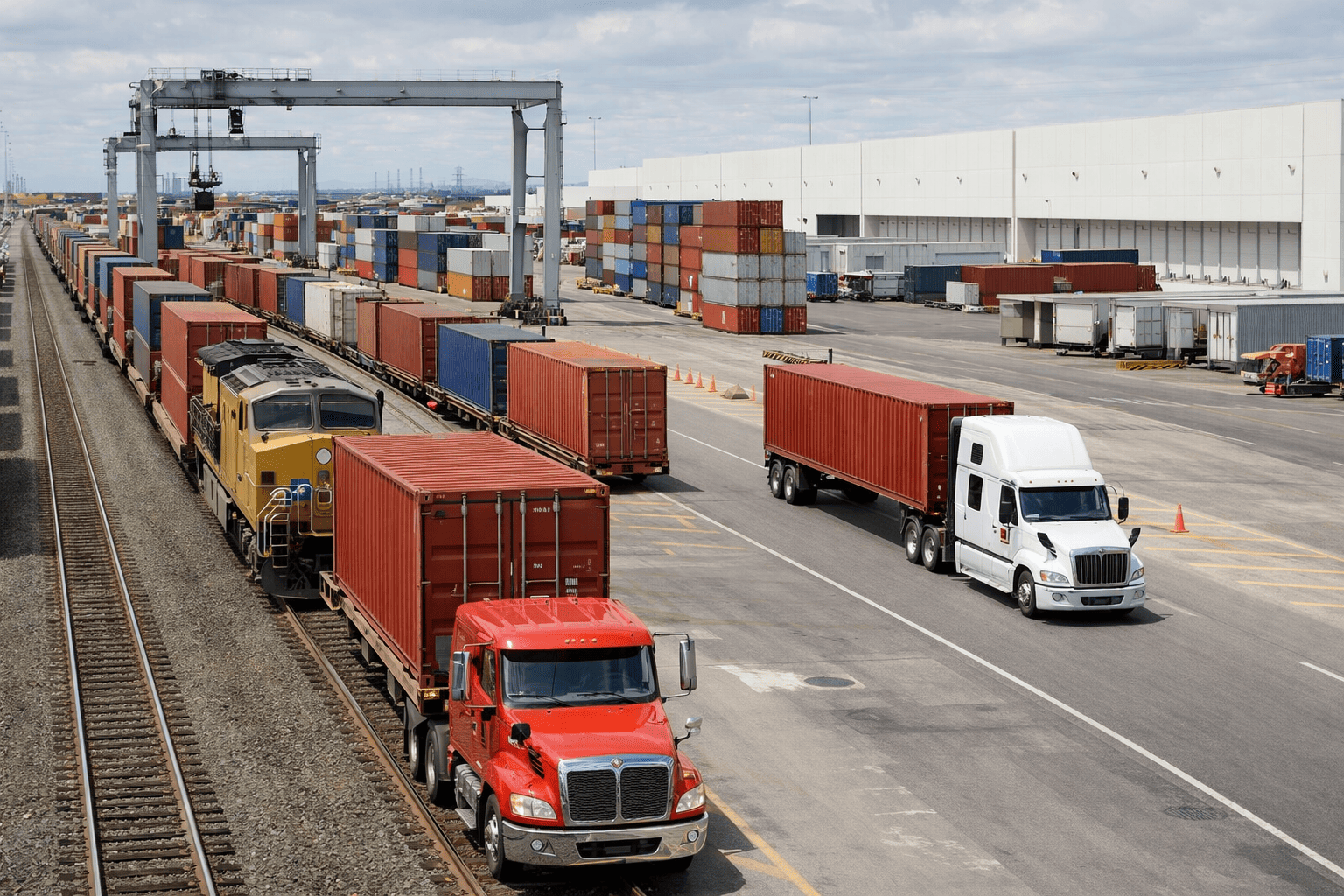
Final mile delivery coordination involves scheduling with your warehouse team to ensure availability for container unloading. Some facilities require appointment systems, while others accept deliveries during specific windows. Coordination prevents delays caused by warehouse unavailability or congestion. Advance communication with your carrier and warehouse team optimizes delivery timing.
During inland transport, your carrier provides tracking updates showing estimated arrival times. Monitoring these updates allows you to coordinate warehouse resources and notify your team of pending deliveries. Delays during this phase can occur due to weather events, road closures, or carrier scheduling issues, typically adding 1-3 days to transit time.
Milestone 7: Warehouse Unloading and Inventory Check
Milestone 7: Final Processing
The final milestone in your wire dog cage shipping timeline involves unloading the container at your warehouse and processing incoming inventory. This phase typically requires 2-3 days and represents the completion of your shipment journey from factory to warehouse. Efficient receiving processes help you get product into inventory and available for sale quickly.

Container unloading and quality inspection require careful coordination between your warehouse receiving team and the carrier. Once the container arrives at your dock, workers unload pallets using forklifts or pallet jacks. Simultaneously, quality inspectors examine incoming wire dog cages for shipping damage, manufacturing defects, or specification discrepancies. This receiving inspection identifies issues while the carrier is still present for potential claims.
Inventory counting and dog crate damage report documentation follows unloading and inspection. Receiving personnel verify quantities against the packing list and bill of lading, noting any discrepancies. Damaged or missing items are documented with photos and detailed descriptions. This documentation supports potential freight claims and supplier communications. Accurate receiving records ensure inventory accuracy in your systems.
After receiving inspection and documentation, inventory moves to storage locations and becomes available in your warehouse management system. The wire dog cage shipping timeline is complete, and your product is ready for order fulfillment. Total cycle time from factory production to warehouse availability typically spans 49-52 days under normal conditions, though delays at any milestone can extend this timeline.
Common Dog Cage Shipping Delays and How to Avoid Them
While the typical wire dog cage shipping timeline spans 30-45 days, various factors can extend this timeline significantly. Understanding common delay points and implementing preventive strategies helps you build realistic expectations and buffer time into your planning.
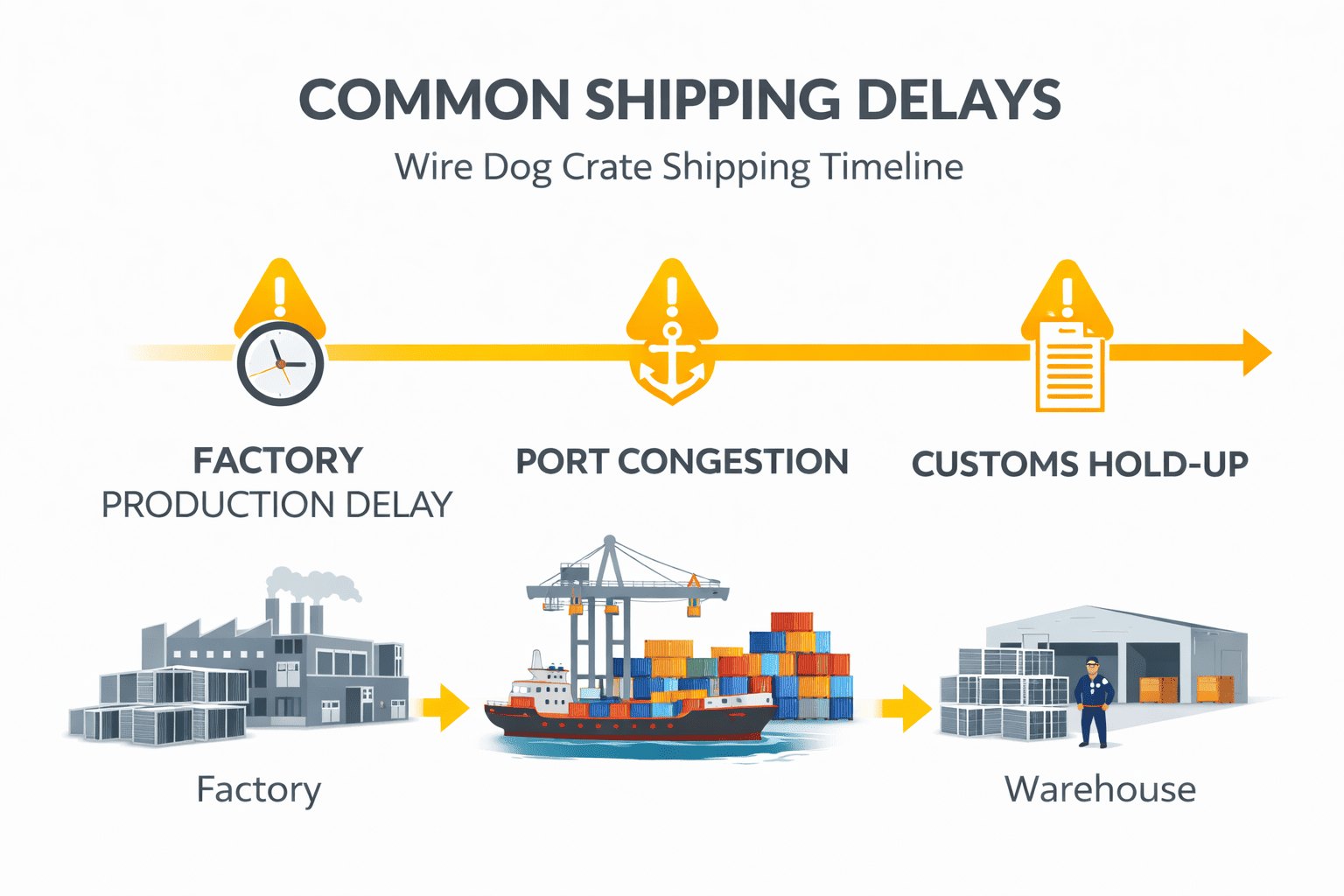
Production Delays
- Factory capacity constraints during peak seasons
- Raw material shortages affecting production schedules
- Quality control failures requiring rework or reproduction
- Mitigation: Order early, maintain supplier relationships, build quality gates early in production
Port Congestion and Peak Season Logistics Problems
- Container shortages at origin ports
- Vessel space constraints during high-demand periods
- Terminal labor issues reducing processing capacity
- Mitigation: Book shipping early, consider alternative ports, maintain buffer inventory
Customs Hold-Ups and Documentation Issues
- Incorrect tariff classification causing CBP inquiries
- Missing or incomplete documentation requiring resubmission
- Random examinations adding processing time
- Mitigation: Work with experienced customs brokers, verify documentation accuracy, build inspection buffers
Conclusion: Planning Your Wire Dog Cage Shipping Timeline
Understanding the complete wire dog cage shipping timeline from factory to warehouse enables effective inventory planning and supply chain management. The seven critical milestones—production completion, inland transit, port clearance, ocean freight, import customs, inland transportation, and warehouse processing—span 30-45 days under normal conditions but can extend significantly due to delays.
For B2B buyers importing wire dog cages, the key takeaways are:
For more comprehensive guidance on first-time wire dog cage importing, review our detailed 8-phase importing process guide. Understanding the complete import workflow, including documentation requirements covered in our import documentation checklist, provides the foundation for successful sourcing and logistics management. Protect your transactions with our 7-strategy payment protection framework to safeguard your import funds throughout the shipping process.
By mapping your wire dog cage shipping timeline and implementing proactive delay mitigation strategies, you can optimize inventory levels, improve customer service, and build a more resilient supply chain capable of navigating the complexities of international trade.
Frequently Asked Questions
Click questions below to view answers
How long does wire dog cage shipping typically take from China to the US?
The typical wire dog cage shipping timeline from China to the US takes 30-45 days from factory production completion to warehouse delivery. This includes 7 days for production preparation, 7 days for inland transit to port, 4 days for export clearance, 15-20 days for ocean transit to West Coast ports (28-38 days to East Coast), 4 days for US customs clearance, 4 days for inland transportation, and 3 days for warehouse processing.
What is the fastest shipping route for wire dog cages from China?
The fastest shipping route for wire dog cages from China is via West Coast ports like Los Angeles or Long Beach, which typically takes 15-18 days for ocean transit. Combined with inland transportation, total timeline to a West Coast warehouse can be as short as 25-30 days. East Coast routes via the Panama Canal take 28-35 days for ocean transit alone.
How can I avoid delays in my wire dog cage shipments?
To avoid delays, book container space 2-3 weeks in advance, work with experienced freight forwarders who have established relationships with shipping lines, ensure all documentation is accurate and complete before submission, build 7-10 days of buffer time into your planning, and maintain open communication with your supplier about production schedules. During peak seasons (August-October), add extra buffer time for port congestion.
What documents are required for wire dog cage import customs clearance?
Required documents include commercial invoice, packing list, bill of lading, and accurate tariff classification (HS code) for wire dog cages. Your customs broker submits these through the ACE system. Additional documents may include certificates of origin or product safety certifications depending on your specific product specifications and destination state requirements.
Should I choose West Coast or East Coast port for my wire dog cage shipments?
Choose West Coast ports for faster transit times (15-20 days) if your warehouse is in western or central states. Choose East Coast ports if your final destination is in the eastern US and you want to minimize inland transportation costs. Consider total landed cost including ocean freight, inland transport, and transit time when making this decision.
How much buffer time should I build into my wire dog cage shipping schedule?
Build 7-10 days of buffer time into your wire dog cage shipping schedule to accommodate common delays. During peak shipping seasons (August-October) or periods of known port congestion, consider adding 14 days of buffer. This ensures you maintain adequate inventory levels even when unexpected delays occur at various milestones.
External References: Freightos – Ocean Freight Shipping from China to US | Trade.gov – Importing Goods to the US | CBP – Basic Import and Export