How to Choose Wire Dog Cage Coating: Powder Coat vs E-Coat vs Plating Comparison
Powder coating offers the best balance of durability, cost, and aesthetics for most wire dog cage applications. E-coating provides superior coverage for complex shapes, and plating delivers premium metallic finishes for high-end markets.
Selecting the optimal wire dog cage coating requires matching surface treatment to your market’s expectations. Each coating technology offers distinct advantages in corrosion resistance, appearance, and production efficiency.
Wire dog cage coating serves as the primary defense against rust, wear, and environmental damage. For B2B buyers, understanding coating options prevents costly warranty claims and protects brand reputation. This comprehensive guide examines the three dominant wire dog cage coating technologies and helps you make informed sourcing decisions based on your material substrate requirements.
Why Coating Matters
Powder Coating for Wire Dog Cages: Industry Standard
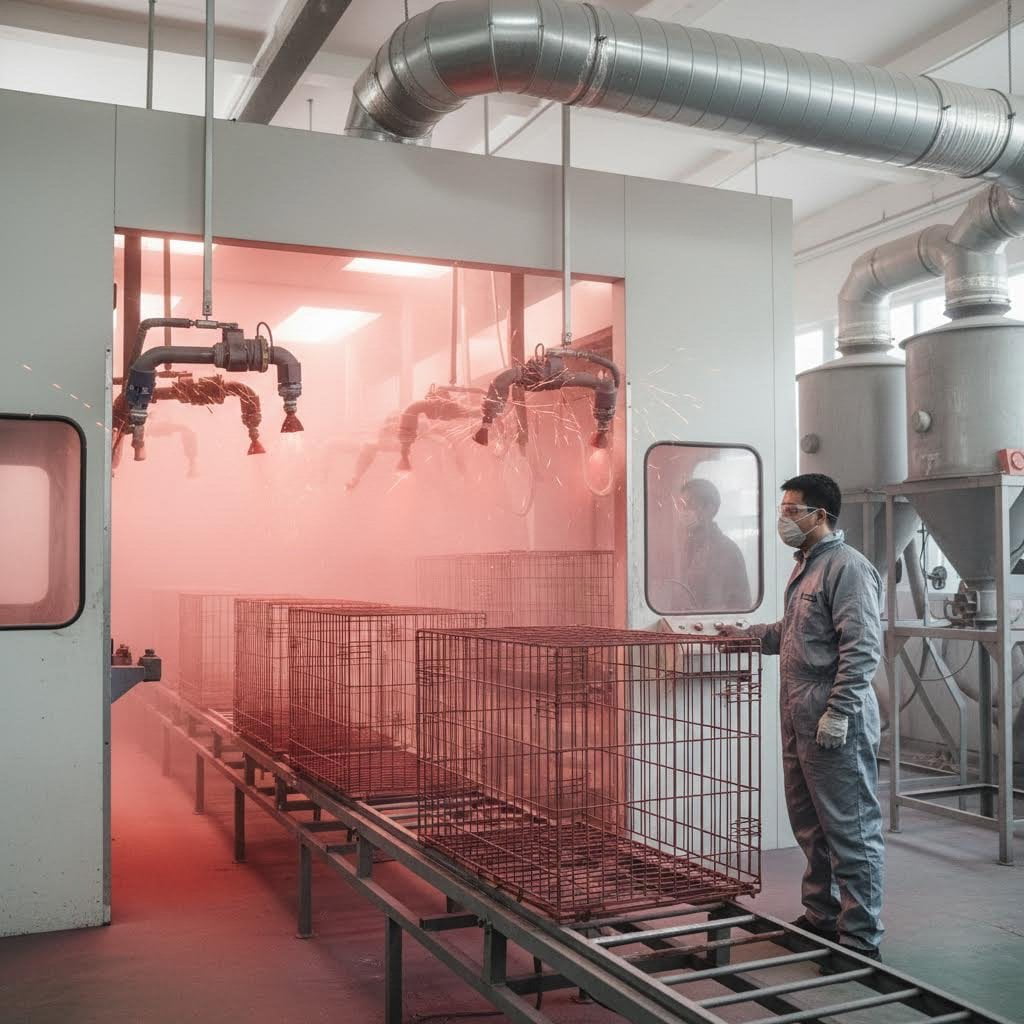
Powder coating dominates the wire dog cage industry, representing approximately 70% of all finished cages worldwide. This dry finishing process uses electrostatically charged powder particles that adhere to metal surfaces and cure under heat.
The popularity of powder coating for wire dog cage manufacturing stems from its excellent durability, environmental benefits, and cost-effectiveness. Unlike liquid paints, powder coating contains no solvents and releases negligible volatile organic compounds.
How Powder Coating Process Works
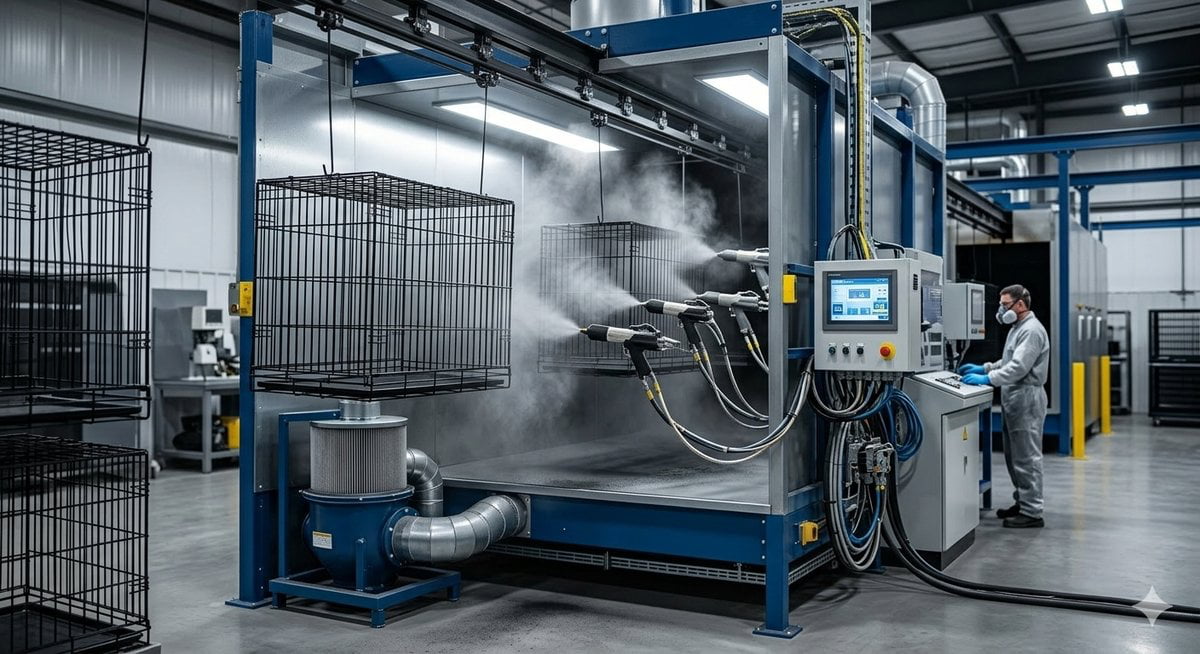
The powder coating process for wire dog cage coating involves four critical stages:
Surface Preparation
Cages undergo chemical pretreatment including degreasing, phosphating, and rinsing to ensure powder adhesion.
Powder Application
Electrostatic spray guns apply charged powder particles that cling to grounded metal surfaces.
Curing Oven
Coated cages enter high-temperature ovens where powder melts, flows, and chemically cross-links.
Cooling and Inspection
Finished cages cool to room temperature before quality inspection and packaging.
Powder coating provides excellent chip resistance compared to liquid paints because the coating molecularly bonds with the metal substrate. This makes powder coated wire dog cage coating ideal for high-traffic environments and transportation applications. Understanding common coating defects and their prevention helps buyers specify appropriate quality controls.
E-Coating Wire Dog Cages: Superior Coverage Solution
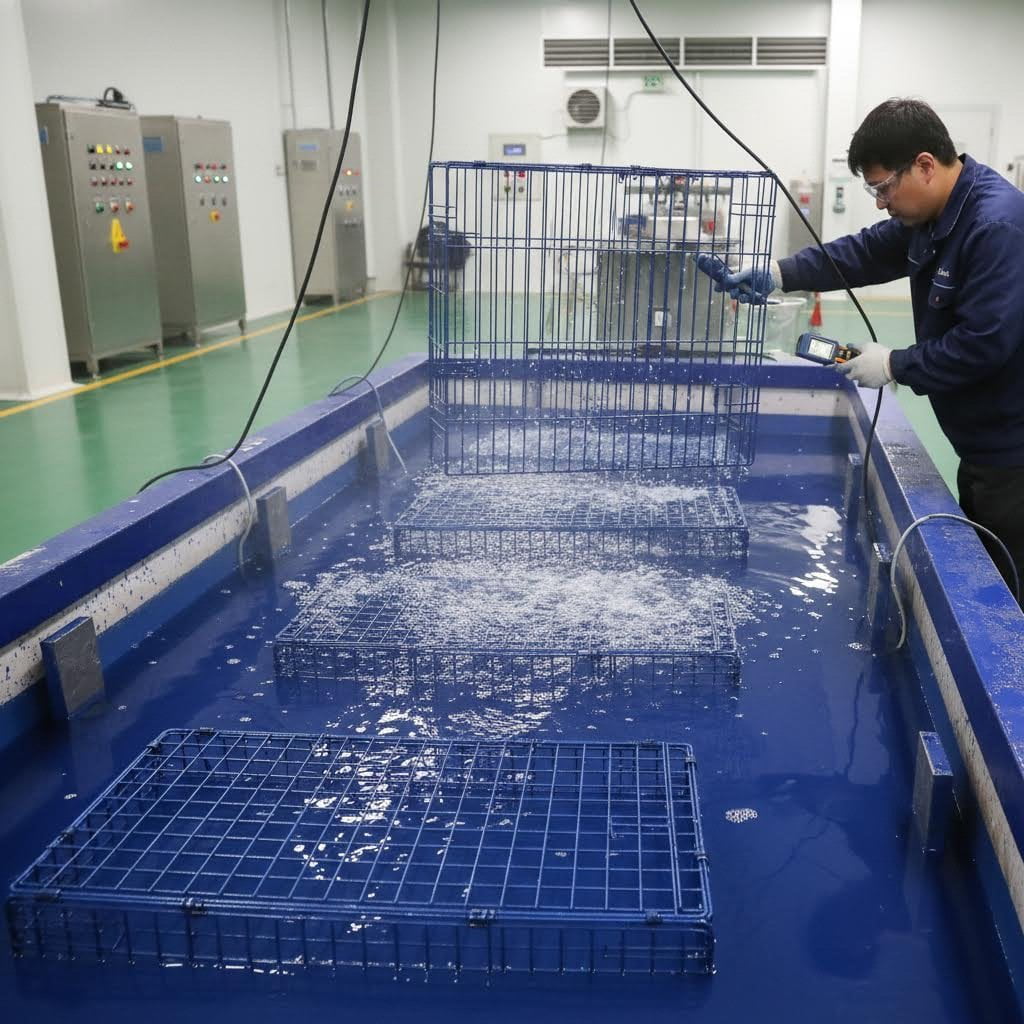
Electrophoretic coating, commonly called e-coating, uses electrical current to deposit paint onto metal surfaces. This wire dog cage coating method excels at covering complex shapes and reaching areas spray applications cannot access.
E-coating technology originated in the automotive industry but has gained significant traction in wire dog cage manufacturing. The process delivers uniform coating thickness even on intricate wire mesh patterns and welded joints.
Science of E-Coat Layering
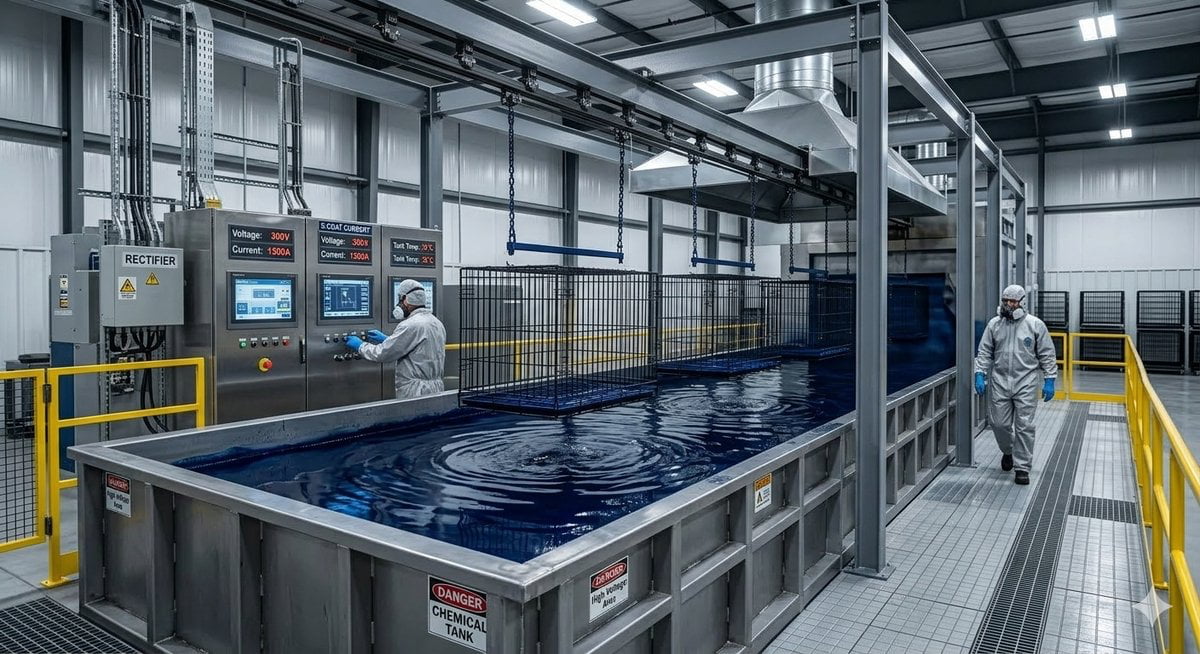
E-Coating Advantages
Uniform Thickness: 20-30μm consistent coating across all surfaces, eliminating thin spots vulnerable to corrosion.
High Efficiency: Near 100% material utilization with minimal overspray or waste.
The e-coating process submerges cages in a tank containing water-based paint emulsion. Applying direct current causes paint particles to migrate and deposit uniformly on all conductive surfaces. This ensures complete protection for wire dog cage coating even in hard-to-reach areas.
For wire dog cage applications, e-coating serves as either a standalone finish or a primer beneath powder coating. The “dual coating” approach combining e-coat and powder coat provides exceptional corrosion resistance for outdoor and high-humidity environments.
E-Coating Limitations
Zinc and Chrome Plating for Dog Cages: Metallic Finish
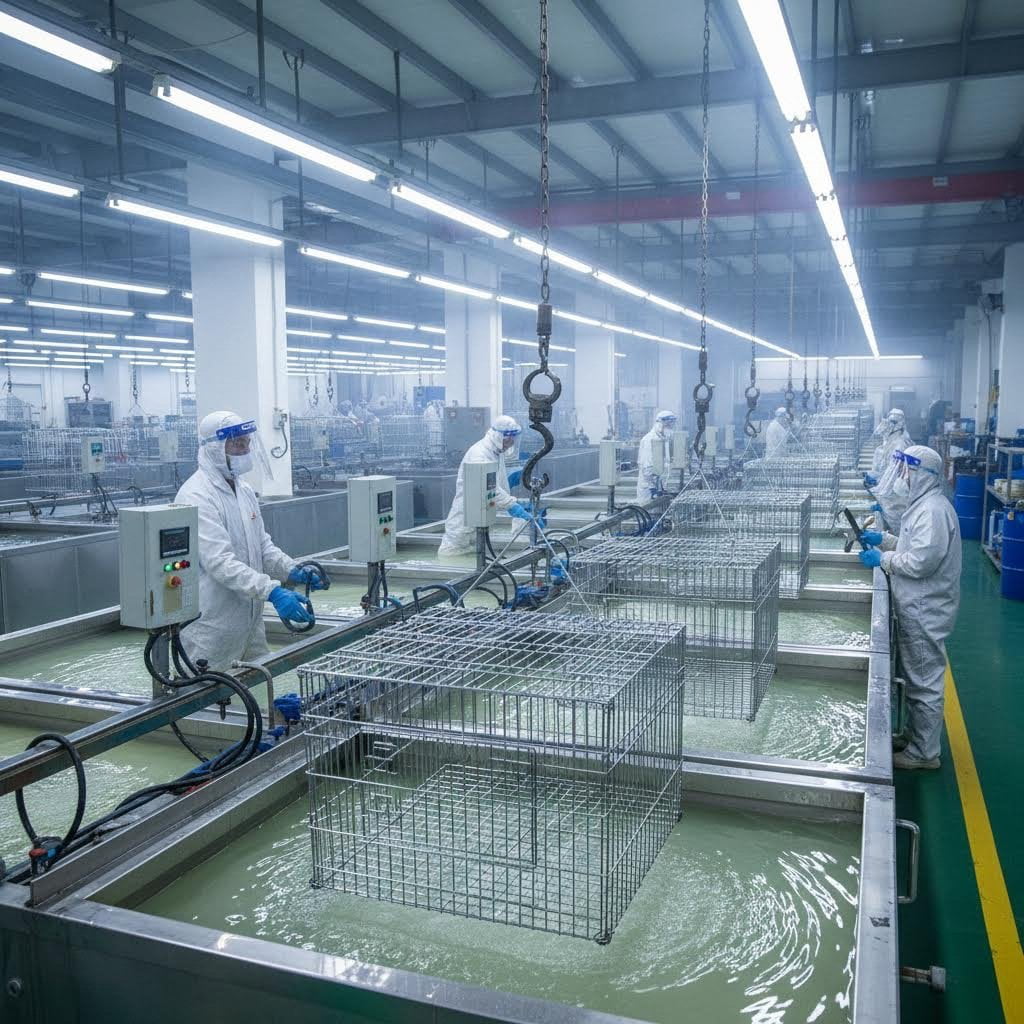
Electroplating deposits thin metal layers onto wire dog cage surfaces through electrochemical processes. Zinc and chrome plating offer distinct aesthetic and functional benefits for specific market segments.
Zinc plating provides sacrificial corrosion protection similar to galvanized steel but with a brighter, more uniform appearance. Chrome plating delivers mirror-like reflective surfaces that signal premium quality in high-end markets.
Plating Aesthetics and Uses
| Plating Type | Appearance | Best Application |
|---|---|---|
| Zinc Plating | Bright silver/blue | Indoor retail displays |
| Chrome Plating | Mirror reflective | Premium residential |
| Nickel Plating | Warm silver | Veterinary clinics |
Plating offers unique advantages for wire dog cage coating in specific niches. The metallic finish resists fingerprints and maintains appearance longer than painted surfaces in high-touch environments. Chrome plating particularly appeals to customers seeking “show quality” cages for home display.
However, plating has limitations for heavy-duty applications. Zinc plating thickness (typically 5-15μm) provides less corrosion resistance than hot-dip galvanizing. Chrome plating requires precise surface preparation and is sensitive to impact damage.
Wire Dog Cage Coating Comparison: Performance & Cost
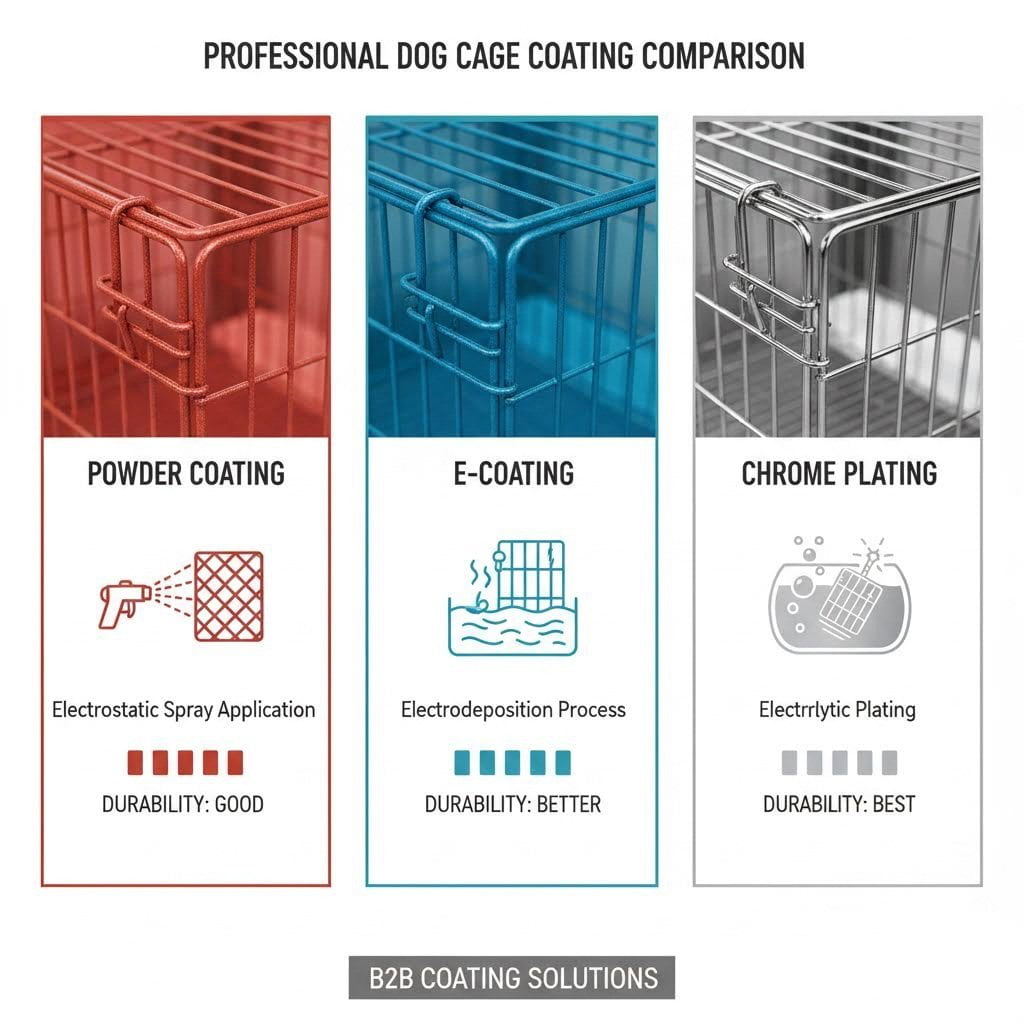
Selecting the optimal wire dog cage coating requires balancing performance requirements, budget constraints, and market positioning. This side-by-side comparison helps professional buyers evaluate options.
| Factor | Powder Coating | E-Coating | Plating |
|---|---|---|---|
| Cost per Cage | $$ (Mid-range) | $$$ (Higher) | $$$$ (Premium) |
| Corrosion Resistance | Excellent | Superior | Good-Zinc, Fair-Chrome |
| Coverage Completeness | Good | Excellent | Good |
| Color Options | Unlimited | Limited | Metallic only |
| Typical Lifespan | 5-10 years | 8-12 years | 3-7 years |
Cost Analysis:
Powder coating delivers the best value for most wire dog cage applications. Material costs range from $3-8 per cage depending on size and color complexity. Equipment requirements are moderate, and production rates meet most commercial demands.
E-coating commands higher initial costs due to tank infrastructure and electrical systems. However, the superior coverage reduces warranty claims and customer complaints, improving long-term profitability for wire dog cage coating operations.
Plating involves the highest per-unit costs, especially for chrome finishes requiring multiple processing steps. Reserve plating for premium market segments where customers willingly pay 30-50% price premiums for metallic aesthetics.
Detecting Cage Coating Defects in Mass Production
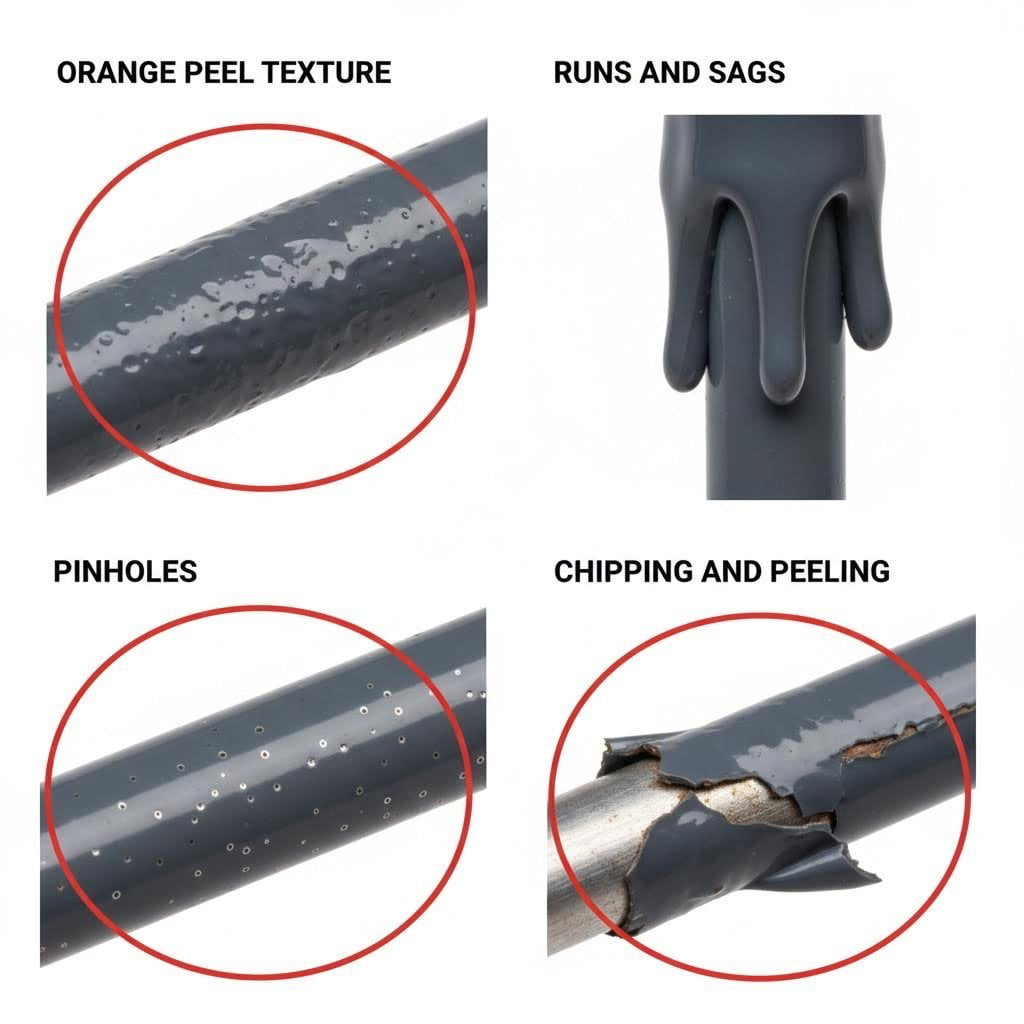
Quality control for wire dog cage coating prevents defective products from reaching customers. Understanding common defects and their causes helps buyers specify appropriate quality standards.
Common Coating Defects Checklist
- Pinholing: Tiny bubbles in coating surface from trapped moisture or contamination
- Orange Peel: Textured surface resembling citrus skin from improper cure or application
- Thin Coating: Inadequate thickness leaving metal vulnerable to corrosion
- Runs and Sags: Excess material accumulation on vertical surfaces
- Poor Adhesion: Coating peeling or chipping from inadequate surface preparation
- Color Variation: Inconsistent shade between batches or cage sections
Prevention Strategies:
Specify coating thickness requirements in purchase agreements. For powder coating, demand 60-80μm minimum thickness measured with eddy current gauges. E-coating should achieve 20-30μm uniform coverage.
Require salt spray test results for wire dog cage coating validation. ASTM B117 testing exposes coated samples to salt fog for 500+ hours to simulate long-term corrosion exposure. Quality suppliers provide test reports with every production batch.
Implement incoming inspection procedures. Check coating adhesion using cross-hatch tape tests and measure thickness at multiple points on each cage. Document findings and reject batches falling below specifications.
FAQ: Common Wire Dog Cage Coating Questions
Conclusion: Selecting Optimal Wire Cage Coating
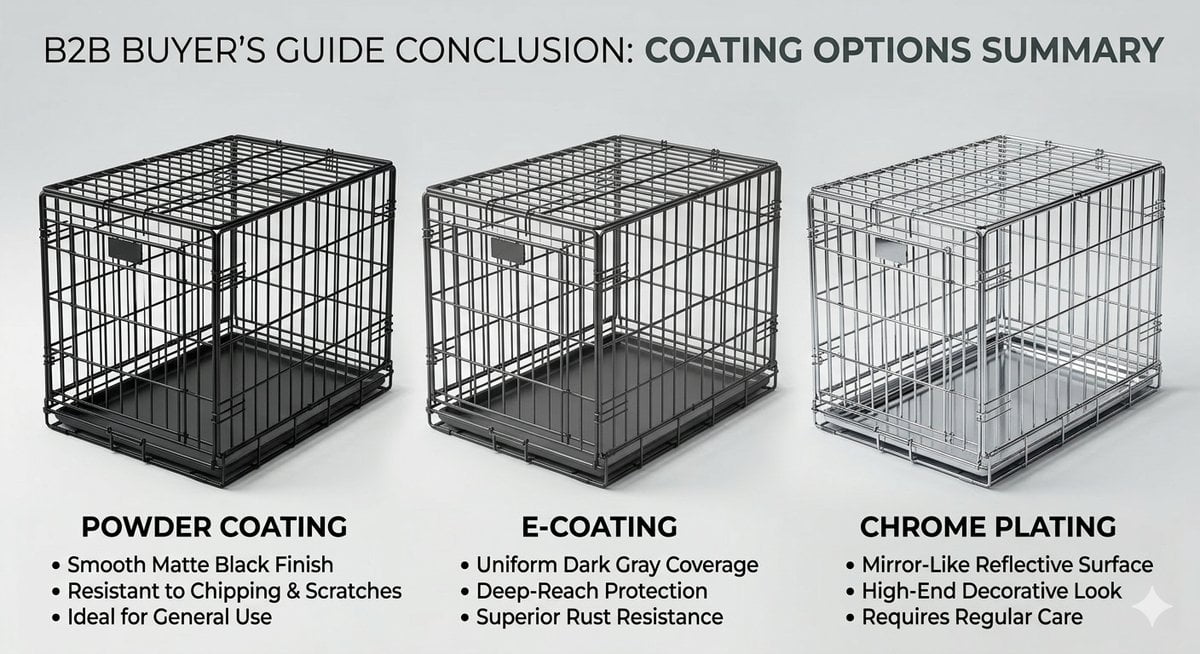
Choosing the right wire dog cage coating requires aligning surface treatment capabilities with your market’s expectations and environmental demands. No single coating technology suits every application.
Decision Framework
Choose E-Coating for: Maximum corrosion resistance, outdoor applications, complex wire geometries
Choose Plating for: Premium positioning, metallic aesthetic requirements, showroom displays
Powder coating remains the default choice for most wire dog cage applications, offering the best combination of durability, aesthetics, and value. E-coating justifies its premium for demanding environments where corrosion resistance is paramount. Plating serves niche markets willing to pay for distinctive metallic finishes.
Regardless of coating type, insist on documented quality testing, specify minimum thickness requirements, and verify supplier capabilities through sample evaluation. Your wire dog cage coating choice directly impacts customer satisfaction, warranty costs, and brand reputation.
Related Resources
Industry Standards & References