Which Wire Dog Cage Material is Best: Cold Rolled vs Galvanized vs Stainless Steel
Wire dog cage material selection directly impacts your business profitability and customer satisfaction. Choosing the right wire dog cage material is one of the most critical decisions for B2B buyers in the pet product industry.
The best wire dog cage material depends on your target market: cold rolled steel for budget retail, galvanized steel for outdoor kennels, and 304 stainless steel for premium veterinary facilities. The wire dog cage material you select directly affects product durability, customer satisfaction, return rates, and ultimately your profit margins.
The Material Decision Ripple Effect
Many buyers struggle with the classic dilemma: should you prioritize upfront cost savings with basic materials, or invest in premium cage material that commands higher retail prices and reduces long-term complaints?
The answer depends on your target market, distribution channels, and brand positioning. Understanding wire dog cage material options helps you make informed purchasing decisions that align with your business goals.
In this comprehensive guide, we’ll examine the three dominant wire dog cage materials in today’s market: cold rolled steel, galvanized steel, and stainless steel. You’ll learn the technical specifications, cost structures, ideal use cases, and decision frameworks that professional buyers use to maximize ROI when selecting wire dog cage material.
Understanding Cold Rolled Steel for Wire Dog Cages
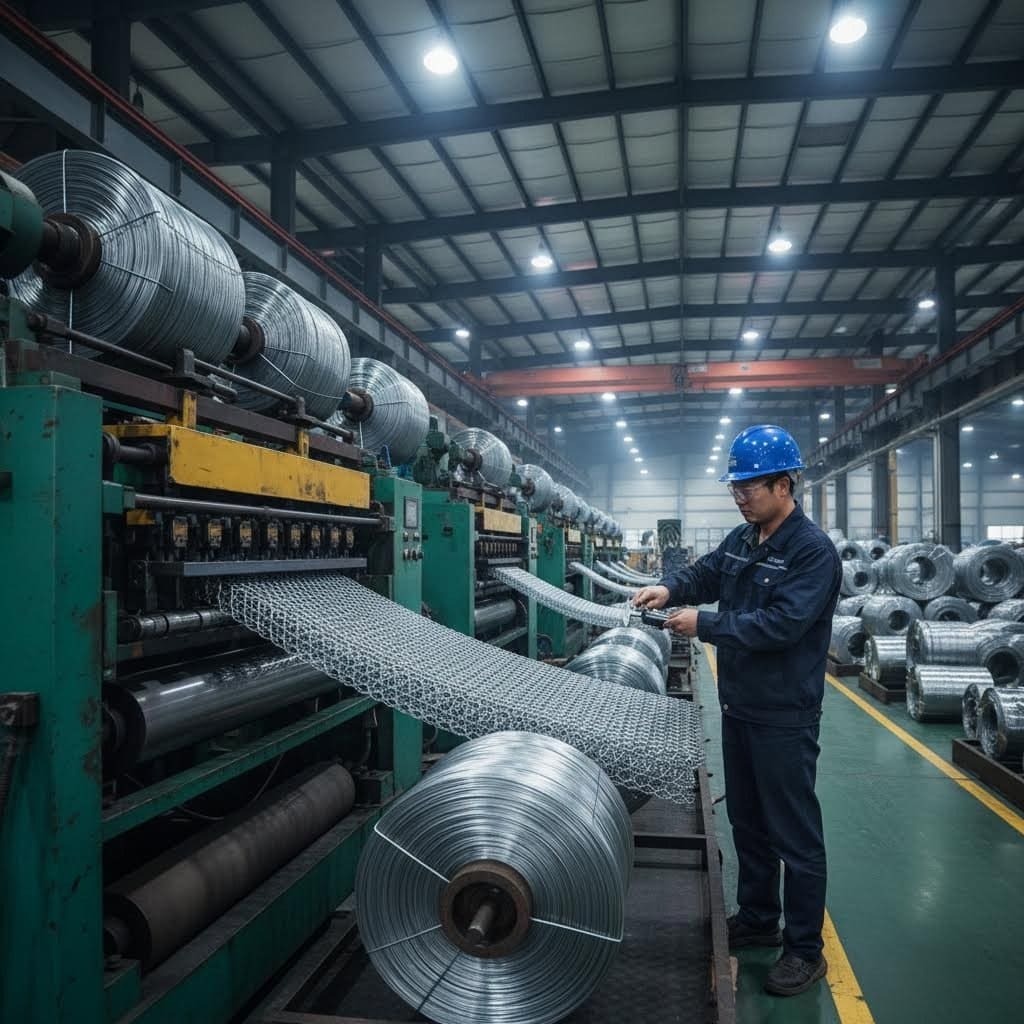
Cold rolled steel represents the entry-level option in wire dog cage material selection. This material undergoes a rolling process at room temperature, producing steel with smooth surfaces and tight dimensional tolerances.
Cold rolled steel is the most widely used wire dog cage material in the pet product industry due to its excellent formability and cost-effectiveness. Buyers appreciate the versatility of this wire dog cage material for various applications.
Properties and Material Characteristics
Cold rolled steel offers the lowest material cost but requires additional surface treatment for corrosion resistance.
Key Characteristics:
- Surface Finish: Smooth, clean appearance ideal for painting or powder coating
- Strength: High tensile strength (270-500 MPa depending on grade)
- Formability: Excellent for bending and shaping into cage wire patterns
- Raw State: Unprotected carbon steel prone to rust without coating
Cold rolled steel serves as the substrate for most painted or powder coated wire dog cages on the market. The material itself provides structural integrity, but the coating system provides corrosion protection. This separation of structural and protective functions makes cold rolled steel versatile but coating-dependent.
Manufacturing Considerations:
When sourcing cold rolled steel wire dog cage material, verify that your supplier uses SPCC (Steel Plate Cold Commercial) or equivalent grade steel. Lower grades may contain impurities that affect weld quality and coating adhesion.
The wire gauge typically ranges from 6 gauge (heavy duty) to 12 gauge (light duty) for different cage strength requirements. Quality control during manufacturing is essential for wire dog cage material.
The cold rolling process work-hardens the steel, increasing its strength but potentially making it more brittle if over-processed. Reputable manufacturers perform tensile testing and dimensional inspections to ensure consistency.
Ask your supplier for material test reports (MTR) documenting the steel’s mechanical properties and chemical composition. This documentation ensures you receive the specified wire dog cage material quality.
Another critical factor is surface preparation before coating. Cold rolled steel often has mill oil residue that must be thoroughly cleaned through degreasing and phosphating processes.
Inadequate surface preparation leads to coating delamination and premature corrosion failure. Specify that your supplier uses a multi-stage pretreatment system including alkaline cleaning, rinsing, phosphating, and sealing before applying any protective coating to the wire dog cage material.
Deep Dive into Galvanized Steel Wire Dog Cages
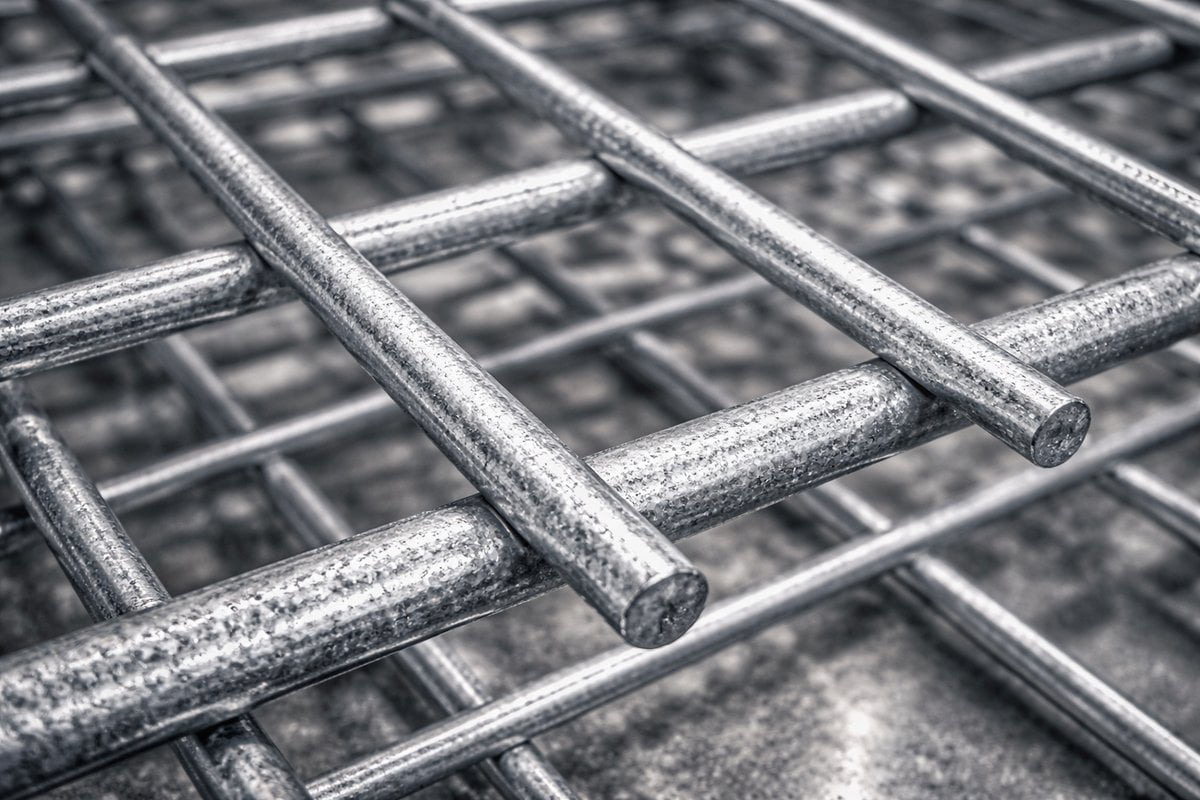
Galvanized steel offers built-in corrosion resistance through a zinc coating applied to the steel substrate. This wire dog cage material bridges the gap between economical cold rolled steel and premium stainless steel.
The zinc layer acts as a sacrificial barrier, protecting the underlying steel from moisture and oxidation. This makes galvanized wire dog cage material ideal for outdoor and humid environments where rust prevention is critical.
Hot-Dip vs Electro-Galvanizing Coating
Galvanizing Methods Comparison
Electro-Galvanizing: Zinc electroplated onto steel (5-12μm). Smoother finish, better for painting, 3-5 year lifespan indoor.
Hot-Dip Galvanized Steel for Wire Dog Cages:
Hot-dip galvanized cages dominate the outdoor and kennel market. The thick zinc layer provides sacrificial protection—even if the coating scratches, the surrounding zinc continues protecting exposed steel. This makes hot-dip wire cage material ideal for:
- Outdoor boarding kennels
- Veterinary facilities with wash-down protocols
- Humid climates where rust accelerates
- Heavy-duty commercial applications
The hot-dip galvanizing process involves cleaning the steel in acid baths, fluxing to prevent oxidation, and immersion in molten zinc at approximately 450°C.
This metallurgical bonding creates an iron-zinc alloy layer beneath the pure zinc coating, providing exceptional adhesion and durability. ASTM A123 standards specify minimum coating thickness requirements based on material thickness.
These standards ensure consistent protection across different wire dog cage material components. Always verify compliance when sourcing galvanized wire dog cage material.
Electro-Galvanized Steel Applications:
Electro-galvanizing produces a thinner, smoother zinc coating perfect for indoor cages where aesthetics matter. The fine surface accepts powder coating beautifully, creating a “duplex system” with both zinc and polymer protection. This cage material works best for:
- Retail pet store displays
- Indoor residential use
- Transport and travel cages
- Budget-conscious commercial applications
Electro-galvanizing deposits zinc through an electrochemical process, allowing precise control over coating thickness and surface finish.
Unlike hot-dip galvanizing, this method doesn’t subject the steel to high temperatures, preserving the mechanical properties of heat-sensitive components.
The resulting coating is smoother and more uniform, making it ideal for wire dog cage material applications requiring subsequent painting or powder coating.
Galvanized Steel Limitations
The Premium Choice: Stainless Steel Wire Dog Cage Material
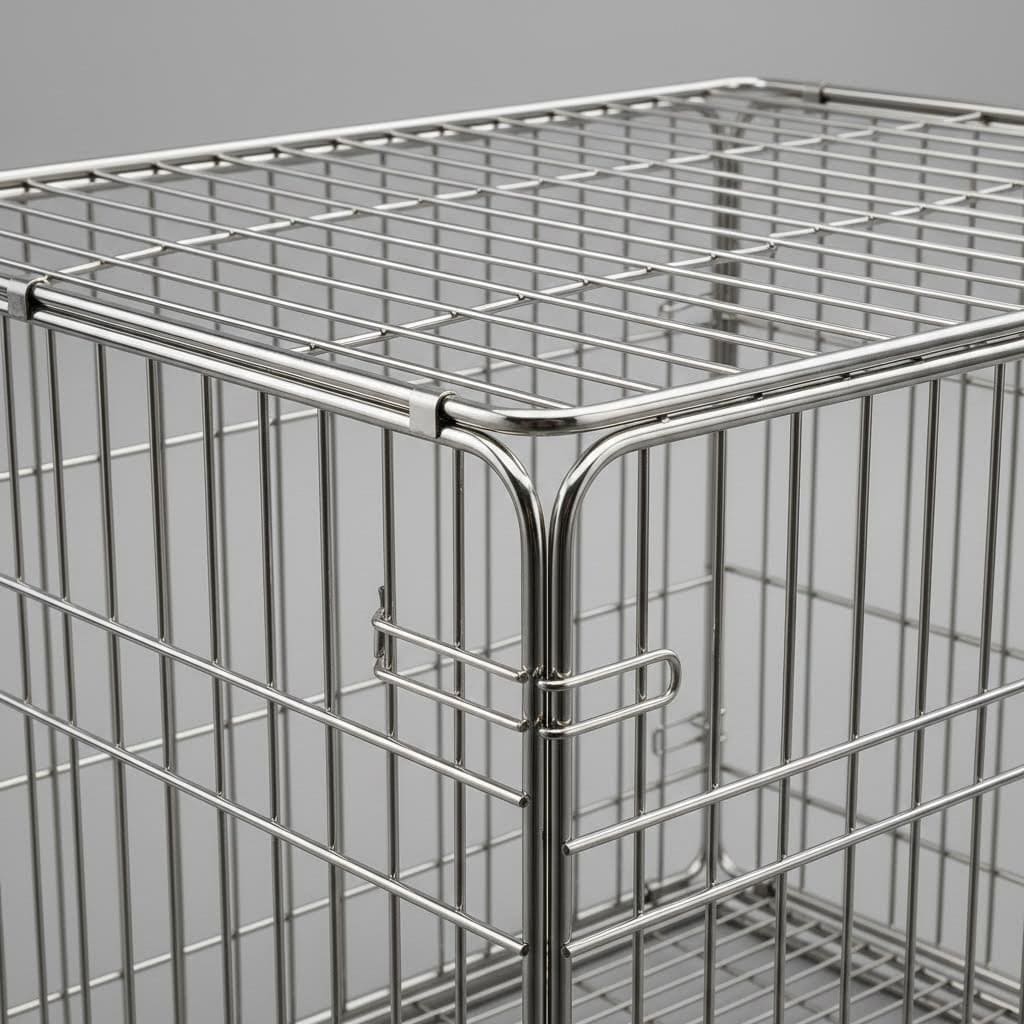
Stainless steel represents the gold standard in wire dog cage material, offering unmatched corrosion resistance, hygiene properties, and longevity.
While the upfront cost exceeds other wire dog cage material options, the lifecycle economics often justify the investment. Stainless steel contains chromium which forms a passive oxide layer, preventing rust even when scratched.
This self-healing property makes stainless steel wire dog cage material the preferred choice for demanding applications.
201 vs 304 vs 316 Steel Grades
Stainless Steel Grade Comparison
| Grade | Chromium/Nickel | Best Application |
|---|---|---|
| 201 | 16-18% Cr, 3.5-5.5% Ni | Indoor residential, budget commercial |
| 304 | 18-20% Cr, 8-10.5% Ni | Professional kennels, veterinary use |
| 316 | 16-18% Cr, 10-14% Ni, 2-3% Mo | Coastal, marine, pharmaceutical |
Grade 201 Stainless Steel:
Grade 201 contains manganese replacing some nickel content, making it more affordable than 304. It resists indoor corrosion excellently but may show surface rust in outdoor or high-humidity environments over time.
Best for budget-conscious buyers targeting residential markets. The lower nickel content makes 201 more susceptible to intergranular corrosion in welded areas.
Specify that welded joints receive proper post-weld treatment or passivation when using this grade of wire dog cage material.
Grade 304 Stainless Steel:
The industry workhorse, 304 offers the optimal balance of corrosion resistance, formability, and cost for professional applications.
This wire dog cage material withstands frequent cleaning, urine exposure, and humidity without degradation. Most veterinary clinics and premium boarding facilities specify 304 stainless as their preferred wire dog cage material.
The 18% chromium and 8% nickel composition provides excellent corrosion resistance for most commercial applications.
Grade 316 Stainless Steel:
With added molybdenum, 316 resists chlorides and salt corrosion that attack other grades. If your customers operate near oceans or in harsh chemical environments, 316 provides the only truly permanent solution.
The cost premium (40-50% over 304) limits it to specialized applications. Marine environments, poolside kennels, and facilities using salt-based deicing agents all benefit from 316’s superior pitting resistance.
For extreme environments, this grade of wire dog cage material delivers unmatched performance despite the higher investment.
Wire Cage Material Comparison: Durability, Cost, Aesthetics
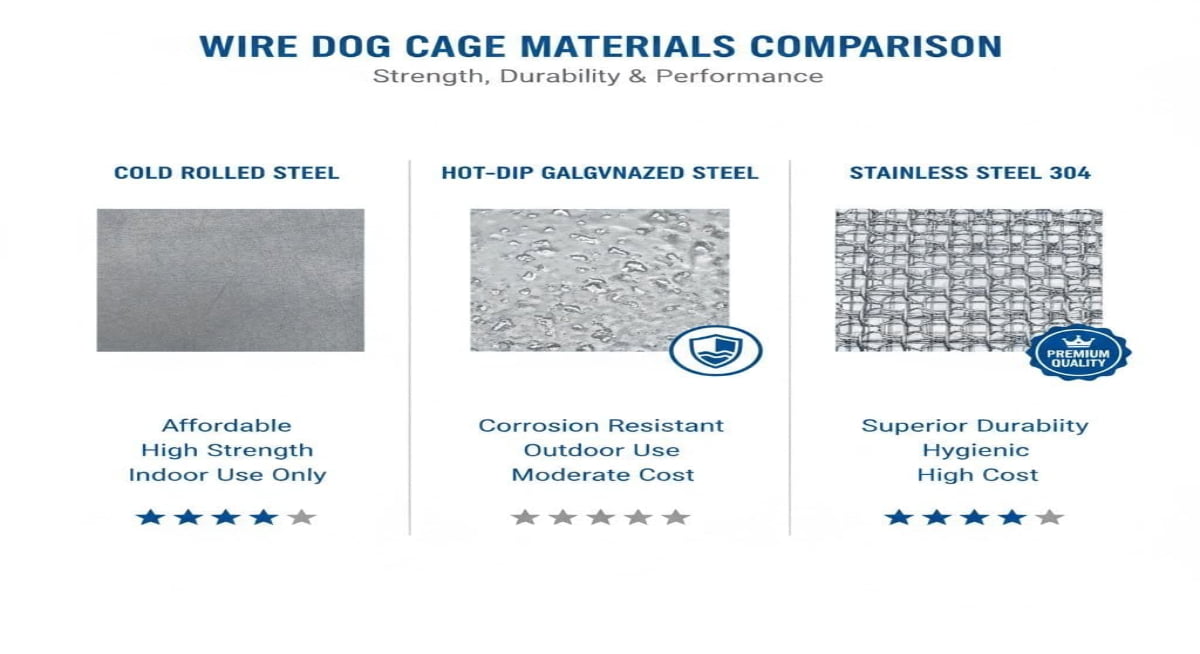
Selecting the optimal wire dog cage material requires balancing three critical factors: how long it lasts, what it costs, and how it looks.
Here’s the side-by-side analysis professional buyers use when evaluating wire dog cage material options for their product lines.
Side-by-Side Material Performance
Complete Material Comparison Matrix
| Factor | Cold Rolled + Coating | Galvanized Steel | Stainless Steel (304) |
|---|---|---|---|
| Unit Cost | $ (Lowest) | $$ (Mid-range) | $$$ (Premium) |
| Indoor Lifespan | 3-5 years | 5-10 years | 15-20 years |
| Outdoor Lifespan | 1-2 years | 5-8 years | 15+ years |
| Maintenance | High (recoating) | Medium | Low (wash only) |
| Aesthetic Options | Any color (powder coat) | Silver/gray or painted | Brushed or polished |
Durability Analysis:
Stainless steel dominates longevity metrics, but galvanized steel delivers respectable performance at half the cost. Cold rolled steel without premium coating systems shows rust within months in challenging environments.
For B2B buyers, durability translates directly to warranty costs and customer satisfaction scores. Choosing the right wire dog cage material minimizes long-term expenses.
Cost Structure Reality:
While stainless steel costs 3-4x more upfront, the 10-year total cost of ownership often equals or beats cheaper alternatives. Factor in replacement costs, customer complaints, and inventory write-offs when selecting wire dog cage material.
Calculate your break-even horizon based on your customer base and warranty policies. Premium wire dog cage material often pays for itself through reduced returns.
Aesthetic Considerations:
Coated cold rolled steel offers unlimited color matching for retail branding. Galvanized steel provides that industrial “professional kennel” look.
Stainless steel signals premium quality and cleanliness—powerful selling points for high-end veterinary and boarding markets. The appearance of your wire dog cage material influences customer perception.
Decision Tree: Which Dog Cage Material Fits Your Market?
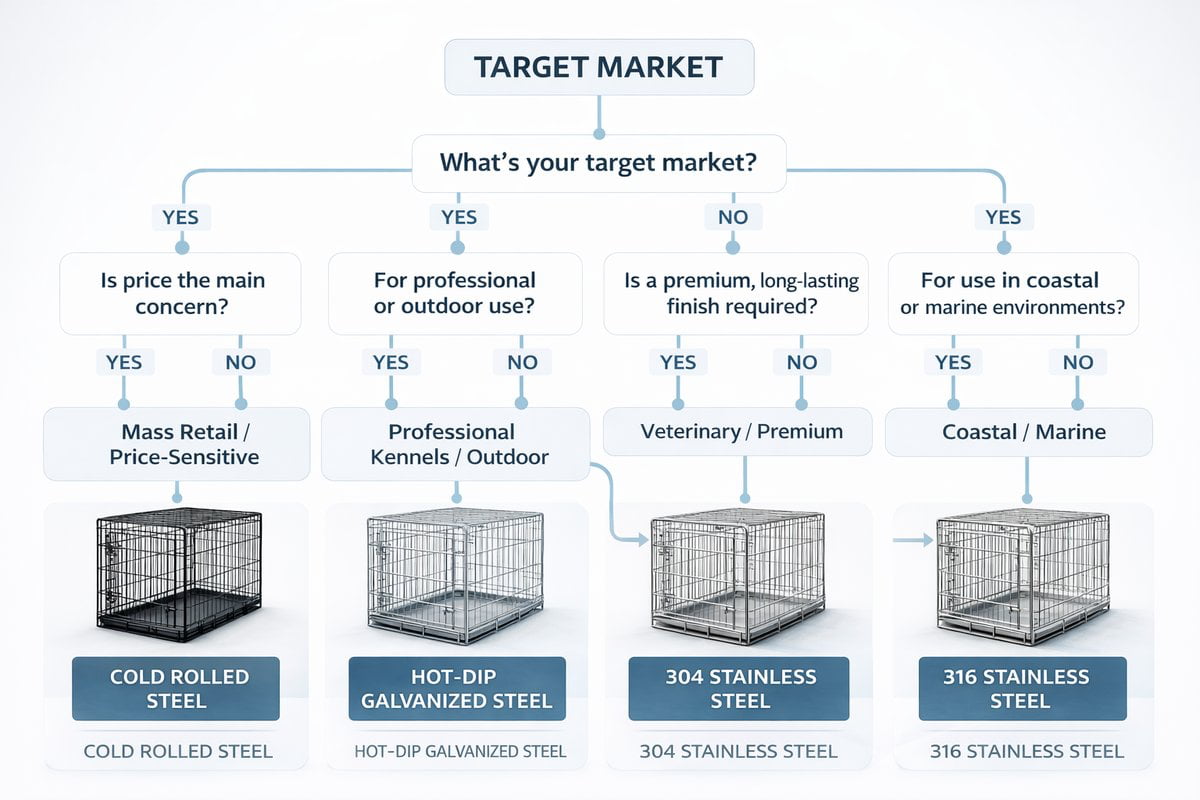
Use this framework to match wire dog cage material to your specific business model and customer base. Consider your target market’s priorities when selecting the optimal wire dog cage material.
Mass Retail / Price-Sensitive Markets
Choice: Cold Rolled + Quality Powder Coat
Target big-box retailers, discount chains. Focus on coating quality to maximize value perception. Expect 3-5 year replacement cycle.
Professional Kennels / Outdoor Use
Choice: Hot-Dip Galvanized Steel
Best ROI for commercial breeding, boarding, shelter operations. Survives weather and heavy use without premium pricing.
Veterinary / Premium Residential
Choice: 304 Stainless Steel
Justify premium pricing with hygiene benefits and lifetime durability. Essential for medical environments and luxury markets.
Coastal / Marine / Extreme Environments
Choice: 316 Stainless Steel
The only viable option for salt air exposure. Niche market with very high margins to offset material costs.
Sourcing Tips: Verifying Wire Dog Cage Material Quality
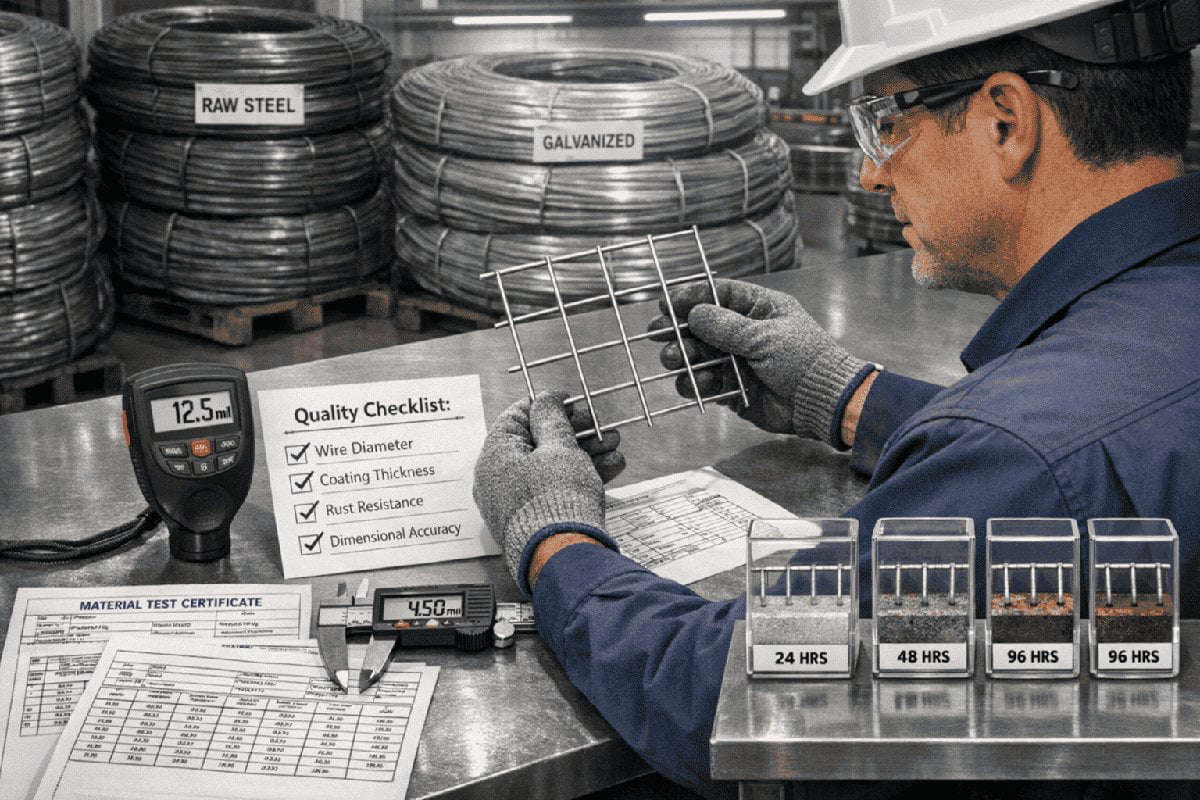
When evaluating suppliers, material authenticity and quality consistency matter more than quoted prices. Here’s how to audit wire dog cage material claims with proper quality testing protocols:
Material Verification Checklist
- Request Material Certificates: Mill test certificates (MTC) should specify steel grade, chemical composition, and mechanical properties
- Check Coating Thickness: Use coating thickness gauges to verify zinc weight (g/m²) or powder coat thickness (μm)
- Perform Salt Spray Tests: Require 500-hour minimum for outdoor cages, 200-hour for indoor applications
- Inspect Weld Quality: Poor welding creates corrosion initiation points regardless of base material quality
- Verify Gauge Consistency: Measure wire diameter at multiple points; variations indicate poor quality control
- Request Sample Aging: Ask for 6-month weathering samples to observe real-world performance
Red Flags in Material Claims:
Be wary of suppliers claiming “stainless steel” at galvanized prices—this usually indicates 201 grade mislabeled as 304.
Similarly, “heavy duty” claims without specific gauge measurements mean nothing. Always verify wire dog cage material specifications with independent testing.
Reputable suppliers provide mill test certificates and coating thickness documentation. Don’t compromise on wire dog cage material quality to save short-term costs.
FAQ: Common Wire Dog Cage Material Questions
Conclusion: Choosing the Right Cage Material
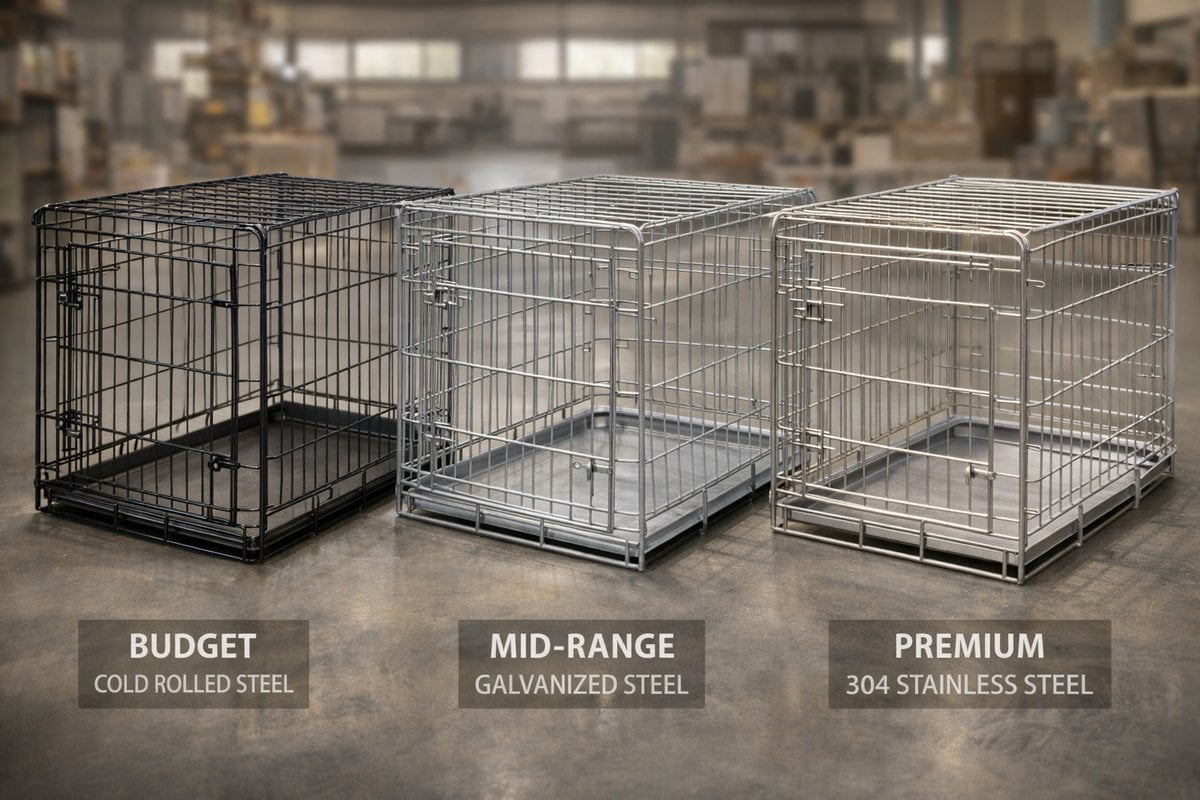
Selecting the optimal wire dog cage material requires balancing your market positioning, budget constraints, and customer expectations.
There is no universal “best” wire dog cage material—only the best material for your specific application and target market.
Key Takeaways for B2B Buyers
• Match material to end-use environment (indoor vs outdoor)
• Calculate total cost of ownership, not just unit price
• Verify supplier claims with material certificates and testing
• Consider warranty implications of material selection
• Factor in your customers’ maintenance capabilities
Cold rolled steel with quality coating serves price-sensitive markets adequately. Galvanized steel delivers the best durability-to-cost ratio for professional applications. Stainless steel commands premium pricing with unmatched longevity and hygiene benefits.
Your wire dog cage material choice shapes your brand reputation, return rates, and customer lifetime value.
Invest time in understanding these wire dog cage material options, and you’ll build a product line that outperforms competitors while protecting your margins.
Related Resources
Ready to Source Quality Wire Dog Crates?
Our 25+ years of OEM manufacturing experience ensures consistent quality for your wire dog crate needs. Request a sample or get a custom quote today.

Mr. Deng Jiang
Hi, I'm Mr. Deng Jiang, a professional in the pet products industry. With years of experience in designing and manufacturing pet crates, I focus on helping brands improve product quality and meet industry standards. My work is driven by a passion for pets and innovation, and I’m committed to sharing insights that help both manufacturers and consumers make informed decisions.