How Long Do Wire Dog Cages Last: Durability Factors & Replacement Guide
Understanding wire dog cage lifespan is essential for B2B buyers making inventory decisions. In our experience, most wire dog cages fall within a practical 5-15 year range, but actual service life depends on weld quality, coating system, environment, and usage intensity. For independent DTC pet brands and Amazon sellers, the key is not just estimating lifespan, but matching cage specifications to real customer use scenarios.
For B2B teams, durability affects ROI, return rates, and brand trust over time. This guide focuses on practical evaluation: what usually causes early failure, how to identify replacement timing, and how to recommend the right durability tier by use case.
Wire Dog Cage Lifespan at a Glance
5-7
Years (Budget cages)
8-12
Years (Mid-range)
12-15+
Years (Premium)
Introduction: Predicting Wire Dog Cage Lifespan for ROI
Accurate lifespan prediction helps buyers set realistic customer expectations and reduce avoidable after-sales issues. From what we see in production and buyer feedback, the biggest mistake is evaluating wire thickness alone while ignoring weld consistency and coating performance.
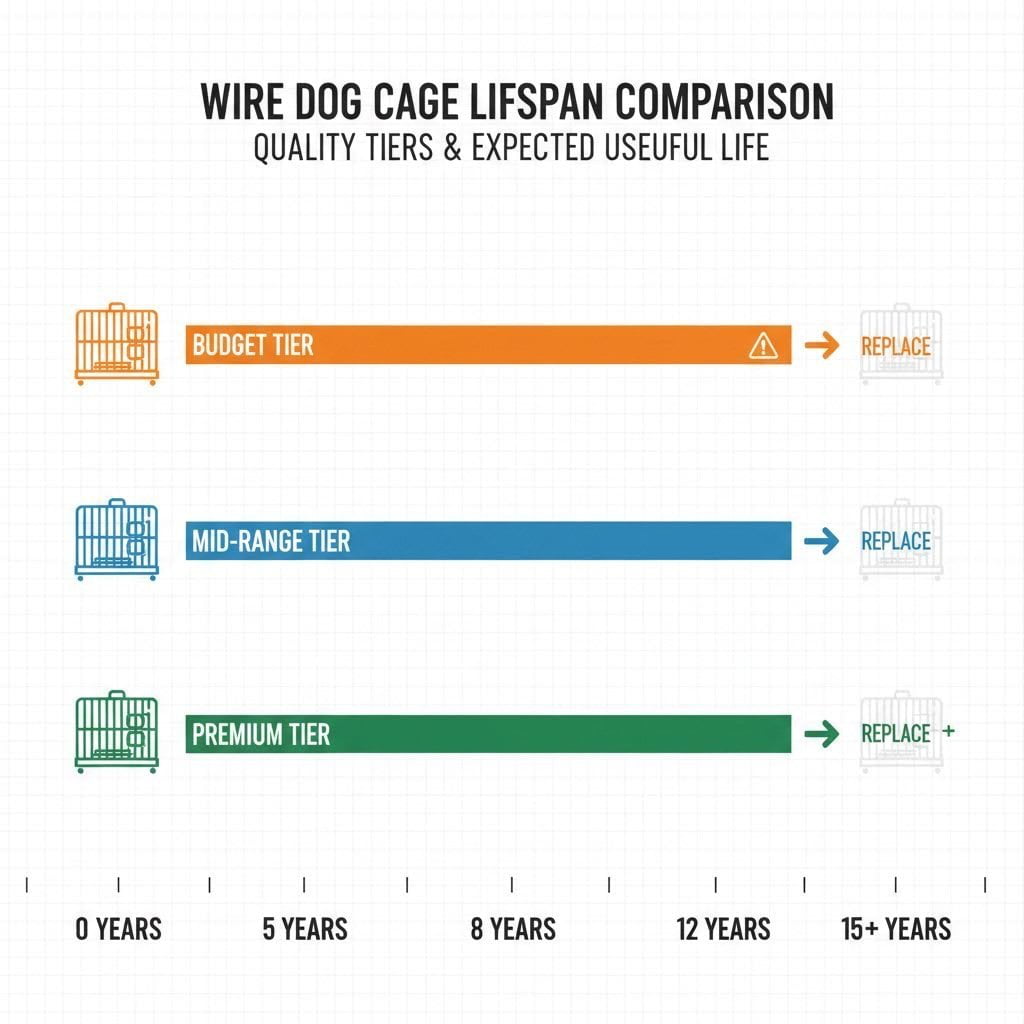
Industry research indicates that wire dog cage lifespan expectations have increased substantially over the past decade as manufacturing standards have improved. Modern wire cages manufactured with quality materials and proper coating processes can deliver significantly longer service life than earlier generation products. However, lifespan variations remain substantial between different product tiers, requiring careful evaluation during supplier selection.
For B2B buyers, understanding wire dog cage lifespan has direct financial implications beyond the initial purchase price. Products with longer lifespans reduce customer replacement frequency, decrease warranty claims, and build stronger brand loyalty. Conversely, underestimating cage durability can lead to unexpected customer complaints, negative reviews, and increased support costs that erode profit margins.
Business Impact: Wire dog cage lifespan directly affects customer lifetime value calculations. A cage lasting 12+ years generates significantly higher customer satisfaction and repeat business potential compared to products requiring replacement after 5-6 years. Factor expected lifespan into pricing strategies and warranty terms.
How We Evaluate Lifespan in Practice: We usually assess five points first: wire gauge, weld integrity, coating consistency, humidity exposure, and usage intensity (home vs commercial). This framework is more reliable than relying on one spec only.
Key Factors in Wire Dog Cage Durability
Multiple factors determine the actual wire dog cage lifespan in real-world conditions. Understanding these variables enables buyers to evaluate products more accurately and set appropriate customer expectations based on specific use cases.
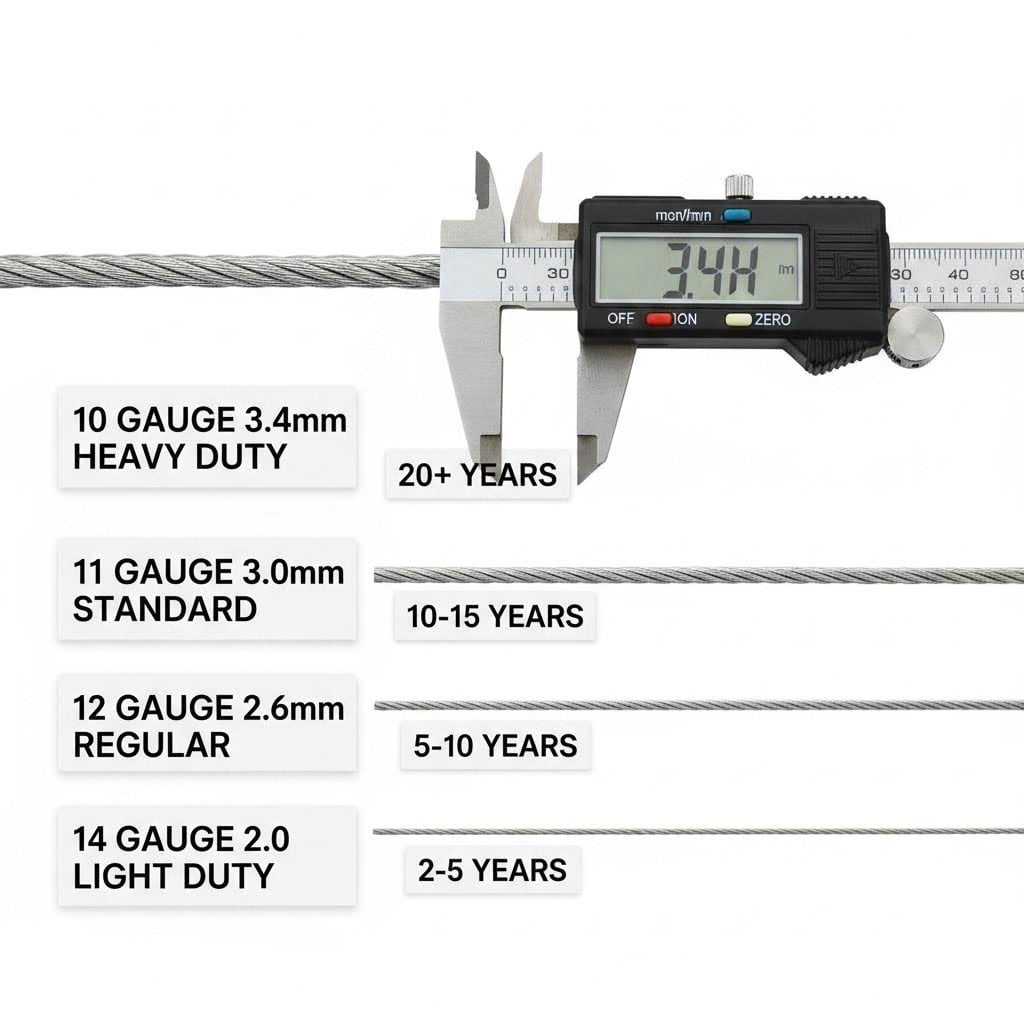
Wire Gauge Impact on Cage Lifespan
Material Thickness: Wire gauge significantly affects structural integrity and resistance to deformation. Heavier gauge wires (lower gauge numbers like 10-12 gauge) provide superior durability compared to lighter gauges (14-16 gauge). Standard commercial wire dog cages typically use 11-12 gauge wire, while premium models may use 10 gauge or heavier for high-stress areas.
Structural Framework: Frame wire gauge is particularly critical for overall cage durability. Thicker frame wires resist bending and maintain shape integrity under stress from active dogs. Evaluate both main frame and panel wire specifications when assessing cage durability.
| Wire Gauge | Thickness (mm) | Expected Lifespan | Best Use Case |
|---|---|---|---|
| 10 gauge | 3.4mm | 12-15 years | Large breeds, commercial use |
| 11 gauge | 3.0mm | 10-12 years | Medium to large breeds |
| 12 gauge | 2.6mm | 8-10 years | General residential use |
| 14 gauge | 2.0mm | 5-7 years | Small breeds, light use |
Coating Quality and Corrosion Protection
The protective coating applied to wire dog cages is the primary defense against corrosion and strongly affects wire dog cage lifespan. Different coating systems perform differently under humidity, cleaning frequency, and handling intensity.
Powder coating is usually the most balanced option for long-term indoor and mixed-use applications. In our experience, coating consistency and edge/corner coverage matter as much as coating type.
Coating Lifespan Impact
- Powder Coating: 10-15 years protection
- E-Coating: 8-12 years protection
- Zinc Galvanizing: 7-10 years protection
- Basic Paint: 3-5 years protection
Weld Quality and Structural Integrity
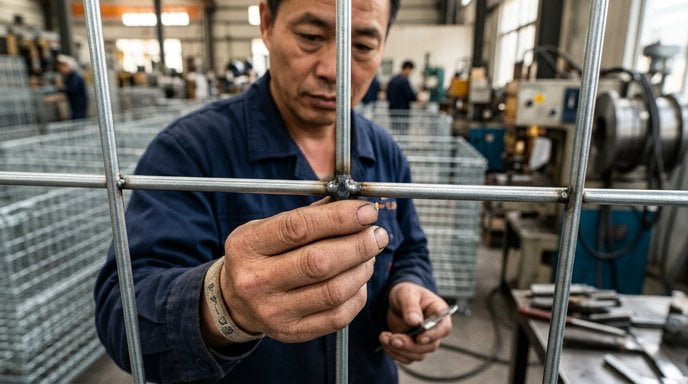
Weld quality directly affects wire dog cage durability and safety throughout the product lifespan. Poorly executed welds create stress concentration points that can lead to premature failure, particularly at high-stress connection points. Quality welding ensures structural integrity remains consistent throughout the cage’s service life.
Inspect weld quality by examining consistency, penetration depth, and absence of defects such as cracks, porosity, or excessive spatter. Quality manufacturers employ automated welding systems or skilled welders who produce consistent, strong joints capable of withstanding years of use stress without failure.
Common Buyer Mistakes That Shorten Cage Lifespan
- Focusing only on wire gauge while ignoring weld quality and latch durability.
- Choosing the lowest-cost coating for high-humidity or high-cleaning environments.
- Using home-use specs for pet shop, breeder, or grooming-shop workloads.
- Delaying replacement after visible rust expansion or door-latch instability.
Dog Cage Lifespan by Environment: Indoor vs Outdoor
Environmental conditions significantly impact wire dog cage lifespan, with outdoor use typically reducing expected service life by 30-50% compared to indoor use. Understanding these environmental effects enables accurate lifespan predictions and appropriate product recommendations for different customer applications.

Indoor Use Lifespan Expectations
Indoor wire dog cages generally achieve maximum lifespan potential due to protection from weather elements and more stable environmental conditions. Climate-controlled indoor environments minimize corrosion risks and reduce stress from temperature fluctuations that can accelerate material fatigue.
Typical indoor wire dog cage lifespans range from 10-15 years for quality products with proper maintenance. Indoor cages primarily face wear from dog activity, cleaning chemicals, and occasional impacts rather than environmental corrosion factors. Regular maintenance and prompt attention to any coating damage can extend indoor cage lifespan toward the upper range of expectations.
Outdoor Use Challenges and Lifespan
Outdoor wire dog cages face significantly harsher conditions that reduce expected lifespan. Exposure to rain, humidity, UV radiation, and temperature extremes accelerates corrosion and material degradation. Even quality coatings eventually break down under continuous outdoor exposure, requiring more frequent replacement.
Expected outdoor wire dog cage lifespans typically range from 5-10 years depending on local climate severity. Coastal environments with salt air present particular challenges, potentially reducing lifespan by an additional 20-30% due to accelerated corrosion. Hot, humid climates also stress coating systems and promote rust formation at any coating breaches.
Outdoor cages in coastal regions require additional protective measures such as regular cleaning to remove salt deposits, more frequent coating inspections, and prompt repair of any damage. Consider covered outdoor placement to reduce direct exposure to rain and sun, significantly extending wire dog cage lifespan in challenging environments.
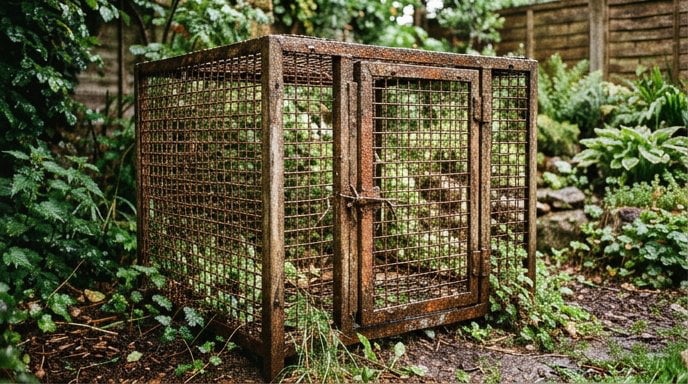
Environmental Warning: Outdoor wire dog cages in coastal or high-humidity regions require more frequent inspection and maintenance. Consider recommending premium coating options for outdoor applications to maximize customer satisfaction and reduce replacement frequency.
When to Replace: Signs of Wire Cage Failure
Recognizing signs of wire dog cage failure enables timely replacement before safety issues develop. B2B buyers should educate customers on replacement indicators and incorporate this guidance into product documentation and customer support resources.
⚠️ Critical Replacement Signs
- Broken or cracked welds
- Significant wire corrosion or rust
- Bent or deformed frame structure
- Door latch mechanism failure
- Sharp edges from coating loss
⚡ Monitor Closely
- Coating chips or scratches
- Minor surface rust spots
- Loose wire connections
- Worn door hinges
- Fading or discoloration
Structural Integrity Assessment
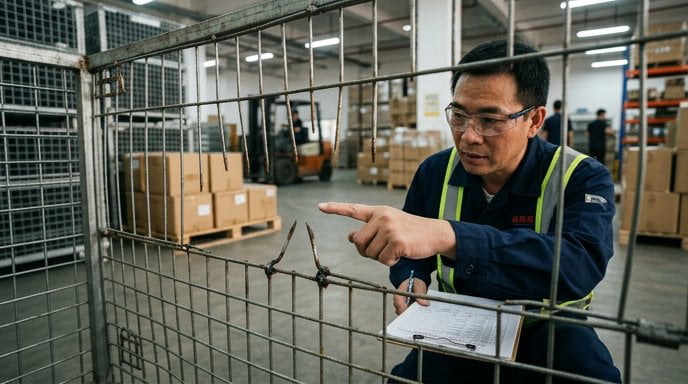
Evaluate cage structural integrity by checking for frame deformation, loose connections, and wire separation from frame components. Quality cages should maintain dimensional stability throughout their service life. Any significant bending, twisting, or frame distortion indicates structural compromise requiring replacement.
Test door functionality by opening and closing mechanisms multiple times. Doors should operate smoothly without binding, and latches should secure positively without excessive play. Door failures represent common cage failure points that can create escape risks or safety hazards.
Coating Condition Evaluation
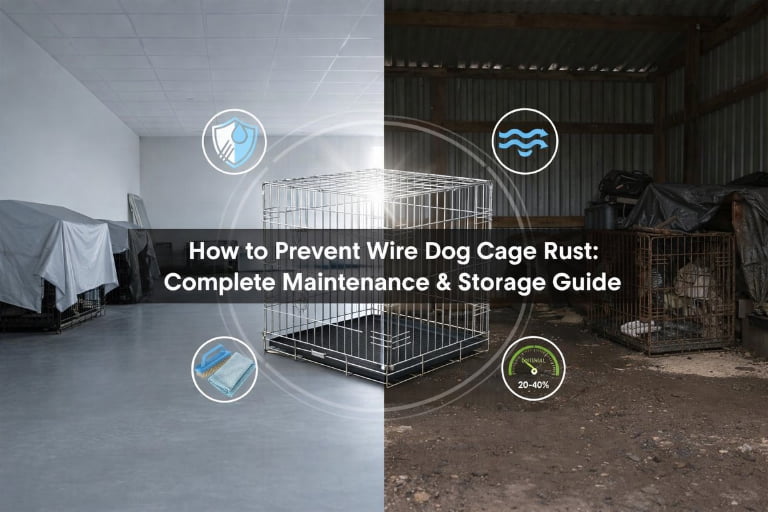
Assess coating condition by examining for scratches, chips, rust spots, or areas where the protective layer has worn thin. While minor coating damage can sometimes be repaired with touch-up paint, extensive coating failure typically indicates the cage is approaching end of useful life. For comprehensive guidance on protecting your investment, review our complete rust prevention guide.
Surface rust that can be cleaned and treated may not require immediate replacement, but widespread rust formation indicates coating system failure and imminent structural risks. Replace cages showing advanced corrosion before safety issues develop.
Business Case for High-Durability Dog Cages
Investing in high-durability wire dog cages delivers measurable business benefits beyond basic product functionality. Understanding these advantages helps justify premium product positioning and supports appropriate pricing strategies.

Reduced Warranty Claims: High-durability cages generate significantly fewer warranty claims, reducing customer service costs and protecting brand reputation. Extended product lifespan means fewer replacement requests and decreased logistics costs associated with handling defective product returns.
Customer Lifetime Value: Customers satisfied with durable cage products become repeat buyers for related products and recommend brands to other pet owners. Positive experiences with long-lasting products generate word-of-mouth marketing that reduces customer acquisition costs for future sales.
Premium Pricing Justification: Documented durability advantages support premium pricing positions. Customers willing to pay more for quality products that deliver longer service life create higher margin opportunities while maintaining competitive positioning against budget alternatives.
Competitive Advantage: Position high-durability wire dog cages as investments rather than expenses. Customers who calculate total cost of ownership often prefer premium products offering lower annualized costs despite higher initial prices.
Calculating Wire Dog Cage Amortized Costs
Understanding amortized costs helps communicate value propositions to customers and supports pricing strategies. Breaking down costs per year of service life reveals the true economic value of durability differences between product tiers.
| Product Tier | Purchase Price | Expected Lifespan | Annual Cost |
|---|---|---|---|
| Budget Cage | $60 | 5 years | $12.00/year |
| Mid-Range Cage | $120 | 10 years | $12.00/year |
| Premium Cage | $180 | 15 years | $12.00/year |
The amortized cost analysis reveals that premium wire dog cages often deliver equivalent or lower annual costs compared to budget alternatives when lifespan differences are factored. This economic reality supports premium product positioning when customers understand total cost of ownership rather than focusing solely on initial purchase price.
Additional cost factors to consider include replacement logistics, customer time investment in researching and purchasing replacements, and potential veterinary costs associated with cage failures. These secondary costs further strengthen the value proposition for durable, long-lasting cage products. When selecting suppliers, consult our material selection guide to ensure optimal wire dog cage lifespan for your specific market needs.
Cost Communication Strategy: Include amortized cost calculations in product descriptions and marketing materials. Help customers understand that choosing premium durability products often represents better economic value despite higher upfront investment.
FAQ: Wire Dog Cage Lifespan and Replacement
Conclusion: Maximizing Cage Lifespan Investment
For B2B buyers, better lifespan outcomes come from matching specs to use conditions—not from chasing a single “maximum years” number. In practice, durability depends on the full combination of wire gauge, weld quality, coating performance, and daily use intensity.
Our practical recommendation: if your market is price-sensitive indoor home use, prioritize stable baseline quality and consistency. If your customers include retailers, breeders, or humid-region users, prioritize weld integrity and coating system first, then optimize cost.
When evaluating suppliers, use repeatable checkpoints (weld points, coating adhesion, latch durability, tray stability) to improve batch consistency and reduce after-sales risk. You can also review our quality control standards for a deeper checklist.
External References: American Pet Products Association – Industry Statistics | ASTM F2057 – Safety Standards for Pet Products | Pet Food Industry – Pet Care Market Trends