How Does ISO Certification Impact Wire Dog Cage Manufacturing Quality?
For B2B buyers, wire dog cage ISO certification is one of the clearest pre-order filters for supplier capability. In our experience, factories with genuine ISO 9001 and ISO 14001 implementation show measurably lower defect rates, faster problem resolution, and more transparent documentation than non-certified peers.
This guide focuses on practical execution: how to verify ISO authenticity, what to check during factory audits, and how to use ISO clauses in contracts and dispute resolution. We explain how ISO frameworks translate into daily manufacturing discipline, and where buyers typically waste time on superficial certificate checks instead of real system validation.
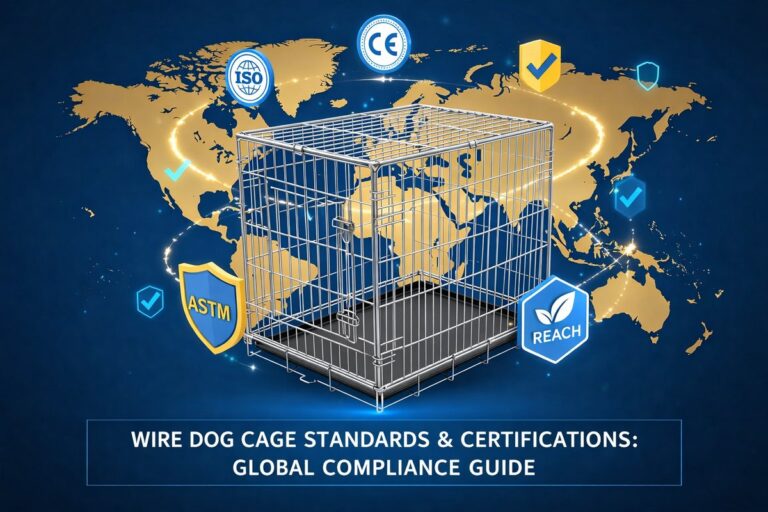
Many buyers know that ISO certificates exist, but few really understand what they mean for wire dog cage production quality. Is ISO just a “piece of paper” for marketing, or does it actually change how the factory welds, coats, and packs your cages? In the following sections we break down ISO 9001 and ISO 14001 in a practical, cage-specific way, so you can ask the right questions, read audit reports with confidence, and avoid factories that treat ISO as a checkbox exercise. For a broader overview of global standards beyond ISO, you can refer to our guide on wire dog cage standards and certifications on CageSilo.
What We Usually See
Introduction: ISO Standards as Manufacturing Excellence Mark
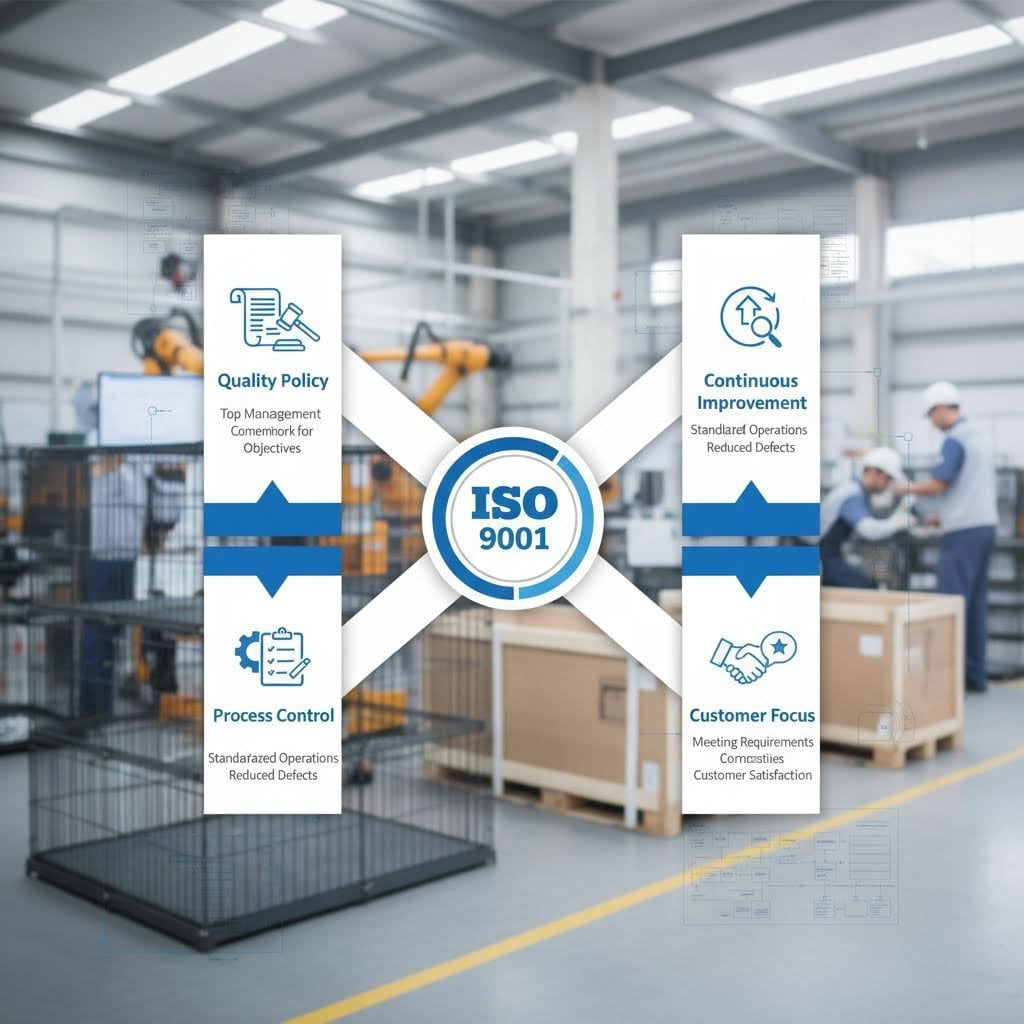
From a buyer’s perspective, wire dog cage ISO certification acts as a shortcut for assessing a factory’s management maturity. Instead of relying only on one-time sample checks or a single factory visit, you get evidence that the supplier maintains documented procedures, conducts internal audits, and undergoes regular third-party surveillance. ISO standards do not tell you whether a specific cage design is good or bad, but they strongly influence how reliably that design can be produced batch after batch.
ISO 9001 focuses on quality management systems, setting requirements for leadership commitment, process documentation, training, monitoring, and continuous improvement. When applied to wire dog cage manufacturing, it touches every step from wire rod sourcing and welding parameter control to coating, packaging, and final inspection. ISO 14001 adds an environmental dimension—how waste is handled, how coatings and chemicals are stored, and how emissions are monitored—which is increasingly important for brands with sustainability goals.
It is important to remember that ISO standards are system-level, not product-level. A non-ISO factory can still make good cages, and an ISO-certified factory can still ship problematic orders if rules are not followed. However, a genuine wire dog cage ISO system dramatically raises the baseline and gives you tools to intervene when things go wrong.
Our Practical Recommendation
• For strategic suppliers: add ISO 14001 requirement and conduct annual on-site audits of QMS implementation.
• For multi-market programs: use ISO as foundation, then layer market-specific compliance (ASTM, CE) on top.
ISO 9001 for Wire Dog Cages: Quality Management Systems
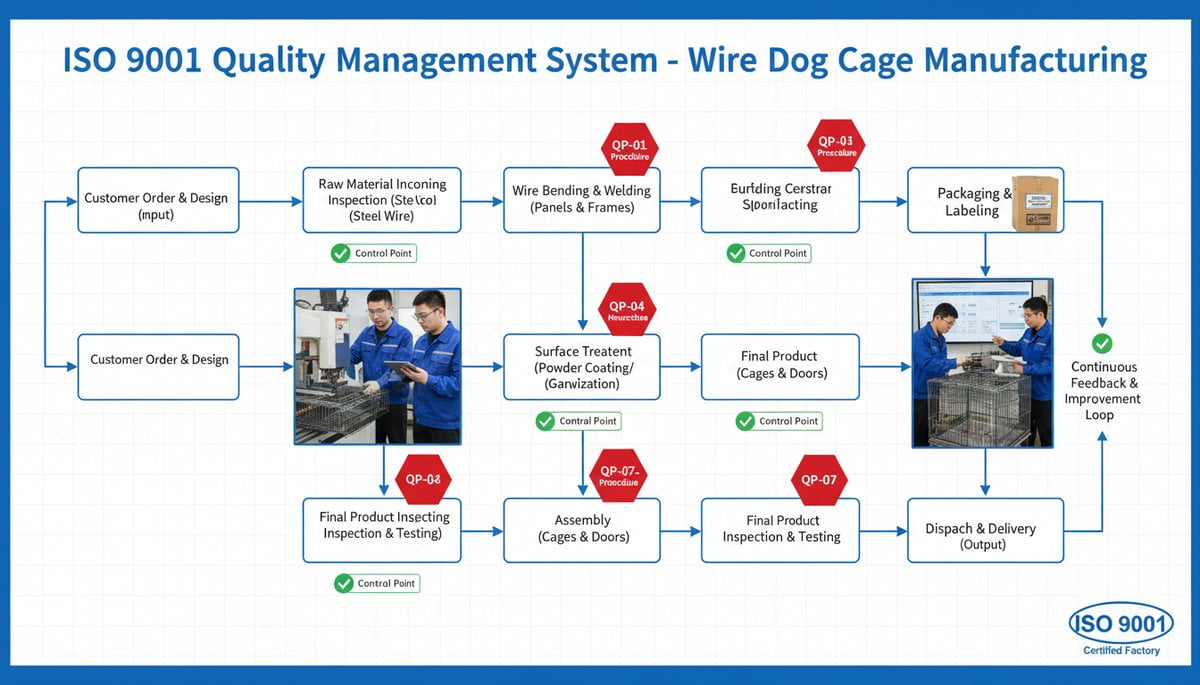
ISO 9001 is the core wire dog cage ISO standard you will see on factory walls and in sales decks. At its heart, ISO 9001 requires the manufacturer to define clear processes, assign responsibilities, train people, keep records, and continually improve based on data. For wire dog cage buyers, the most relevant areas include incoming material control, welding and fabrication processes, coating and curing, dimensional inspection, and final packing checks.
A typical ISO 9001-certified cage factory will maintain documented work instructions for key operations like wire cutting, bending, welding, deburring, and powder coating. Operators receive training records; machines are subject to preventive maintenance schedules; and non-conformities are logged with corrective actions. When you ask for evidence, the factory should be able to show you not only the ISO certificate, but also real examples of internal audits, control plans, and corrective action reports.
QMS Implementation in Cage Factories
In practice, a strong wire dog cage ISO 9001 system reshapes how the factory runs daily operations. Instead of relying on informal communication, supervisors use standardized checklists and control charts. For example, welding current and time may be logged hourly, and sample cages from each batch are measured against dimensional tolerances. If out-of-spec results appear, the line is stopped, the cause is investigated, and affected cages are quarantined rather than quietly mixed into the shipment.
For B2B buyers, this QMS discipline changes your role from “policing every shipment” to “reviewing a transparent system.” During factory audits, you can walk through the process flow, review documented procedures, and spot-check how wire dog cage ISO requirements are implemented at each station. You can also request to see how previous customer complaints were handled—ISO 9001 requires formal corrective and preventive action (CAPA), which should be visible in the factory’s records.
| ISO 9001 QMS Element | Wire Dog Cage Application | What Buyers Should Verify |
|---|---|---|
| Incoming Material Control | Wire diameter, steel grade, coating chemicals | Recorded specifications, supplier COAs, rejection criteria |
| Process Control | Welding parameters, oven temperature, line speed | Control plans, parameter logs, reaction plans for deviations |
| Inspection & Testing | Weld strength, coating thickness, dimension checks | Sampling plans, inspection records, gauge calibration |
| Corrective Actions | Handling non-conforming cages and customer claims | Documented CAPA forms, root-cause analysis quality |
When you see these QMS elements actively used—not just printed in a manual—you can trust that wire dog cage ISO 9001 is doing its job. If the factory cannot produce records, or if staff seem unfamiliar with documented procedures, that is a red flag that the certification may be superficial.
What we usually check first: ask line operators to show their work instructions and recent inspection logs. If they can’t locate documents within 2 minutes, or if records are blank/backdated, the ISO system is likely decorative rather than functional.
ISO 14001 for Dog Cage Manufacturing: Environmental Responsibility
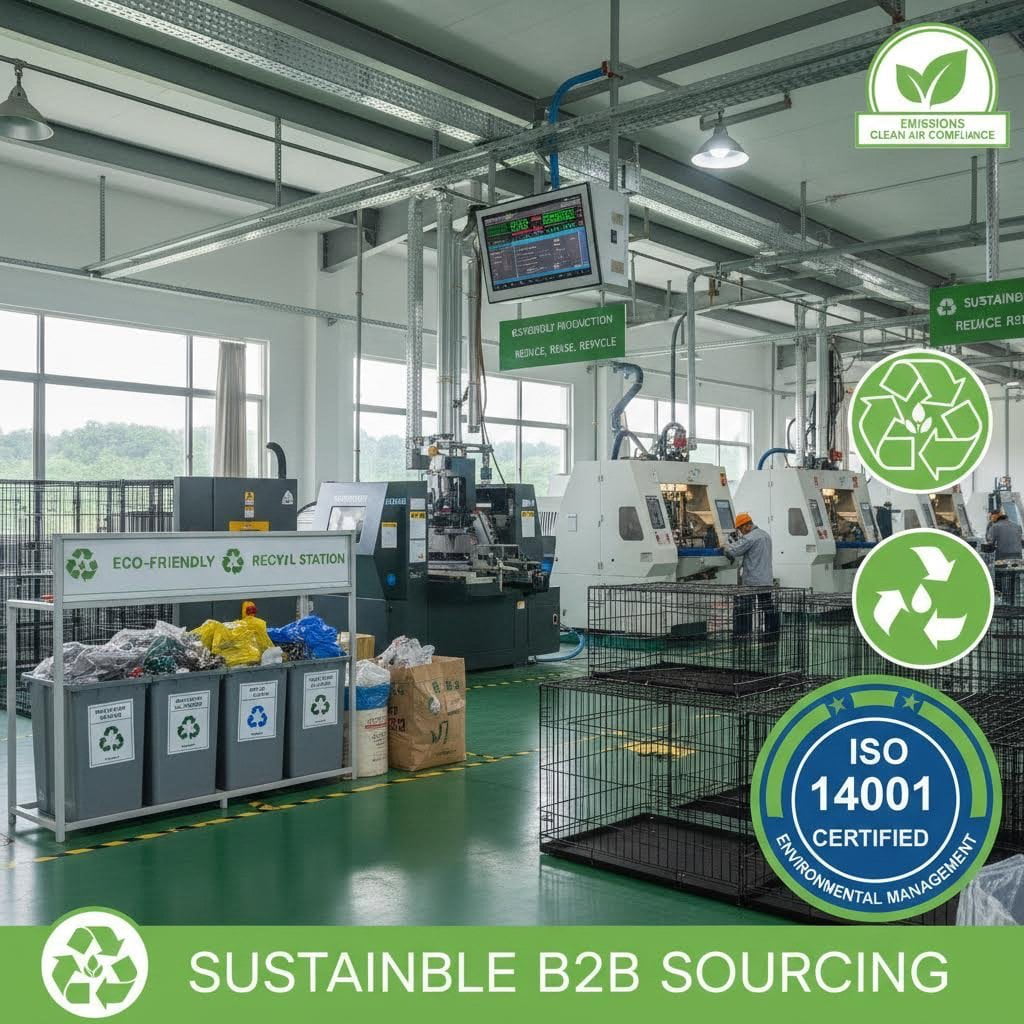
While ISO 9001 focuses on quality, ISO 14001 addresses environmental management systems. For wire dog cage manufacturers, this standard covers how they store and handle chemicals, manage powder or paint overspray, treat wastewater, and dispose of scrap metal and packaging. For many brands, especially in Europe and North America, partnering with ISO 14001-certified factories is becoming a requirement rather than a “nice-to-have.”
A factory that has implemented wire dog cage ISO 14001 will have identified its key environmental aspects—such as emissions from curing ovens, VOCs from coatings, and solid waste from reject cages. It will set objectives and targets (for example, reducing coating waste by 10% per year), monitor performance, and implement programs to achieve those goals. This structured approach not only reduces environmental impact but also improves efficiency and reduces material costs.
Environmental Standards Compliance
For B2B buyers, ISO 14001 provides evidence that the factory understands and complies with local environmental regulations. During audits, you can request permits, inspection reports from local authorities, and records of environmental monitoring. You can also walk through areas where chemicals are stored and ask how spills are prevented and handled. A mature wire dog cage ISO 14001 system will have clearly labeled containers, secondary containment, and emergency response procedures.
Although environmental management may seem distant from cage quality, it often correlates strongly with operational discipline. Factories that take ISO 14001 seriously tend to have better housekeeping, more stable coating processes, and fewer production interruptions due to regulatory issues. In other words, ISO 14001 indirectly supports the same goals you care about: stable wire dog cage supply, predictable quality, and reduced risk of sudden shutdowns.
| ISO 14001 Focus Area | Wire Dog Cage Impact | Buyer Audit Questions |
|---|---|---|
| Waste Management | Handling of scrap wire, defective cages, and used packaging | How are wastes classified, stored, and documented? |
| Chemical Handling | Storage of coatings, solvents, and cleaning agents | Are there MSDS files, spill kits, and clear labeling? |
| Energy & Emissions | Oven efficiency and emissions from curing processes | Does the factory track energy use and emissions trends? |
| Regulatory Compliance | Ability to pass government inspections without disruption | Any recent violations or corrective orders from authorities? |
By integrating ISO 14001 criteria into your supplier scorecards, you encourage cage manufacturers to upgrade their environmental systems over time. This not only improves your ESG story but also contributes to long-term supply stability.
Common Buyer Mistake
Impact of ISO Certification on Wire Cage Consistency
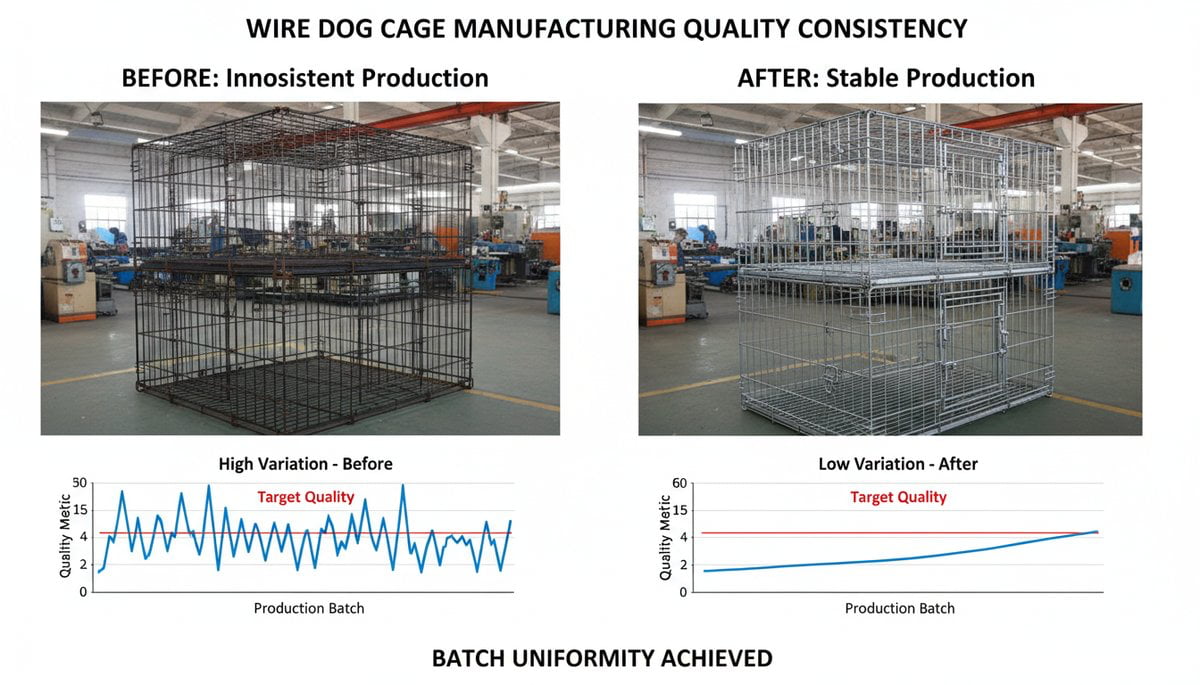
One of the biggest advantages of wire dog cage ISO systems is improved consistency—both within a single batch and across multiple orders. Under ISO 9001, processes are documented, monitored, and adjusted based on data rather than guesswork. That means weld penetration, coating thickness, and cage dimensions are less likely to vary wildly between shifts or when new operators come on board.
Consistency is particularly important when you serve multiple markets with different safety standards. While Blog 25 explains global standards and certifications at a high level, the ISO-focused approach in this article shows how those principles are enforced inside the factory. When ISO is working well, you will see fewer surprises during pre-shipment inspections, lower variability in test results, and more predictable performance under ASTM or EU testing protocols that you may require later in the supply chain.
Stabilized Processes
Standard operating procedures and parameter controls reduce random variation in welding and coating, which directly improves wire dog cage ISO quality performance.
Faster Problem Resolution
When defects occur, ISO systems require root-cause analysis and documented corrective actions, preventing the same cage issues from recurring across future orders.
Better Traceability
Traceability records allow you to link a faulty pallet of cages back to specific wire lots, machines, or shifts, enabling targeted improvements rather than generic blame.
In short, wire dog cage ISO certification is not just a credential; it is a mechanism for locking in process stability. Buyers who understand this can design sourcing strategies that prioritize ISO-certified factories and then build contract clauses that reference specific ISO clauses for dispute resolution and continuous improvement.
Audit Checklist: ISO Compliance on the Factory Floor
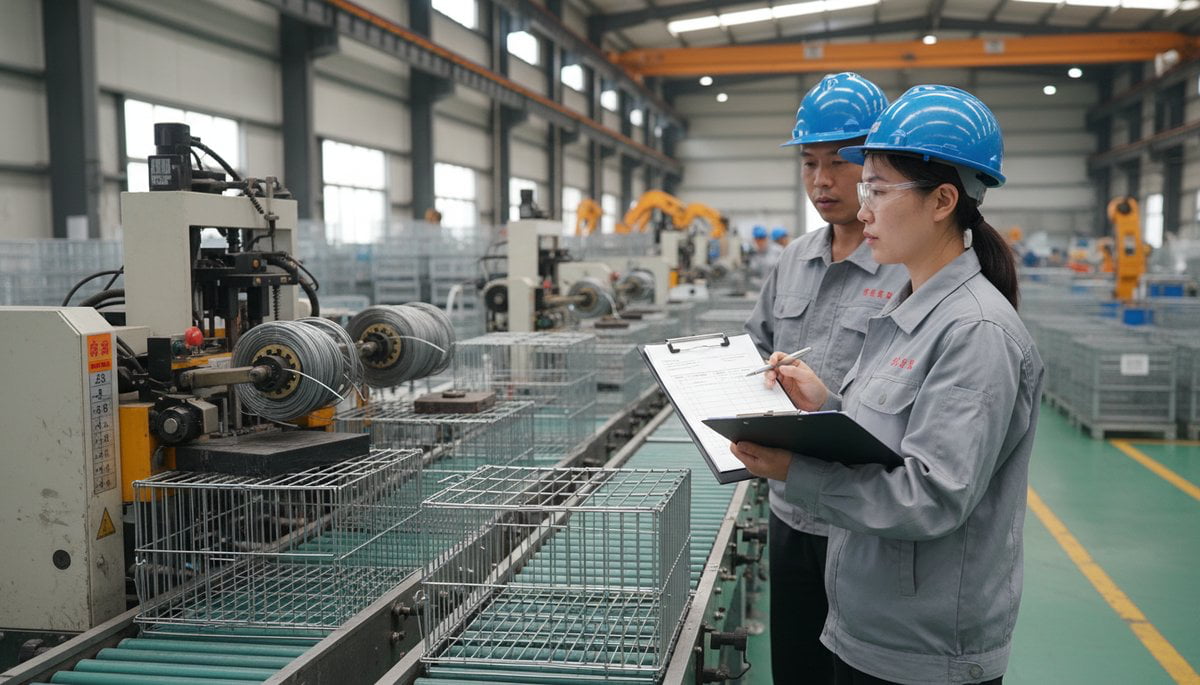
When visiting a potential or existing wire dog cage ISO supplier, you should go beyond simply photocopying certificates. A structured audit checklist helps you confirm that ISO requirements are actually implemented in daily operations. You do not need to be a certified auditor; by focusing on a few practical indicators, you can quickly distinguish a living system from a decorative one.
Before the visit, review the factory’s ISO 9001 and ISO 14001 certificates and note the scope, issuing body, and validity dates. Cross-check whether wire dog cage manufacturing is explicitly included in the scope. During the visit, walk through the process from incoming materials to finished goods, asking operators to show you records and instructions they use. If you already have a factory audit checklist for cage suppliers from your quality control framework on CageSilo, you can integrate the ISO-specific checks below.
- Can operators explain key process parameters and show written instructions?
- Are inspection records up to date, legible, and signed by responsible staff?
- Is non-conforming material clearly identified and segregated from good stock?
- Are environmental risks (chemicals, dust, noise) identified with visible controls?
| Audit Area | What to Look For | Typical Red Flags |
|---|---|---|
| Document Control | Controlled copies of procedures near workstations | Photocopies with handwritten changes, outdated versions in use |
| Training Records | Signed training logs for welders and inspectors | Blank or generic training forms, no cage-specific skills listed |
| Non-Conformance Handling | Labeled quarantine areas and NCR forms | Mixed good and bad cages, no clear tagging or records |
| Environmental Controls | Spill kits, labeled drums, waste segregation | Open chemical containers, leaking drums, no emergency signage |
Audit Warning
How to Verify ISO Certificate Authenticity for Cage Suppliers
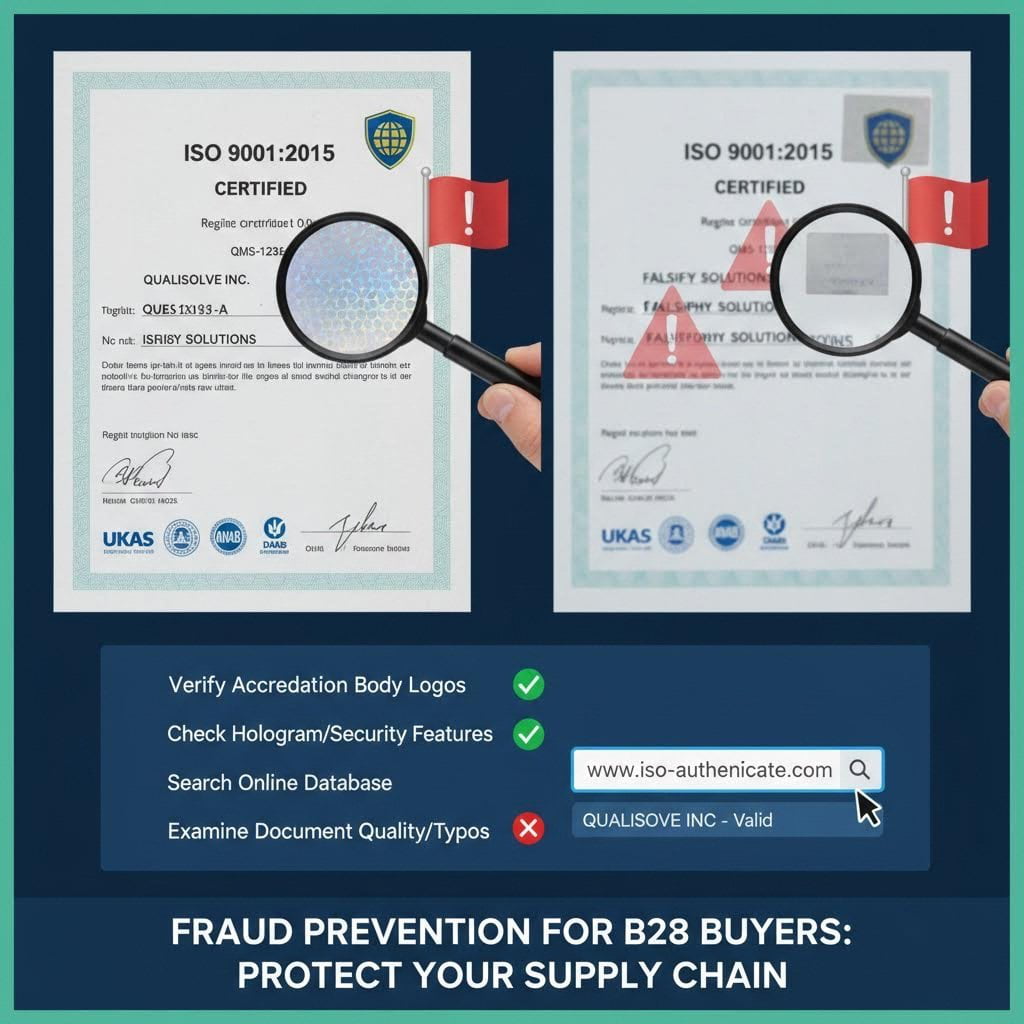
Unfortunately, not all wire dog cage ISO certificates are genuine or current. Some factories use expired certificates, while others may present documents issued by non-accredited bodies. To protect yourself, you need a simple verification workflow that does not require expert knowledge but reliably filters out problematic certificates.
Start by checking the basic details: certificate number, company name, site address, standard version (for example, ISO 9001:2015), issue date, and expiry date. Make sure the scope explicitly mentions metal cages, pet products, or related manufacturing activities. Then look up the certification body—reputable bodies are typically accredited by national or international accreditation forums such as IAF. Many certification bodies provide online lookup tools where you can confirm that the wire dog cage ISO certificate number and company name match their database.
- Verify the accreditation status of the certification body on official accreditation websites.
- Use the certificate number to search on the certifier’s portal—mismatched company names are a red flag.
- Check whether the certificate covers all manufacturing sites involved in your orders.
Whenever possible, keep verified copies of certificates in your supplier files and note verification dates. This simple practice strengthens your due-diligence trail and supports your own quality certifications or audits. For a broader discussion of manufacturer credential checks, you can reference our guide on selecting wire dog cage manufacturers.
FAQ: Common Wire Dog Cage ISO Questions
Conclusion: Leveraging ISO Standards for Competitive Advantage
Key Takeaways
• ISO 9001 and ISO 14001 complement each other—one stabilizes manufacturing processes, the other manages environmental risks that can threaten supply.
• Buyers who understand ISO can design better audits, verify certificates, and build stronger long-term partnerships with cage manufacturers.
ISO certification is both a risk filter and a performance baseline. Buyers who verify ISO authenticity, audit actual implementation, and reference ISO clauses in contracts typically experience fewer quality disputes and faster issue resolution than those who treat certificates as decorative credentials.
Our practical approach: for new suppliers, verify ISO 9001 certificate and conduct initial QMS audit before first PO; for strategic suppliers, add ISO 14001 requirement and schedule annual on-site reviews; for multi-market programs, use ISO as foundation and layer market-specific compliance (ASTM, CE) on top.
ISO systems evolve, certificates expire, and factory management changes. Treat ISO verification as an ongoing process: maintain updated certificate files, set annual review reminders, and re-audit whenever ownership or production scope changes significantly. Teams that operationalize this workflow usually gain more stable supply, fewer emergency reworks, and stronger negotiating position when quality issues arise.
You can reduce claims, support your brand’s ESG commitments, and enter demanding markets with confidence that your upstream manufacturing partners operate with the same discipline you expect in your own organization.
External References
For more detailed information on wire dog cage ISO frameworks and accreditation, consult the following resources:
Internal References: For overall standards context, see our global guide to wire dog cage standards and certifications on CageSilo, as well as detailed articles on ASTM standards and EU regulations within the same Pillar 2 cluster.
Ready to Source Quality Wire Dog Crates?
Our 25+ years of OEM manufacturing experience ensures consistent quality for your wire dog crate needs. Request a sample or get a custom quote today.

Mr. Deng Jiang
Hi, I'm Mr. Deng Jiang, a professional in the pet products industry. With years of experience in designing and manufacturing pet crates, I focus on helping brands improve product quality and meet industry standards. My work is driven by a passion for pets and innovation, and I’m committed to sharing insights that help both manufacturers and consumers make informed decisions.