What Wire Dog Cage Standards & Certifications Are Required for Global Compliance?
Wire dog cage standards and certifications are not just paperwork—they directly determine market access, risk exposure, and buyer confidence in B2B sourcing. In our experience, most compliance failures happen before shipment, when buyers rely on supplier claims without document verification.
This guide is built for practical execution. We break down ISO, ASTM, and EU requirements by market, then show how to evaluate suppliers, verify certificates, and reduce compliance risk before placing bulk orders.
As B2B buyers expand internationally, compliance has become a baseline requirement rather than a premium add-on. Regulatory enforcement is tighter, and downstream customers increasingly ask for test records and conformity documents. This article explains what to check, in what order, and where buyers usually make expensive mistakes. Visit CageSilo for more B2B sourcing resources.
Key Insight
Why Wire Dog Cage Standards Matter for B2B Buyers

Wire dog cage standards serve multiple critical functions in the B2B supply chain. In our experience, they are most useful as pre-order screening tools: if a supplier cannot clearly map product specs to recognized standards, downstream quality and compliance issues are much more likely. Standards set minimum safety requirements that protect end-users—whether pet owners, veterinary clinics, or animal shelters—from product failures that could harm animals or damage property. For buyers, they also create a common language for factory audits, sample evaluation, and contract terms. Check our manufacturer selection guide to find qualified suppliers.
Beyond safety, compliance with recognized wire dog cage standards opens doors to premium markets. Major retailers and distributors typically require suppliers to demonstrate conformity with relevant standards before agreeing to stock their products. In the European Union, CE marking is legally mandatory for pet cages, while in North America, adherence to ASTM standards, though often voluntary, provides significant competitive advantages.
<
The financial implications of standards compliance are substantial. Non-compliant products face customs rejection, recalls, and potential legal liability. Smart buyers factor certification costs into their sourcing budgets and prioritize manufacturers with established quality management systems. This upfront investment pays dividends through reduced returns, enhanced brand reputation, and access to broader distribution channels. Explore our quality control framework for comprehensive guidance.
Global Standards Overview: ISO, ASTM & EU Framework
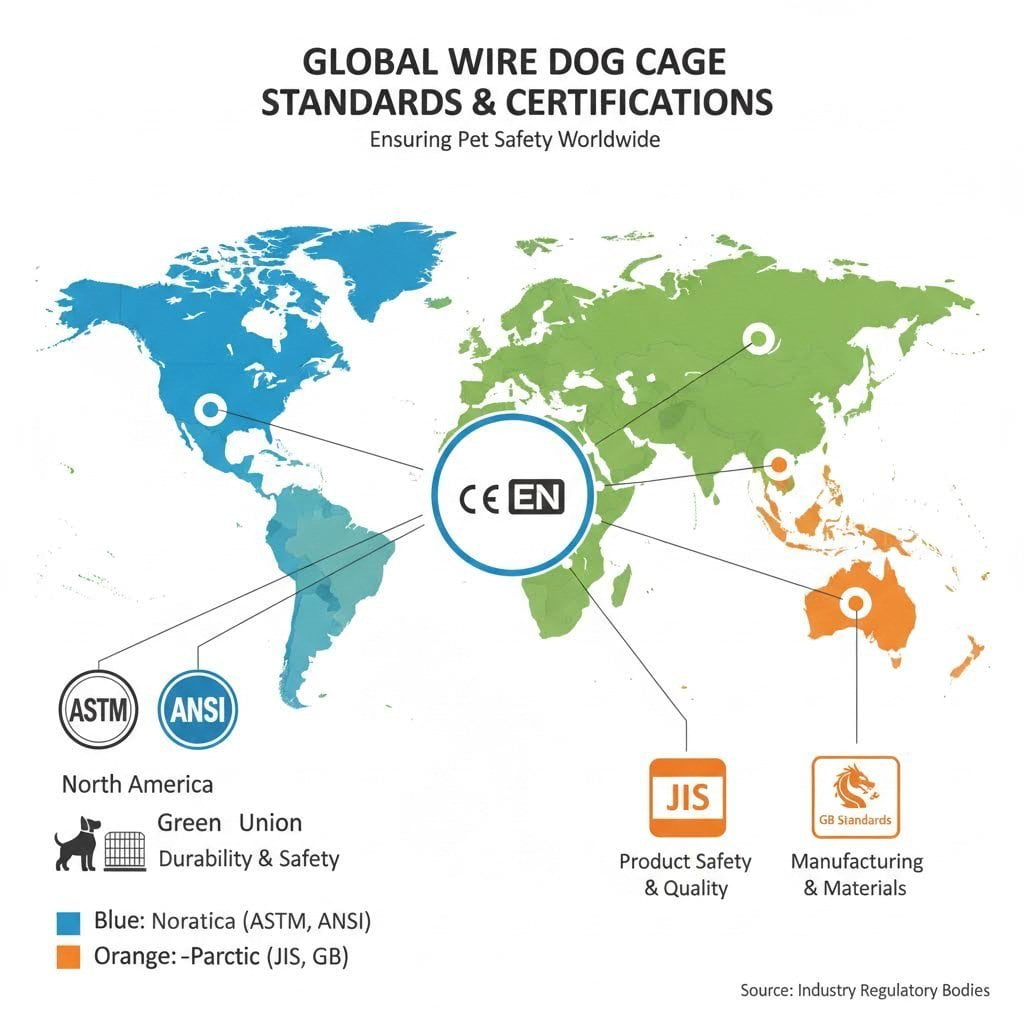
The global standards landscape for wire dog cages encompasses three primary frameworks, each serving distinct markets and purposes. Understanding these systems’ relationships and differences enables buyers to make informed sourcing decisions and ensure comprehensive compliance coverage.
ISO Standards: Quality Management Foundation
ISO (International Organization for Standardization) provides the foundational quality management framework that underpins manufacturing excellence. ISO 9001 certification demonstrates that a manufacturer maintains consistent quality management processes, while ISO 14001 indicates environmental management commitment. Though not product-specific, these certifications signal organizational maturity and reduce supplier risk.
ASTM Standards: Safety & Performance Benchmarks
ASTM International develops technical standards that specifically address pet cage safety and performance. ASTM F2056 covers structural and technical requirements for pet crates, helping ensure cages can safely contain animals under normal use conditions. These standards provide concrete testing methodologies that buyers can reference when evaluating product samples and conducting factory audits.
EU Regulations: Comprehensive Safety Mandates
The European Union maintains the world’s most stringent pet product regulations. CE marking requirements under the General Product Safety Directive, combined with chemical safety mandates through REACH and ROHS, create a comprehensive compliance framework. EU-bound products must meet these requirements to legally enter the market.
| Standard System | Primary Region | Core Focus | Certification Type |
|---|---|---|---|
| ISO 9001/14001 | Global | Quality & Environmental Management | Management System |
| ASTM F2056/F638 | North America | Product Safety & Performance | Technical Standard |
| CE/REACH/ROHS | European Union | Safety & Chemical Compliance | Regulatory Mandatory |
| GB/T Standards | China | National Quality Benchmarks | National Standard |
Regional Compliance Requirements by Market
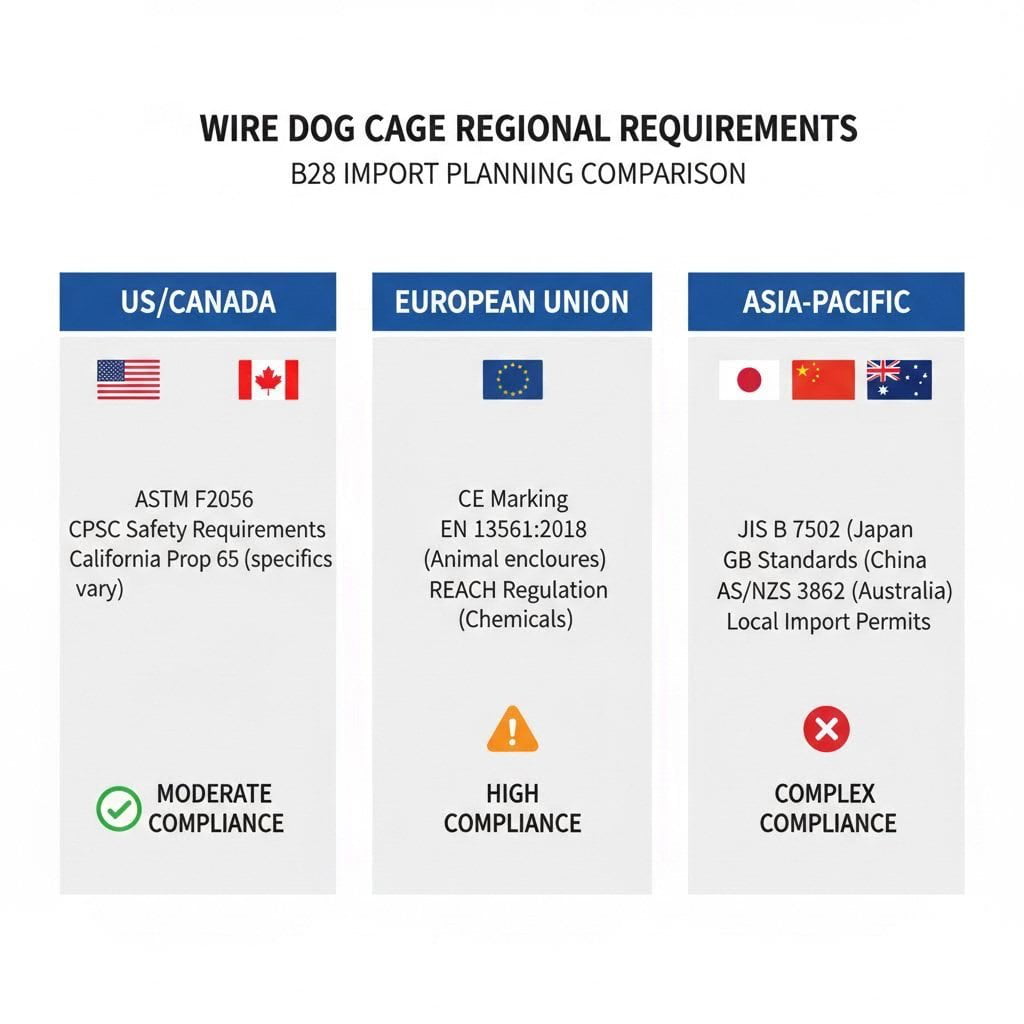
Different markets impose varying compliance obligations on wire dog cage importers. Successful B2B buyers develop market-specific compliance strategies that align with regional regulatory environments and customer expectations.
North America Requirements
The United States and Canada operate under relatively flexible regulatory frameworks where industry standards often substitute for government mandates. While no federal law mandates specific cage standards, liability concerns drive most responsible manufacturers toward ASTM compliance. Retail giants like Amazon and Petco increasingly require suppliers to demonstrate conformity with recognized safety standards, effectively making certification a market access requirement.
European Union Requirements
The EU presents the most complex compliance environment. All pet cages must bear CE marking, indicating conformity with the General Product Safety Directive. Additionally, chemical safety requirements under REACH restrict hazardous substances, while ROHS limits specific materials in product construction. Buyers targeting European markets must ensure their suppliers maintain comprehensive technical documentation and testing records.
Asia-Pacific Requirements
Asia-Pacific markets display significant regulatory diversity. Japan maintains strict quality standards through JIS certifications, while Australia requires compliance with ACCC safety guidelines. Emerging markets like Southeast Asia increasingly adopt international standards as they integrate into global supply chains. B2B buyers should verify specific requirements for each target market rather than assuming uniform standards across the region.
| Target Market | Mandatory Certifications | Testing Requirements | Documentation |
|---|---|---|---|
| United States | None (ASTM recommended) | CPSC safety testing | Certificate of Compliance |
| European Union | CE marking (mandatory) | EN 71, REACH testing | Technical file, DoC |
| United Kingdom | UKCA marking | BS EN standards | UK technical documentation |
| Japan | JIS certification | Product safety testing | JIS compliance certificate |
| Australia | ACCC compliance | Consumer safety testing | Safety assessment report |
What We Usually Recommend by Market
• North America-focused buyers: prioritize ASTM test readiness and retailer documentation format.
• Multi-market buyers: use ISO 9001 suppliers as a base, then add market-specific compliance per SKU.
<
Key Certifications for Wire Dog Cage Imports
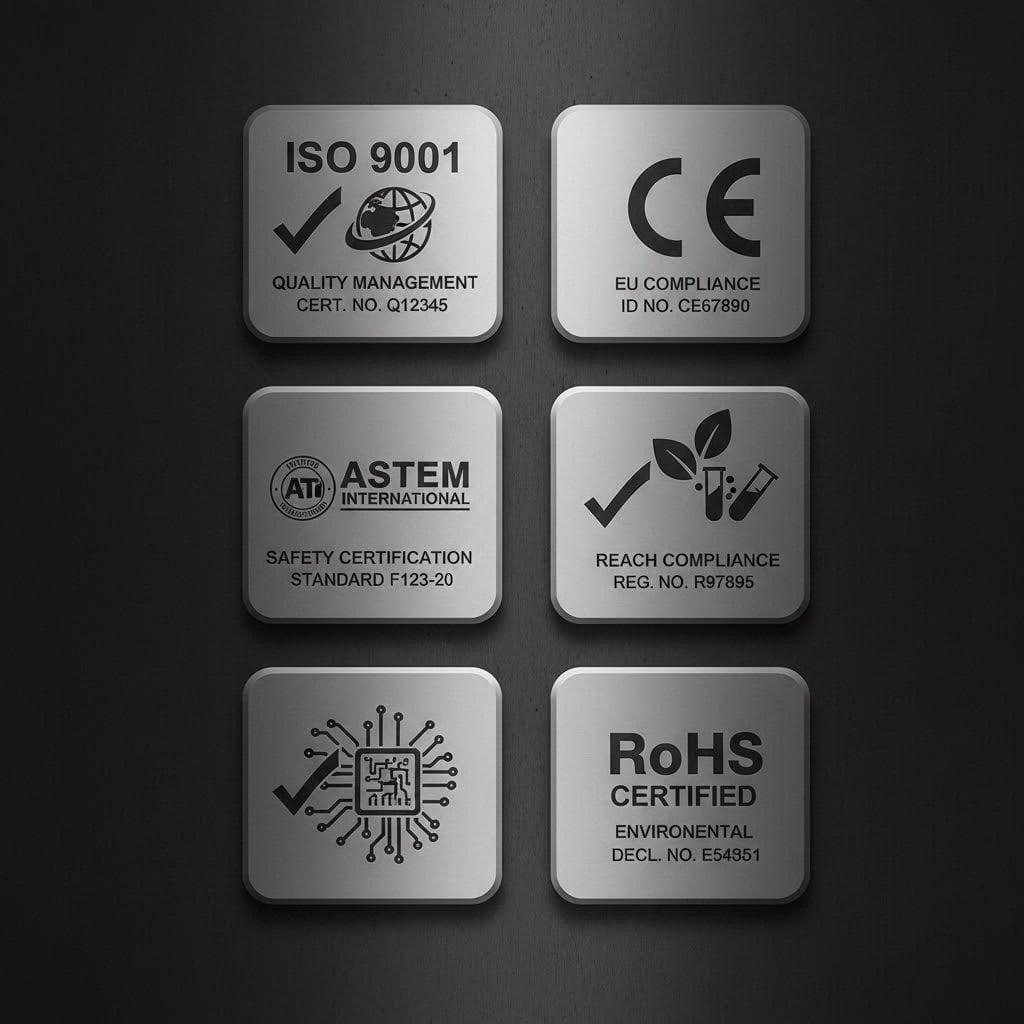
Understanding specific certifications helps buyers evaluate supplier capabilities and plan compliance investments. The following certifications represent the most relevant credentials for wire dog cage sourcing across major markets.
ISO 9001 Quality Management Systems certification demonstrates that a manufacturer maintains documented quality processes, conducts regular internal audits, and pursues continuous improvement. While not product-specific, ISO 9001 certification significantly reduces supplier risk by ensuring consistent manufacturing practices. Buyers should verify certification validity through accredited registrars.
ASTM F2056 Standard Specification for Engineering and Technical Requirements for Pet Crates addresses structural integrity, ventilation requirements, and safety features. Though voluntary, this standard provides objective benchmarks for product evaluation and is increasingly required by major retailers.
CE Marking under GPSD (General Product Safety Directive) is mandatory for all pet cages sold in the European Economic Area. The marking indicates that products meet essential safety requirements and that appropriate conformity assessment procedures have been completed.
REACH and ROHS Compliance certifications address chemical safety concerns. REACH restricts Substances of Very High Concern (SVHC) in products, while ROHS limits hazardous substances like lead and cadmium in electrical components (if cages include electronic features).
Important Warning
<
The Certification Process: Step-by-Step Guide

Navigating the certification process requires systematic planning and coordination with qualified manufacturers. The following framework helps B2B buyers manage compliance from initial supplier assessment through final certification.
Assess Target Market Requirements
Identify mandatory and recommended standards for your target markets. Consult with customs brokers, legal advisors, or compliance consultants to understand specific documentation requirements.
<
Evaluate Manufacturer Capabilities
Review existing certifications, quality management systems, and testing capabilities. Request copies of current certificates and verify authenticity with issuing bodies. Assess willingness to pursue additional certifications if needed.
<
Develop Testing Protocol
Define required testing based on target standards. Determine whether testing will occur at manufacturer facilities, third-party labs, or both. Establish pass/fail criteria and documentation requirements.
<
Execute Testing & Documentation
Conduct required testing according to established protocols. Compile technical documentation including test reports, risk assessments, and manufacturing specifications. Ensure all documentation meets regulatory requirements.
<
Documentation Requirements
Comprehensive documentation underpins successful certification. Required documents typically include technical files detailing product specifications, manufacturing processes, and quality control procedures; test reports from accredited laboratories; risk assessments identifying potential hazards and mitigation measures; and declarations of conformity signed by authorized representatives.
Buyers should establish document management systems that organize certifications by supplier, product line, and target market. Digital document repositories with version control ensure that outdated certificates don’t accidentally accompany shipments, which could cause customs delays or rejections.
Compliance Costs & Timeline Analysis
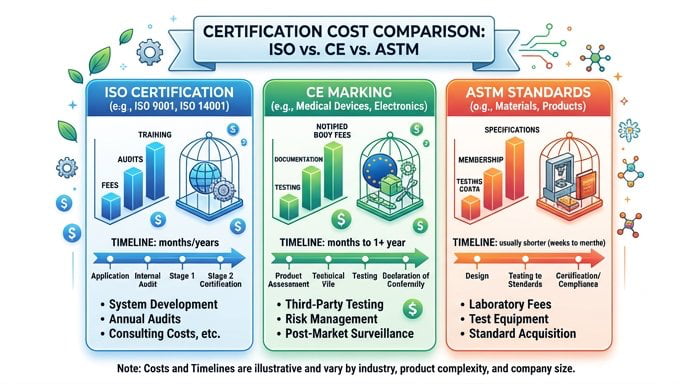
Certification investments vary significantly based on product complexity, target markets, and manufacturer readiness. Understanding cost structures helps buyers budget appropriately and evaluate certification return on investment.
Initial Certification Costs include testing fees ($500-3,000 per standard), consultant fees ($1,000-5,000 for complex projects), documentation preparation ($500-2,000), and potential facility improvements to meet standard requirements. Manufacturers with existing ISO 9001 systems typically face lower costs than those starting from scratch.
Annual Maintenance Costs encompass surveillance audits ($1,000-3,000), periodic retesting ($300-1,500), certificate renewal fees ($200-800), and ongoing documentation updates. These recurring costs should factor into long-term supplier relationships and pricing negotiations.
Timeline Considerations vary by certification type. ISO 9001 certification typically requires 3-6 months from initial assessment through final audit. Product-specific testing like ASTM F2056 may complete in 4-8 weeks if samples are readily available. CE marking projects range from 2-6 months depending on required testing and documentation complexity.
<
Common Compliance Mistakes to Avoid

Experienced buyers recognize recurring compliance pitfalls that derail sourcing projects. Avoiding these common mistakes saves time, money, and market access opportunities.
Mistake 1: Assuming Certification Transferability. A certificate valid for one product model doesn’t automatically extend to similar products. Each SKU requires individual evaluation, and even minor design changes may necessitate retesting. Buyers must verify that certificates cover specific products they intend to purchase.
Mistake 2: Neglecting Ongoing Compliance. Certification isn’t a one-time event. Standards evolve, certificates expire, and manufacturing changes affect compliance. Buyers should establish monitoring systems to track certificate validity and standard updates that might impact their product lines.
Mistake 3: Relying on Supplier Claims Without Verification. Unscrupulous suppliers may present counterfeit certificates or claim compliance without proper testing. Always verify certifications directly with issuing bodies, particularly for high-risk markets like the European Union.
Mistake 4: Ignoring Component Compliance. Wire dog cages contain multiple components—coatings, plastics, hardware—that each carry compliance obligations. Comprehensive compliance requires evaluating the entire bill of materials, not just the finished product.
What we usually recommend: build a compliance checklist into RFQ and sample approval. If a supplier cannot provide clear certificate scope, test report date, and issuing body details, pause the order before PO confirmation.
Red Flag Alert
<
Building a Standards-Compliant Supply Chain
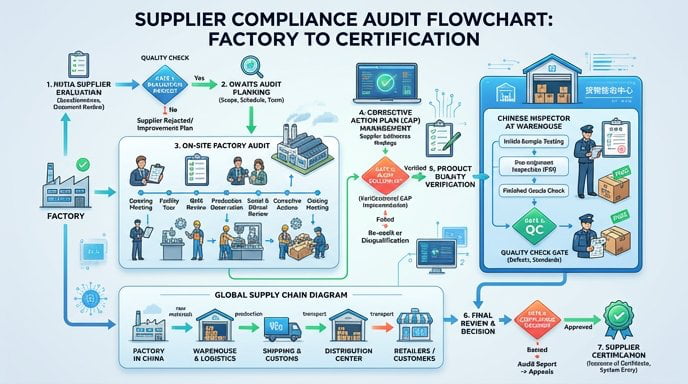
Long-term sourcing success requires embedding compliance into supplier relationships and procurement processes. Proactive buyers develop systematic approaches that ensure consistent standards adherence across their supply chains.
Supplier Qualification Framework. Establish minimum certification requirements as gate criteria for supplier onboarding. Require ISO 9001 certification for all strategic suppliers, and mandate market-specific certifications (CE, ASTM) before first orders. Include compliance obligations in supplier agreements with clear consequences for non-conformance.
Continuous Monitoring Systems. Implement regular compliance audits verifying that certifications remain current and manufacturing processes haven’t deviated from approved specifications. Schedule annual certificate reviews and maintain documentation archives accessible to quality and logistics teams.
Cross-Functional Compliance Teams. Engage quality, legal, and procurement personnel in compliance decisions. Quality teams evaluate technical compliance; legal advisors interpret regulatory requirements; procurement negotiates certification cost-sharing with suppliers.
FAQ: Common Questions About Wire Dog Cage Standards
<
<
<
<
<
Conclusion
Key Takeaways
• ISO 9001 signals supplier maturity: While not product-specific, quality management certification reduces sourcing risks significantly
• Documentation diligence prevents customs disasters: Always verify certificates directly with issuing bodies
• Build compliance into supplier relationships: Include certification requirements in agreements and conduct regular audits
<
Wire dog cage standards and certifications are both a compliance requirement and a sourcing filter. Buyers who use standards early—during supplier screening and sample approval—typically reduce downstream risk more effectively than those who check documents only before shipment.
Our practical approach: for EU projects, validate CE and chemical documentation first; for North American retail projects, align ASTM testing and report format early; for multi-market programs, prioritize ISO-based process stability plus per-market compliance layers.
Standards evolve, certificate scopes change, and product revisions can invalidate previous reports. Treat compliance as an ongoing system: maintain a document library, set renewal reminders, and re-check certificate scope whenever SKU specs change. Teams that operationalize this workflow usually gain faster market entry and fewer costly surprises.
External References: ISO 9001 Quality Management | ASTM F2056 Standard | EU CE Marking Guidelines