How Is Wire Dog Cage Pricing Calculated? Understanding Every Cost Factor
Wire dog cage pricing depends on multiple cost factors including raw materials, manufacturing processes, surface treatments, and packaging requirements. Understanding how manufacturers calculate prices helps B2B buyers make informed sourcing decisions and negotiate better deals. This comprehensive guide breaks down every cost component so you can optimize your procurement strategy and avoid common pricing mistakes.
Many buyers focus solely on the quoted price without understanding what drives wire dog cage pricing. However, price reflects a complex interplay of material choices, production methods, quality standards, and logistical considerations. When you understand these factors, you can identify cost-saving opportunities without compromising product quality.
Understanding Wire Dog Cage Pricing Fundamentals
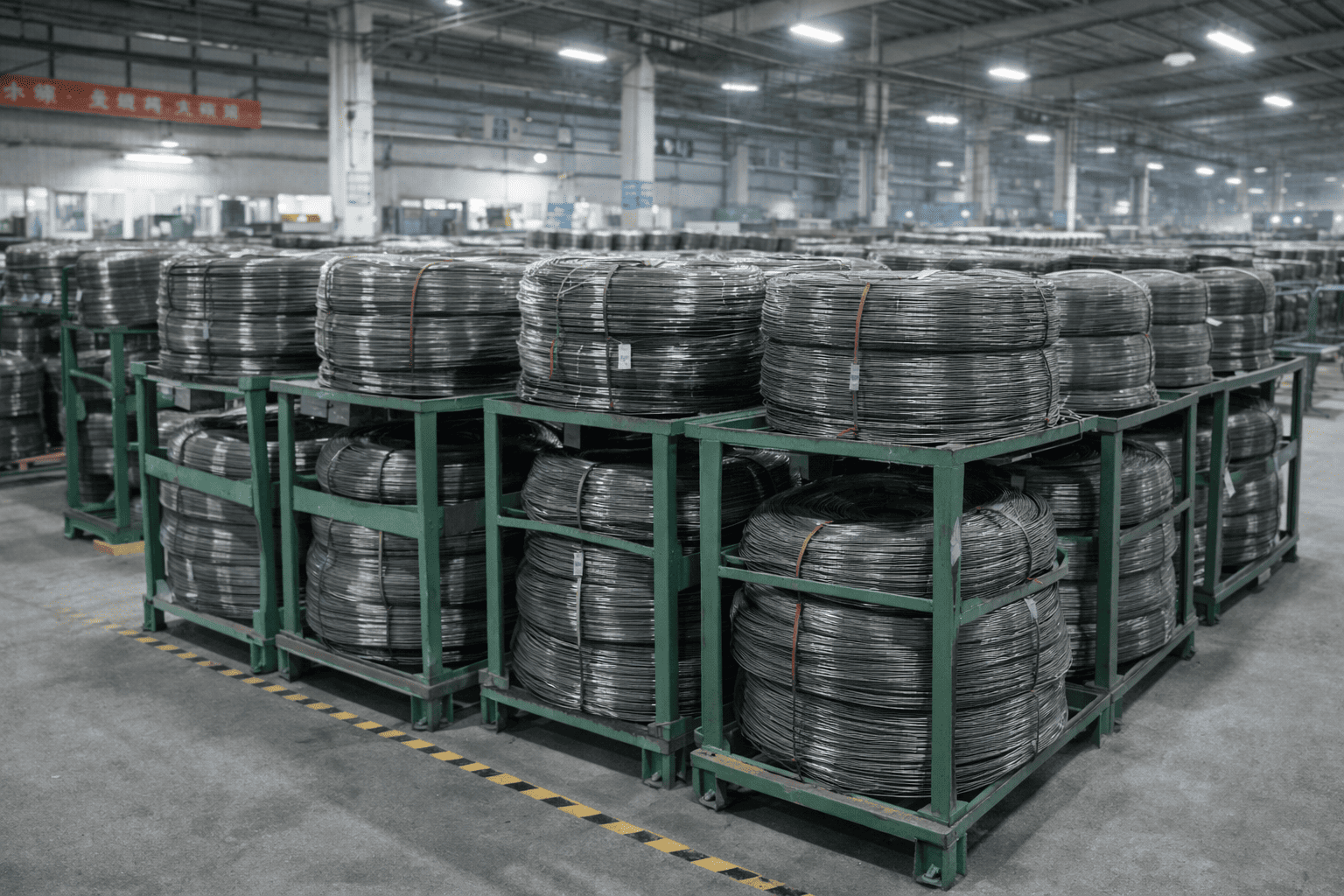
Wire dog cage pricing is not arbitrary. Manufacturers calculate prices based on detailed cost analysis of every production stage. Each component contributes to the final unit cost, from raw material sourcing to final packaging. Understanding these fundamentals helps you evaluate quotes objectively and identify negotiation opportunities.
The pricing structure varies significantly based on order volume, quality requirements, and customization needs. A manufacturer offering a lower price might be cutting corners on materials or quality control. Conversely, higher quotes often reflect superior materials, better quality processes, and more reliable production capabilities.
Why Wire Dog Cage Pricing Remains Complex for B2B Buyers
Several factors contribute to pricing complexity in the wire dog cage industry. First, material prices fluctuate based on global steel markets. Second, different manufacturing methods offer varying cost-quality trade-offs. Third, packaging and logistics requirements add significant but often overlooked costs. Finally, quality standards and certifications impact both upfront and long-term costs.
Buyers must navigate these variables while balancing budget constraints with quality requirements. The challenge lies in identifying the optimal combination of cost factors that meets your specific needs without overpaying for unnecessary features or sacrificing critical quality standards.
Pricing Breakdown: What Drives Wire Dog Cage Costs?
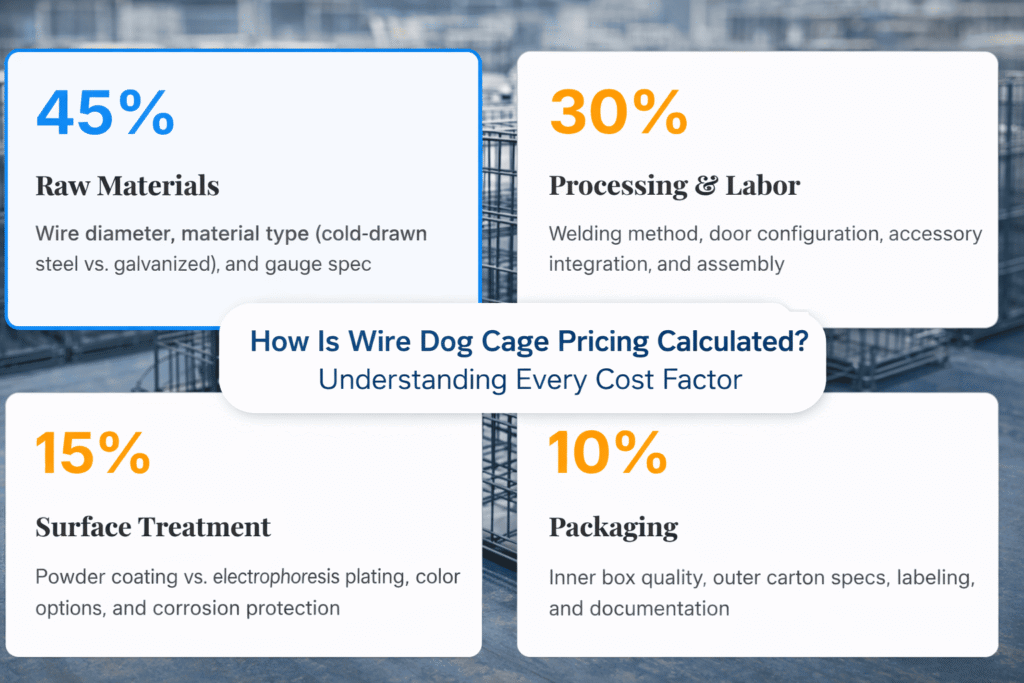
Understanding the cost structure helps you make informed sourcing decisions and optimize your budget allocation.
Raw Materials
Wire diameter, material type (cold-drawn steel vs. galvanized), and gauge specifications
Processing & Labor
Welding method, door configuration, accessory integration, and assembly
Surface Treatment
Powder coating vs. electrophoresis plating, color options, and corrosion protection
Packaging
Inner box quality, outer carton specs, labeling, and documentation
Key Insight for Buyers
Raw materials account for nearly half of total wire dog cage pricing, making wire diameter and material quality the most significant price drivers. However, processing choices (door configuration, accessories, welding method) offer the most flexibility for cost optimization without compromising core quality.
Raw Materials: The Wire Dog Cage Price Foundation
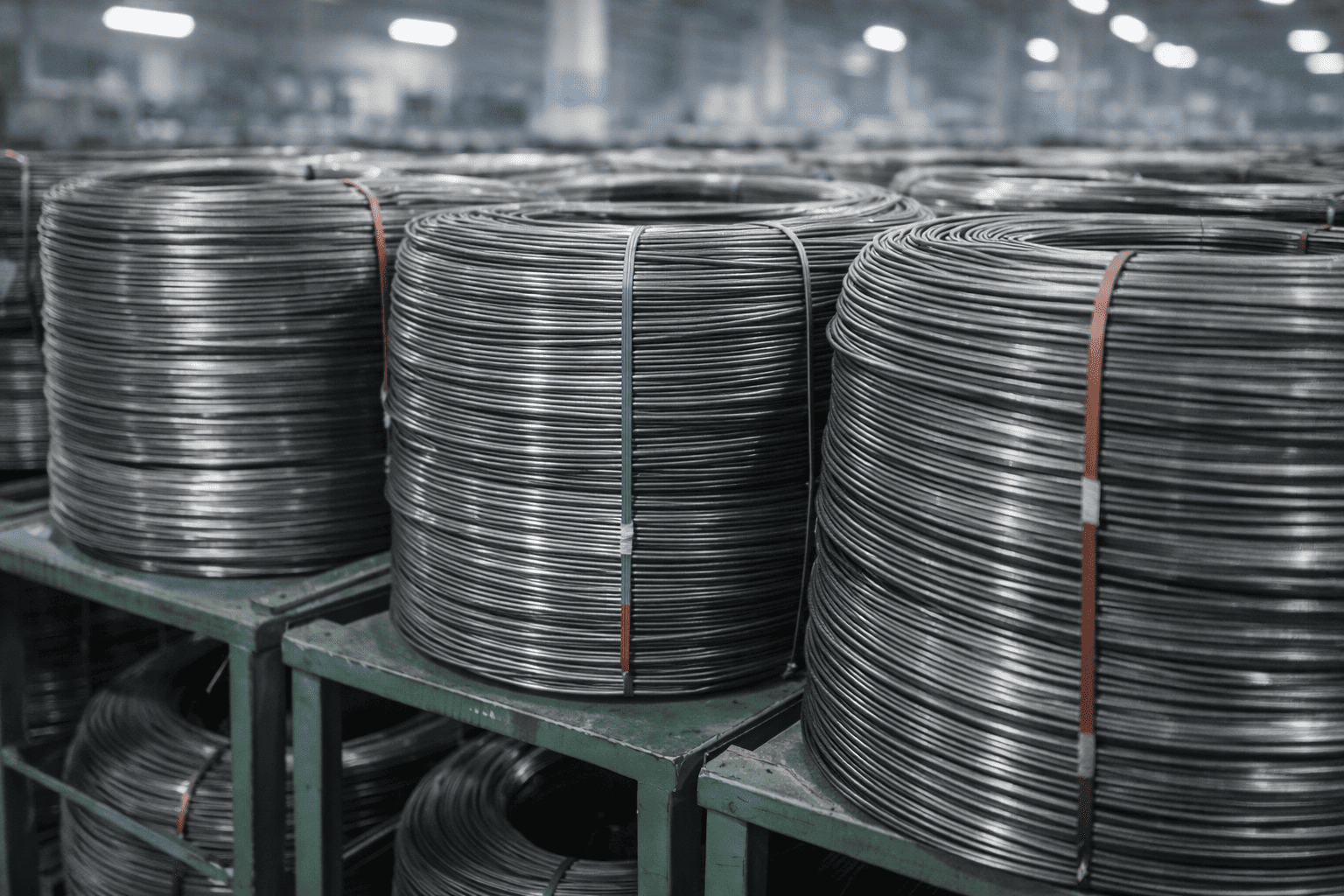
Raw material costs represent the largest component of wire dog cage pricing. The type of steel, wire diameter, and quality grade all significantly impact the final price. Manufacturers typically source steel from specialized suppliers, and market fluctuations directly affect production costs.
Wire diameter alone can change material costs by 15-30% depending on specifications. Thicker wire provides stronger cages but requires more material and higher welding energy. Conversely, thinner wire reduces costs but may compromise structural integrity. Finding the optimal balance requires understanding your product’s specific strength requirements.
Material quality grades also affect pricing. While Q195 cold-drawn steel serves as the industry baseline, higher-grade materials like Q235 offer superior strength at a moderate cost increase. Premium options like galvanized or stainless steel provide enhanced durability but at significantly higher price points.
Steel Wire Types: Cold-Drawn vs. Galvanized vs. Stainless
Cold-drawn steel represents the industry standard for wire dog cage manufacturing. This material offers excellent cost-performance balance and works well for most indoor applications. Approximately 90% of wire dog cages use cold-drawn steel due to its reliability and competitive pricing.
Galvanized steel provides enhanced corrosion resistance through a zinc coating process. This option costs 10-15% more than cold-drawn steel but delivers superior rust protection. Galvanized wire dog cages are ideal for humid environments or outdoor applications where moisture exposure is common. However, less than 10% of orders choose this option based on specific performance needs.
Stainless steel offers the highest durability and corrosion resistance. However, based on 25+ years of manufacturing experience, stainless steel is not suitable for most wire cage applications. While exceptionally durable, it costs 200-300% more than cold-drawn steel and rarely justifies the expense for standard wire dog cage production.
Wire Diameter Cost Impact and Material Calculations
Wire diameter directly determines material usage and processing costs. Increasing wire diameter by 0.5mm typically adds 5-8% to material costs, with proportional impacts on welding and processing. Frame wires require the thickest gauge as they carry structural loads, while horizontal and vertical wires can use thinner specifications.
Horizontal wire density also affects material costs. More closely spaced horizontal wires increase strength but add material weight and production time. Buyers must balance cage requirements with cost considerations. Standard spacing patterns offer good cost-performance balance for most applications.
Material waste rates during manufacturing also impact final pricing. Experienced manufacturers minimize waste through efficient cutting patterns and quality control. Inefficient production can waste 5-10% more material, increasing costs unnecessarily. Working with established manufacturers helps control these hidden costs.
Wire Diameter Cost Impact Reference
| Wire Component | Cost Impact | Key Considerations |
|---|---|---|
| Frame Wire (Outer) | Cost driver #1 | Thickest gauge, carries structural loads |
| Horizontal Wire | Density ↑ = Cost ↑ | Spacing affects material usage and strength |
| Vertical Wire | Moderate impact | Spacing determines security and visibility |
| Latch Hardware | Separate component | Quality affects durability and user experience |
| Divider/Bottom Panel | Optional add-ons | Custom features increase material usage |
Rule of thumb: Increasing wire diameter by 0.5mm typically adds 5-8% to material cost, with proportional impact on welding and processing requirements.
Processing: How Manufacturing Choices Affect Wire Dog Cage Pricing

Manufacturing processes represent approximately 30% of wire dog cage pricing. The choice of welding method, assembly techniques, and automation levels significantly impacts production costs. Buyers who understand these process options can optimize pricing without sacrificing quality.
Different welding methods offer varying cost-quality trade-offs. Manual welding provides maximum flexibility for customization but has higher labor costs. Mesh welding delivers economies of scale for medium to large batch runs. Robotic welding offers the lowest per-unit cost for high-volume, repetitive production.
Door configuration also affects processing costs. Single-door designs require less material and labor, reducing costs by 3-5%. Double-door configurations represent the industry standard baseline. Triple-door options add 3-5% to costs but are only available for large sizes and specialized applications.
Assembly and quality control processes add to processing costs but prevent expensive failures downstream. Reputable manufacturers invest in proper fixtures, training, and inspection systems. These investments increase upfront costs but reduce long-term expenses through lower defect rates and fewer warranty claims.
Welding Methods: Manual vs. Mesh vs. Robotic
Welding Method Comparison
Different welding methods optimize for different production scales and order profiles.
Manual Welding
For Small-Batch & High-Mix
Baseline cost. Offers maximum flexibility for multi-SKU programs, customization, and prototype development.
Mesh Welding
For Medium to Large Batch Runs
-5-10% cost reduction. Delivers economies of scale for structured, high-volume production with stable designs.
Robotic Welding
For High-Volume & Repetitive Precision
-8-15% cost reduction. Provides high automation and consistency for large-scale, repeatable assembly operations.
Selecting the right welding method depends on your order volume, SKU variety, and customization requirements. For first-time buyers or small orders, manual welding offers the best flexibility. For established product lines with stable specifications, mesh or robotic welding delivers significant cost savings.
Manufacturing location also affects processing costs. Regions with lower labor costs can offer competitive pricing but may have longer lead times or quality variability. Established manufacturing hubs often provide better quality control and faster turnaround at slightly higher costs. Buyers must balance these factors based on their priorities.
Door Configuration Cost Variations
Door configuration significantly impacts wire dog cage pricing. More doors require additional cut-outs, hinges, latches, and assembly labor. Each door represents an additional manufacturing step and quality control checkpoint.
Single-door designs reduce material usage and assembly complexity, typically costing 3-5% less than double-door models. These configurations work well for basic applications where cost efficiency is prioritized. However, single-door cages may limit placement flexibility and user convenience.
Double-door configurations represent the industry standard and pricing baseline. Front and side doors provide versatile placement options and convenient access for pets and owners. The moderate cost increase delivers significant usability benefits that justify the investment for most applications.
Triple-door options add a third door, typically on the top or opposite side. These configurations cost 3-5% more than double-door models and are only available for larger sizes (42″ and 48″). Triple-door cages serve specialized use cases where maximum access flexibility is required.
Accessories and Their Pricing Impact
Accessories add functionality but increase wire dog cage pricing. Each accessory requires additional materials, processing time, and quality control. Understanding these costs helps buyers make informed decisions about which features are essential versus optional.
Accessories Cost Reference
Each accessory adds material cost, processing time, and QC requirements. Plan your accessory strategy carefully.
Handle
+$0.20-0.50 per unit
Standard large orders include 1 handle per unit
Divider
+$2.00-6.00 per unit
Double compartment design
Bottom Panel
+$3.00-8.00 per unit
Bottom reinforcement
Bowl
+$1.50-5.00 per unit
Food and water container
Rolling Wheels
+$2.00-5.00 per set
Mobility enhancement
Cover
+$5.00-15.00 per unit
Protective enclosure
Folding Design: All wire dog cages feature collapsible design as industry standard. This reduces shipping volume and lowers overall logistics costs, offsetting some of the accessory expenses.
Buyers should carefully consider which accessories truly add value for their target market. Unnecessary accessories increase costs without providing corresponding customer benefits. Strategic accessory selection optimizes wire dog cage pricing while meeting user needs.
Surface Treatment Options and Cost Implications
Surface treatment represents 15% of wire dog cage pricing but significantly impacts product durability and aesthetics. The choice between powder coating, electrophoresis, and electroplating affects both upfront costs and long-term performance.
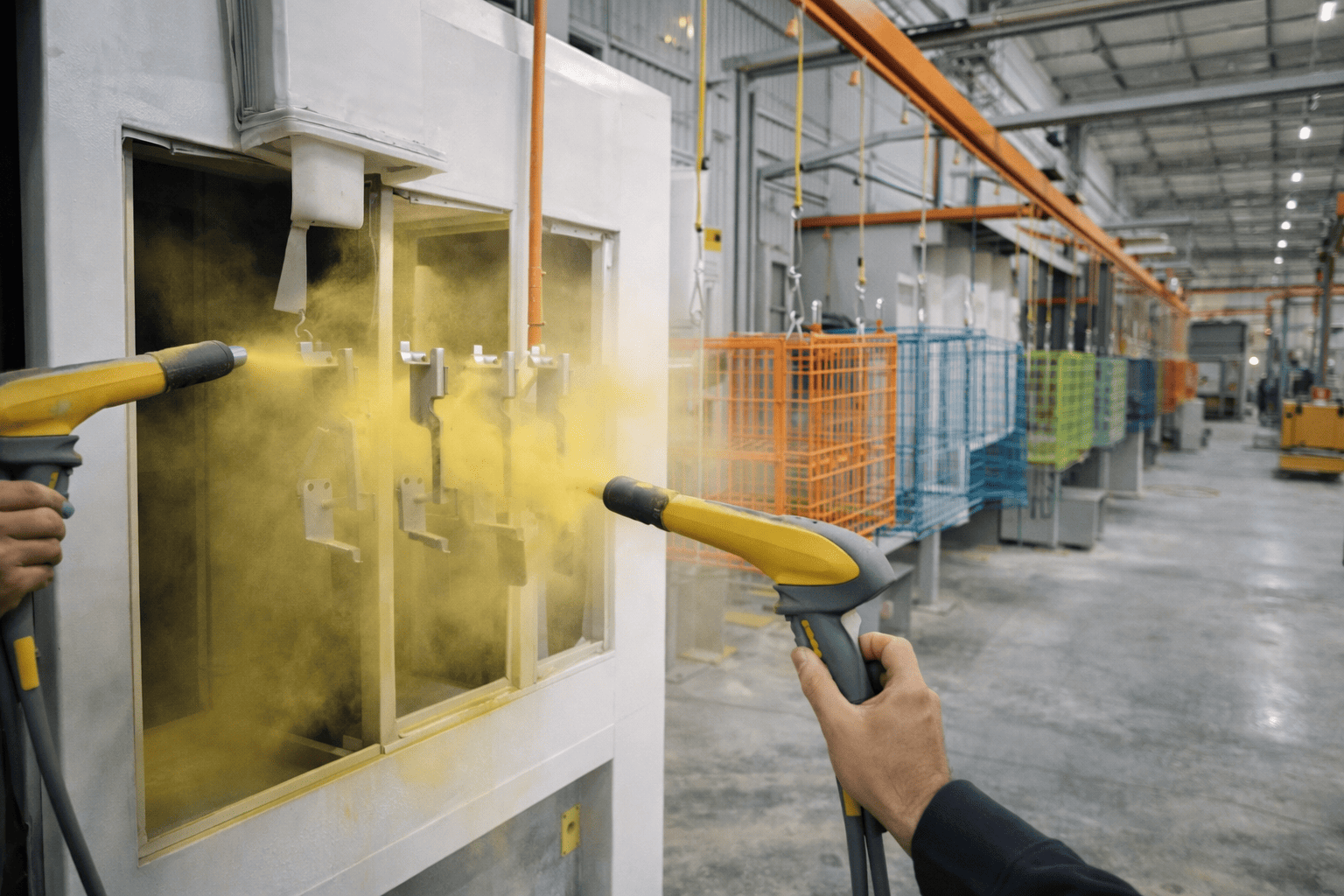
Interestingly, electrophoresis plating is actually cheaper than powder coating while offering better corrosion protection for outdoor applications. This counterintuitive fact represents an important opportunity for cost optimization. Many buyers assume powder coating is the standard choice without understanding the cost-performance trade-offs.
Surface treatment affects wire dog cage pricing through material costs, processing time, and quality requirements. Premium finishes like electroplating cost 10-15% more but deliver superior aesthetics and durability. Standard options like powder coating offer good performance at competitive prices.
Quality control for surface treatment adds to overall costs but prevents expensive failures. Proper coating thickness, adhesion testing, and corrosion resistance verification prevent premature rust and customer complaints. Investing in quality surface treatment reduces long-term warranty costs and protects brand reputation.
Powder Coating vs. Electrophoresis: A Cost-Benefit Analysis
Surface Treatment Comparison
| Treatment | Cost | Durability | Best For | Color Options |
|---|---|---|---|---|
| Powder Coating | Baseline | Standard | Indoor use | Extensive palette |
| Electrophoresis | -2 to -5% | Superior | Outdoor / humid environments | Limited options |
| Electroplating | +10 to +15% | Premium | High-end applications | Metallic finishes |
Electrophoresis plating offers the best value for outdoor applications. The electrochemical process provides superior corrosion protection at a lower cost than powder coating. For products exposed to humidity or outdoor conditions, electrophoresis delivers better performance and cost savings.
Powder coating remains the preferred choice for indoor applications where color variety and premium aesthetics are priorities. The extensive color palette allows precise brand matching and retail presentation. While more expensive than electrophoresis, powder coating provides excellent durability for standard indoor use.
Electroplating represents the premium option for high-end applications. The metallic finishes create a luxury appearance ideal for premium product lines. However, the 10-15% cost premium limits electroplating to specialized applications where visual appeal justifies the investment.
Choosing the Right Surface Treatment for Your Budget
Choose Powder Coating When:
- Indoor applications with moderate humidity
- Brand requires specific color matching
- Retail display requires premium aesthetic finish
- Cost is secondary to visual appeal
Choose Electrophoresis When:
- Outdoor or high-humidity environments
- Superior corrosion resistance required
- Cost optimization is priority
- Extended product lifespan expected
The right surface treatment choice depends on your application, environment, and budget constraints. For most indoor pet products, powder coating provides the best balance of cost and performance. For outdoor or humid applications, electrophoresis offers superior corrosion protection at lower cost.
Packaging: The Hidden Cost Factor in Wire Dog Cage Pricing
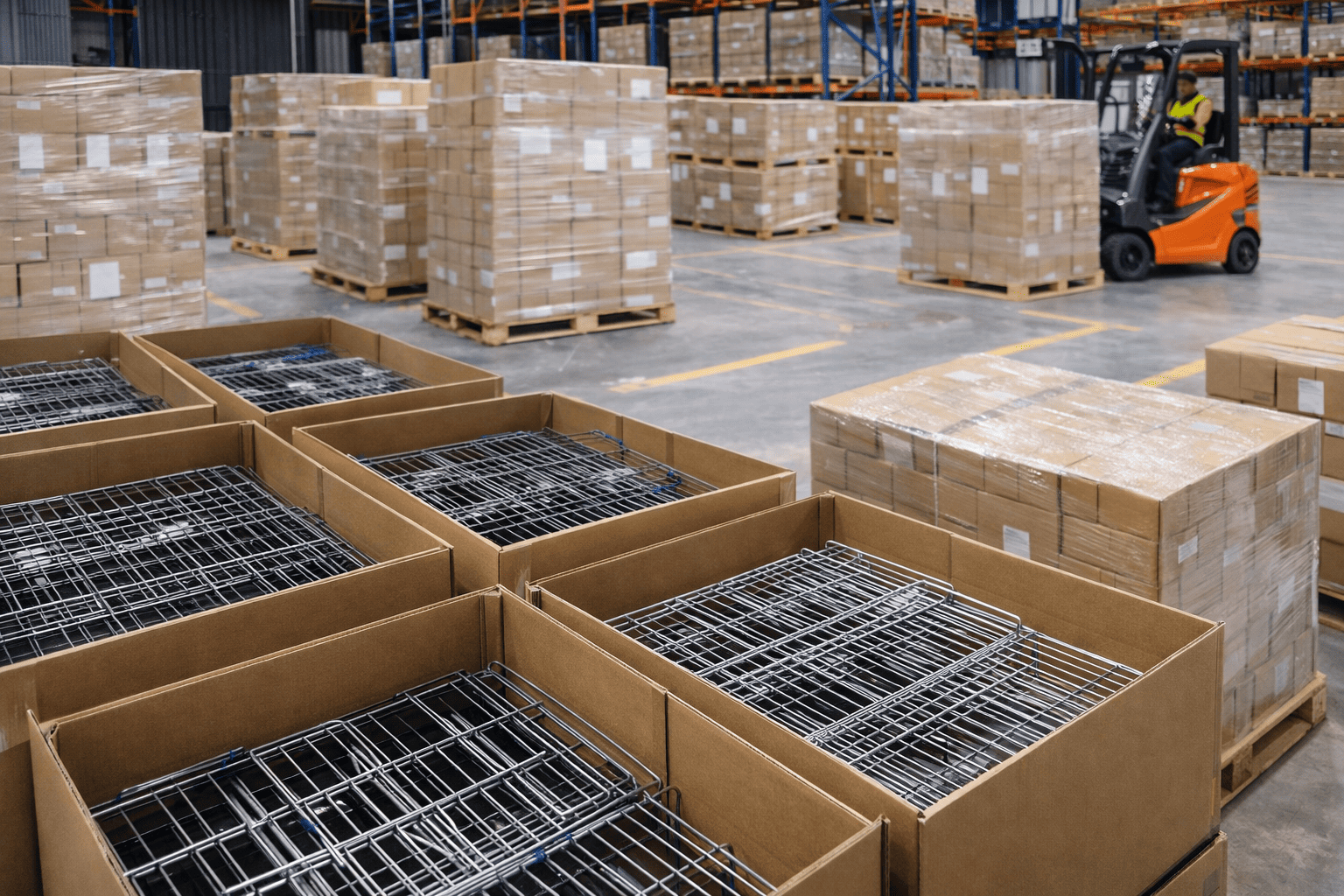
Packaging accounts for approximately 10% of wire dog cage pricing but significantly impacts shipping efficiency, damage rates, and brand presentation. Smart packaging choices can offset other cost factors and reduce total landed costs.
All wire dog cages fold flat for shipping. Optimizing packaging around collapsed dimensions can reduce container utilization costs by 15-25% compared to assembled shipping. Proper packaging design represents a significant opportunity for cost optimization that many buyers overlook.
Packaging quality affects damage rates during shipping. Poor packaging leads to returns that cost 2-3x the original unit price due to shipping, restocking, and reputational damage. Investing in better packaging reduces these hidden costs and improves customer satisfaction.
Inner Box and Outer Carton Selection
Inner box options range from basic kraft paper to premium color boxes. Kraft paper represents the baseline cost but offers minimal protection. Corrugated boxes add 5-10% to packaging costs but provide better protection. Color boxes cost 15-25% more but enhance retail presentation and brand value.
Outer carton requirements vary by destination market. Standard corrugated cardboard works for most applications. Heavy-duty cartons add 10-20% for high-weight loads. Some countries require specific carton dimensions or nailing specifications, adding additional costs.
Multi-pack configurations reduce per-unit packaging costs. Bundling multiple units in one outer carton lowers material and handling costs while improving container loading efficiency. Buyers should evaluate multi-pack options for SKUs with consistent sales volumes.
Packaging Optimization for Cost Reduction
Packaging Optimization Strategies
1. Collapsed Dimensions Matter
All wire dog cages fold flat. Optimizing packaging around collapsed dimensions can reduce container utilization costs by 15-25% compared to assembled shipping.
2. Corner Protection
Inexpensive corner guards (+$0.05-0.15 per unit) can reduce transit damage rates by 30-50%, significantly lowering warranty and replacement costs.
3. Multi-Pack Configuration
Bundling multiple units in one outer carton reduces per-unit packaging material and handling costs while improving container loading efficiency.
4. Documentation Integration
Pre-printed carton information reduces label application labor and ensures consistent customs clearance across different markets.
Cost-saving tip: Discuss packaging optimization early in the design phase. Small changes here often yield higher ROI than negotiating material costs.
Buyers should work closely with manufacturers on packaging optimization. Small investments in better packaging reduce shipping costs, damage rates, and customer returns. These savings often exceed the incremental packaging costs, delivering net savings and improved customer satisfaction.
MOQ and Bulk Discount Structure
Minimum Order Quantities (MOQs) and bulk discount structures significantly impact wire dog cage pricing. Understanding how manufacturers structure volume pricing helps buyers optimize order quantities and procurement cycles.
MOQs reflect production setup realities including line configuration, material allocation, and stable coating batches. Production setups have fixed costs that must be amortized across volume. Smaller quantities can be produced but carry higher per-unit overhead, reflected in pricing tiers.
For small B2B buyers facing high MOQ requirements, flexible MOQ solutions can help navigate minimum order quantity constraints without compromising quality or increasing risk. Understanding hidden costs beyond the price quote is also essential for accurate total landed cost calculation.
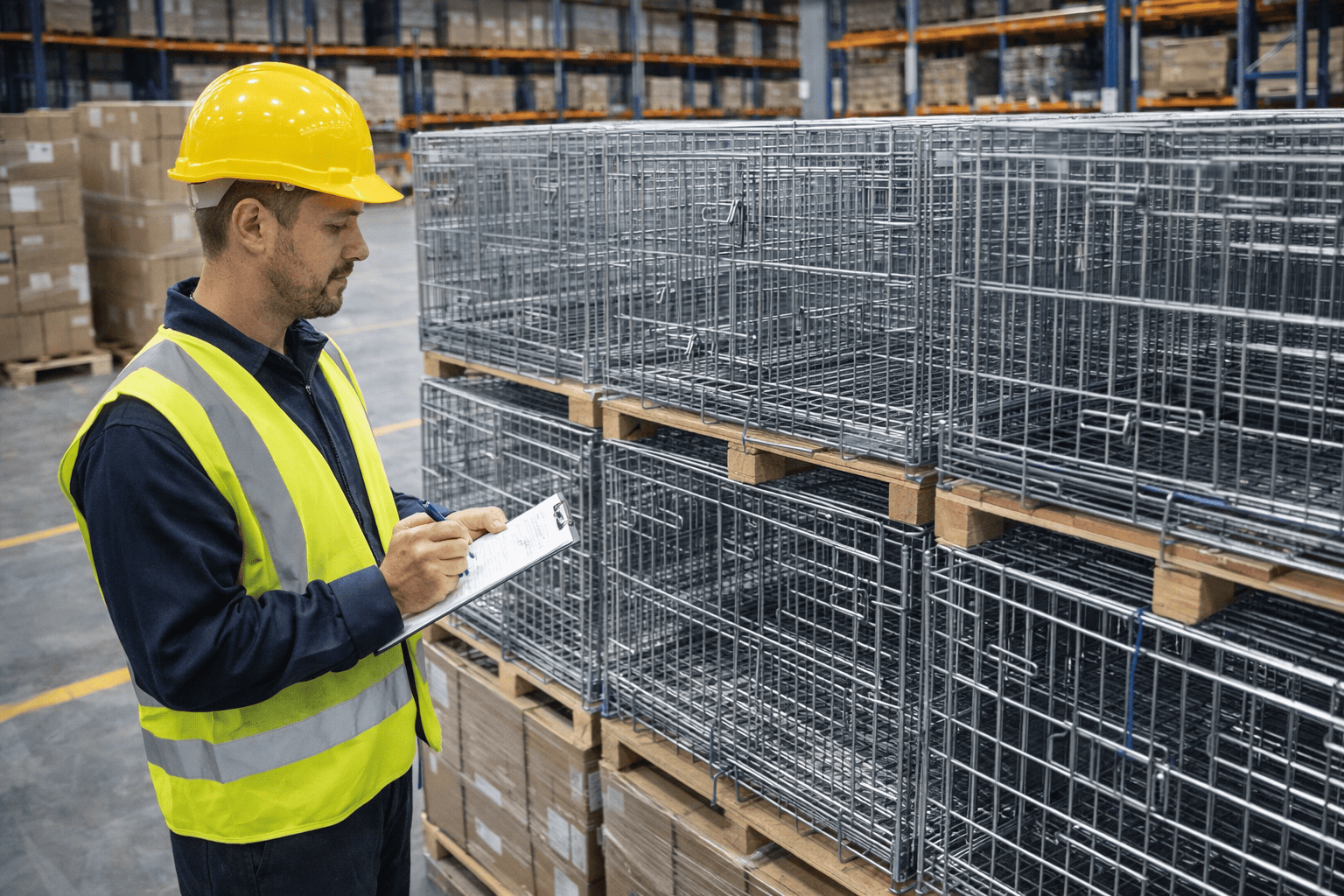
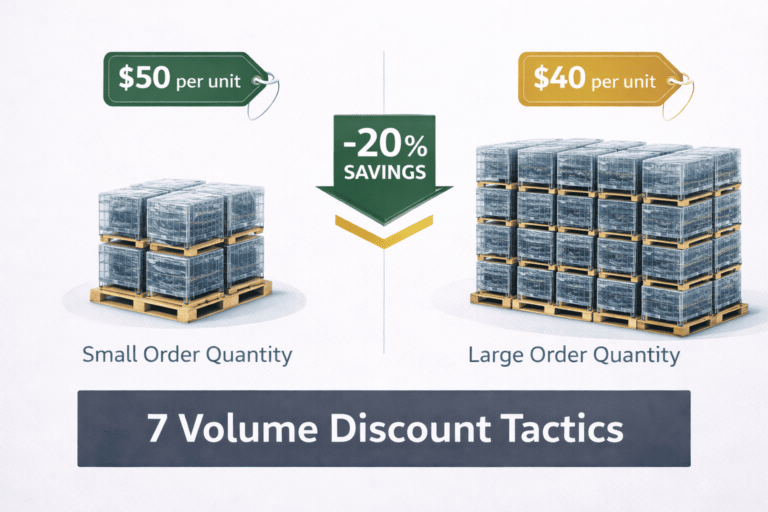
Bulk discount structures typically follow tiered pricing based on order quantity. Reaching higher volume tiers unlocks percentage discounts that significantly impact per-unit costs. Strategic procurement planning can maximize these volume discounts without overstocking inventory.
Multi-SKU consolidation offers another path to volume pricing. Combining multiple SKUs to reach aggregate volume thresholds unlocks better pricing across the entire product line. This approach benefits buyers with diverse product ranges. For advanced volume discount negotiation tactics, explore our detailed guide on reducing unit costs by 15-30% through strategic bulk purchasing.
Understanding Why MOQs Exist in Manufacturing
Why MOQs Exist
MOQs reflect setup realities: line configuration by size/spec, material allocation, and stable coating batches. Production setups have fixed costs that must be amortized across volume. Smaller quantities can be produced but often carry higher per-unit overhead, which is reflected in pricing tiers.
Manufacturers must cover fixed costs including machine setup, line configuration, material preparation, and quality control initialization. These costs exist regardless of order quantity. Spreading fixed costs across larger volumes reduces per-unit overhead, enabling lower prices.
Material sourcing also influences MOQs. Steel suppliers often have minimum purchase quantities. Manufacturers must purchase sufficient material to cover production runs, requiring minimum order commitments from buyers.
Quality control processes add another layer of MOQ considerations. Establishing production parameters, setting up inspection systems, and validating first articles require time and resources. These startup costs must be amortized across production volumes.
Volume Pricing Tiers and How They Work
MOQ Pricing Tiers (Per SKU)
First-time buyer threshold
Base Price
Initial scaling
-1 to -2%
Volume production
-3 to -5%
Partner pricing
-5 to -8%
Volume pricing tiers reward larger orders with percentage discounts. The discount percentages compound across price categories, creating significant savings at higher volumes. Buyers should evaluate whether increasing order quantities to reach the next tier delivers sufficient savings to justify additional inventory carrying costs.
Repeat orders often enjoy more favorable pricing due to established production parameters. Manufacturing setup costs are lower for repeat orders since fixtures, processes, and quality systems are already in place. This efficiency savings translates to better pricing for loyal customers.
Strategic Bulk Procurement Approaches
Bulk Procurement Strategies
Multi-SKU Consolidation
Combine multiple SKUs to reach volume thresholds and unlock better pricing across your product line.
Seasonal Forward-Planning
Plan 2-3 months ahead to secure capacity and lock in pricing before seasonal demand peaks.
Repeat Order Discounts
Stable production specs on repeat orders reduce setup costs, enabling more aggressive pricing.
Packaging Optimization
Bulk packaging reduces per-unit material costs and improves container utilization.
Strategy tip: For multi-SKU programs, batching strategy often matters more than nominal MOQ number. Discuss your full SKU roadmap to unlock volume-based pricing.
Strategic procurement requires balancing inventory carrying costs against volume discounts. Buyers should calculate the break-even point where volume savings exceed inventory costs. For products with stable demand, increasing order quantities to reach higher discount tiers often delivers net savings.
Lead Time and Its Impact on Wire Dog Cage Pricing
Production timelines significantly affect wire dog cage pricing through labor costs, material availability, and scheduling efficiency. Understanding time-cost trade-offs helps buyers balance urgency with budget constraints.
Urgent orders typically incur cost premiums of 5-10%. Rush production requires overtime labor, expedited material sourcing, and prioritized line allocation. These premium costs are necessary to accelerate production schedules beyond standard timelines.
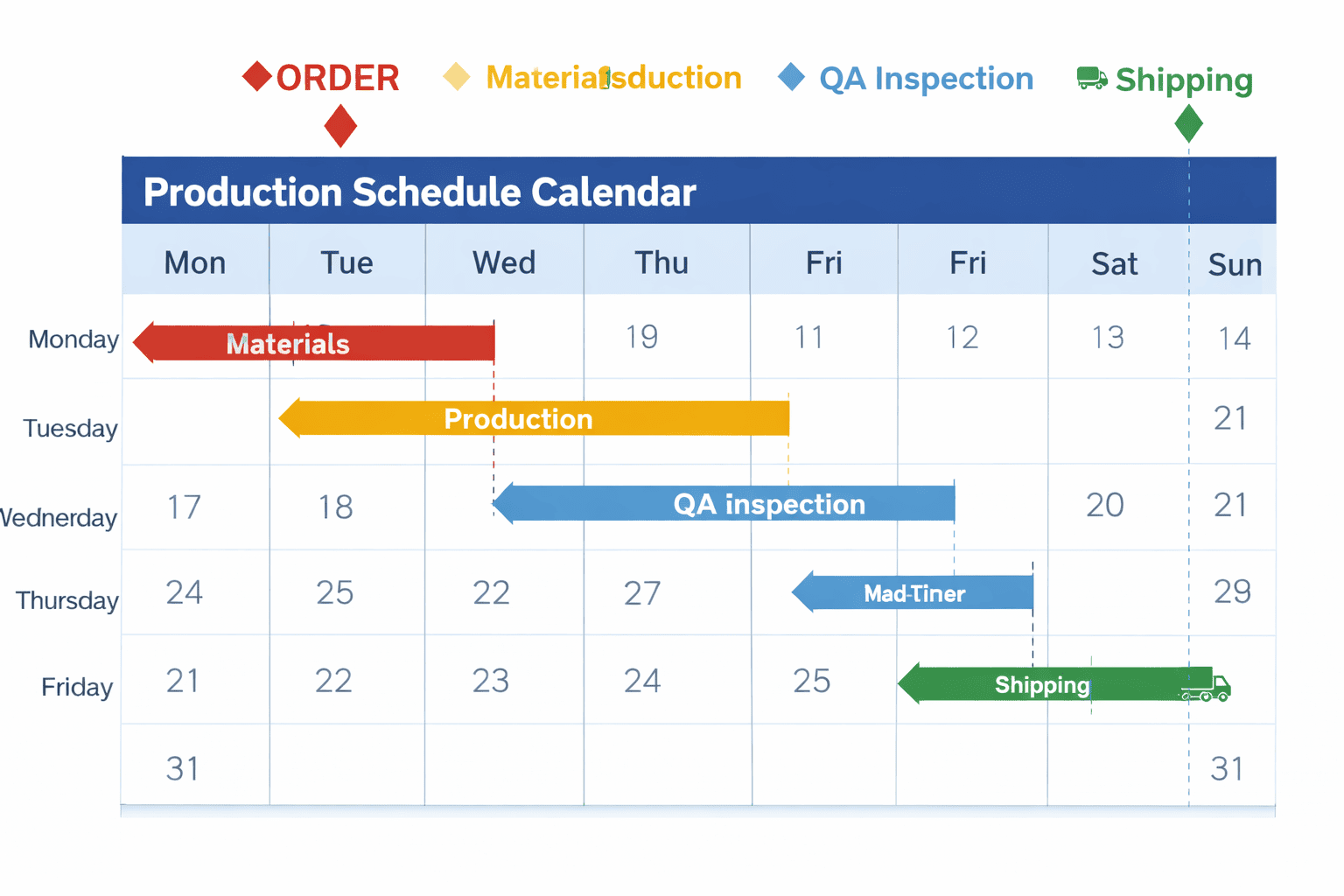
Seasonal demand fluctuations also impact pricing. Peak seasons (Q3-Q4) experience 5-10% price volatility due to high demand affecting material costs, labor availability, and shipping capacity. Early planning mitigates these seasonal premiums.
Long-term partnerships enable stable pricing and priority scheduling. Consistent orders allow manufacturers to reserve capacity and optimize production planning. This relationship reduces urgency premiums and improves cost predictability for both parties.
Production Timelines and Cost Implications
Business Days
Sample Development
After specifications are confirmed. Timeline varies with size range, coating requirements, and fixture availability.
Business Days
Production (New Program)
Includes setup, production, and QC. Custom changes typically extend development due to additional fit testing.
Business Days
Repeat Orders
Typically faster due to stable specs and established production parameters. Confirm timing after spec freeze.
Understanding standard production timelines helps buyers set realistic expectations. Sample development typically requires 10-20 business days after specifications are confirmed. New program production needs 25-40 business days including setup, production, and quality control.
Repeat orders generally process faster at 30-35 business days. Established production parameters and stable specifications reduce setup time and enable faster turnaround. However, exact timing depends on current capacity and production scheduling.
Balancing Urgency with Budget Constraints
Time vs. Cost Trade-offs
Urgent Orders
Cost premium: +5-10%
Rush production requires overtime labor, expedited material sourcing, and prioritized line allocation.
Peak Season (Q3-Q4)
Price impact: +5-10% volatility
High demand affects material costs, labor availability, and shipping capacity. Early planning mitigates.
Off-Peak Scheduling
Cost savings: -1 to -3%
Scheduling during off-peak periods allows better capacity planning and material cost optimization.
Long-Term Partnerships
Benefits: Stable pricing + priority scheduling
Consistent orders enable capacity reservation, reducing urgency premiums and improving cost predictability.
Balance strategy: Plan 2-3 months ahead when possible. This buffer accommodates material sourcing, production scheduling, and QC without rush premiums while maintaining flexibility for unexpected requirements.
Buyers should evaluate trade-offs between urgency and cost. Rush orders deliver faster turnaround but at premium prices. Planning ahead enables cost savings through standard production schedules and off-peak scheduling. The optimal approach depends on inventory needs, budget constraints, and market timing.
Hidden Costs Beyond the Price Quote
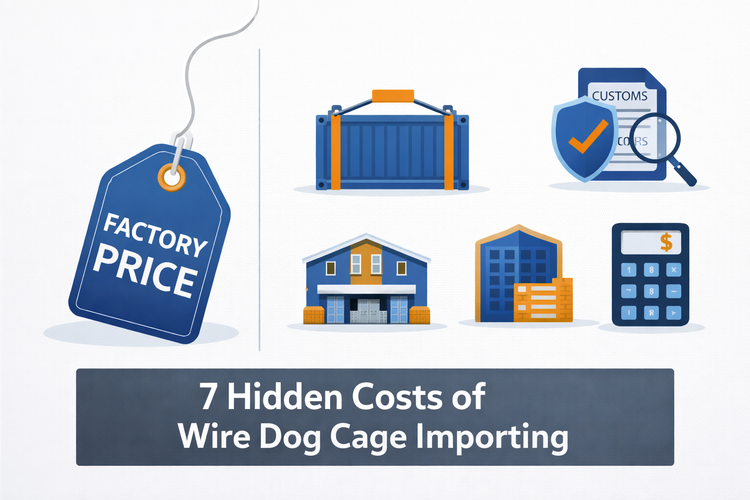
Many hidden costs impact total wire dog cage pricing beyond the quoted unit price. Damage rates, quality failures, and certification requirements all add to total cost of ownership. Understanding these factors helps buyers make accurate cost comparisons.
Poor packaging or weak structural design leads to in-transit damage and customer returns. These returns cost 2-3x the original unit price due to shipping, restocking, and reputational damage. Investing in quality packaging and robust design reduces these hidden costs.
Quality failures result in rework, scrap, and field failures that compound costs. Rework costs typically 30-50% of defective unit’s value. Field failures can cost 10x+ due to warranty claims, brand damage, and lost sales. Preventing quality failures through proper manufacturing processes is far cheaper than addressing failures after production.

Damage Rates and Return Costs
Damage & Returns
Poor packaging or weak structural design leads to in-transit damage and customer returns, significantly increasing total cost of ownership.
Cost impact: Returns often cost 2-3x original unit price due to shipping, restocking, and reputational damage.
Solution: Invest in corner protection (+$0.05-0.15/unit) and conduct drop testing to optimize packaging design.
Damage rates vary significantly based on packaging quality and structural design. Well-designed packaging with corner protection reduces damage rates by 30-50%. The incremental packaging cost is far lower than the cost of returns and replacements.
Structural design also affects damage rates. Reinforced frames and proper weld spacing create more durable products that withstand shipping stresses. While stronger designs may have slightly higher material costs, they reduce damage rates and improve customer satisfaction.
Quality Failures and Rework Expenses
Quality Failures
Weld defects, coating issues, and assembly errors result in rework, scrap, and field failures that compound costs.
Cost impact: Rework costs typically 30-50% of defective unit’s value. Field failures can cost 10x+ due to warranty claims.
Solution: Work with manufacturers that have stable QC processes, documented parameters, and consistent fixture control.
Quality failures occur throughout the production process. Weld defects may require rework or scrap. Coating issues may necessitate rework or replacement. Assembly errors may require disassembly and rework. Each failure adds costs that compound across production runs.
Field failures represent the most expensive quality issue. Products that fail after delivery require warranty claims, replacements, and potentially lost future sales. The cost of field failures can exceed 10x the original unit price when including brand damage and customer churn.
Certification and Compliance Requirements
Certification Costs
ASTM, EN, and other regulatory requirements add upfront costs but vary significantly by testing lab and documentation requirements.
Cost impact: Certification costs range from $500-5,000+ depending on standard and testing complexity. These are one-time costs amortized across production volume.
Solution: Work with manufacturers who have existing certifications for similar products to reduce testing requirements.
Certification requirements add upfront costs but enable market access. ASTM standards for pet products in the United States, EN standards for Europe, and various regional requirements all mandate testing and documentation. These costs vary based on the specific standard and testing laboratory.
Manufacturers with existing certifications for similar products can often leverage those credentials to reduce testing requirements for new products. Working with established manufacturers reduces certification costs and accelerates market entry.
Optimizing Your Wire Dog Cage Procurement Strategy
Optimizing wire dog cage pricing requires a comprehensive approach across all cost factors. Strategic material selection, process optimization, smart packaging, and careful supplier selection all contribute to cost optimization without compromising quality.
Begin with a clear understanding of your product requirements. Define quality standards, material specifications, and performance needs before requesting quotes. This clarity prevents over-specifying requirements and paying for unnecessary features. It also enables apples-to-apples price comparisons.

Work with manufacturers who offer transparent pricing breakdowns. Understanding the cost structure behind quoted prices reveals optimization opportunities. Manufacturers who share detailed cost breakdowns demonstrate confidence and enable more effective collaboration.
Leverage volume pricing through strategic procurement planning. Analyze demand patterns to optimize order quantities and timing. Multi-SKU consolidation, seasonal forward-planning, and repeat order strategies all unlock volume discounts.
Consider total cost of ownership, not just unit price. Factor in quality, reliability, packaging, shipping, and hidden costs. The lowest quoted price may not represent the best value when considering total landed cost and long-term expenses.
Build long-term relationships with reliable manufacturers. Consistent orders enable capacity reservation, priority scheduling, and better pricing. Stable partnerships reduce risk and improve cost predictability over time.
Key Takeaways for Wire Dog Cage Pricing Optimization
- Raw materials represent 45% of costs – optimize wire diameter and material selection
- Processing accounts for 30% – choose appropriate welding methods for your volume
- Surface treatment at 15% – consider electrophoresis for outdoor applications
- Packaging at 10% – invest in quality packaging to reduce damage costs
- Volume discounts offer significant savings – plan orders strategically
- Hidden costs impact total ownership – evaluate quality, damage rates, and certification
- Build long-term partnerships for stable pricing and priority scheduling
Understanding wire dog cage pricing empowers B2B buyers to make informed sourcing decisions and optimize procurement budgets. By analyzing each cost component and implementing strategic optimizations, buyers can reduce costs without compromising quality. Work with experienced manufacturers who offer transparent pricing and collaborative partnership for long-term success in the competitive pet products market.
Ready to optimize your wire dog cage procurement strategy? Contact us at https://cagesilo.com/inquiry/ to discuss your requirements and receive a detailed pricing breakdown. Our team provides transparent cost analysis and collaborative partnership to help you achieve your sourcing goals.
Frequently Asked Questions About Wire Dog Cage Pricing
What is the typical price range for wire dog cages?
How does wire gauge affect pricing?
Is electrophoresis cheaper than powder coating?
What is the typical MOQ for wire dog cages?
How long does wire dog cage production take?
Related Resources
Explore our comprehensive guides on wire dog cage sourcing, pricing, and supplier selection:
- Wire Dog Cage Sample Guide: Fees, Process, and ROI Analysis
- How to Choose Wire Dog Cage Manufacturers for B2B Buyers
- Wire Dog Cage Factory Audit Checklist
- 7 Red Flags to Watch for When Selecting a Wire Dog Cage Supplier
- Wire Dog Cage Supplier Verification Process
- What Are the Best Flexible MOQ Solutions for Wire Dog Cage Importing?
- 7 Hidden Costs of Wire Dog Cage Importing and How to Avoid Them
- 7 Wire Dog Cage Volume Discount Tactics to Reduce Your Unit Cost by 15-30%
Ready to Optimize Your Wire Dog Cage Pricing?
Contact us for transparent pricing breakdown and collaborative sourcing partnership
Learn more about our standard wire crate programs or visit our traditional crates guide for detailed specifications.