Mixed Container Nightmare: One Wrong Inspection Cost Me $5,700 — A Real Factory Story
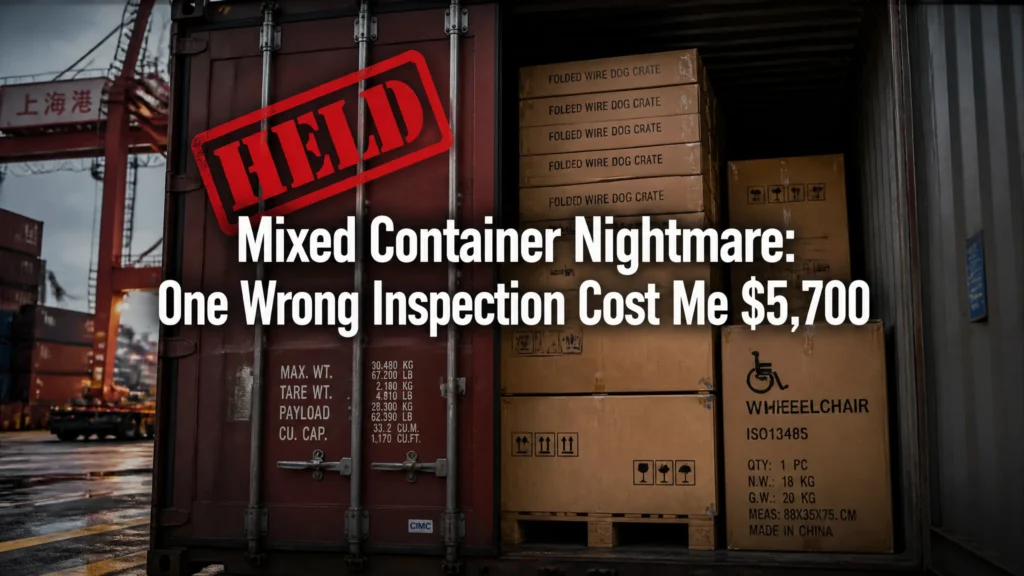
One container. Three product types. Two customs holds. Fifty days of demurrage. Total bill: ¥41,000 ($5,700). We’re a wire dog crate factory in Ningbo. Last year, a client asked if they could ship their furniture and medical equipment to our facility and consolidate everything into one 40HQ — our crates would be the main cargo, their other goods would fill the remaining space. We said yes as a favor. What should have been a routine January shipment didn’t leave until April — and it almost didn’t leave at all.
This isn’t a hypothetical. This is exactly what happened, with real numbers. If you’re a factory consolidating a client’s mixed products into your container — or a buyer asking your supplier to do the same — this is the story you need to read before your next booking.
Common Pitfalls When Shipping Mixed Products in One Container
- Pitfall 1: Assuming same HS code = same product for inspection. China export inspection treats product names separately, not just codes. A desk and a bookshelf share HS 9403.60 — but customs wants them declared as two separate items with separate inspection certificates.
- Pitfall 2: One failed inspection triggers a flag on re-export. After your first hold, the system elevates your inspection probability. Our container got inspected three times — and the second inspection found an entirely different problem.
- Pitfall 3: Demurrage is not linear. Free for 7 days, then ¥XX/day for days 8-17, then a higher rate for days 18-27, then higher again. By day 50, the daily rate alone was brutal — and we had 50 days of it.
The Shipment: One Container, Three Product Categories
The container was headed from Ningbo to Auckland, New Zealand. Here’s what was inside:
| Product | Source | HS Code | Inspection Required? |
|---|---|---|---|
| Wire dog crates (folded) | Our factory | 7326.90 | No — exempt |
| Wooden desks + bookshelves | Sourced for client | 9403.60 | Yes — this is where it went wrong |
| Wheelchairs (manual + 1 electric) | Sourced for client | 8713.10 | Yes — electric version needs separate docs |
The dog crates were fine — no inspection required for steel wire products under 7326.90. The problems were entirely with the client’s other goods, which they had shipped to our facility for consolidation. We had arranged export inspection for the bookshelves. We assumed that covered the desks too, since they shared the same HS code. That assumption was wrong — and it triggered a chain reaction that kept this container at Ningbo port for 50 days.
A note for context: it’s common for buyers to ask their main supplier to consolidate a container. The buyer buys from multiple factories, ships everything to one location for loading, and saves on freight by filling one 40HQ instead of shipping LCL. In this case, our wire crates made up the bulk of the container; the client’s furniture and wheelchairs filled the remaining space. The risk: we didn’t know these products well, and the client didn’t flag the inspection requirements to us. That gap in communication cost us ¥41,000.
Hold #1: “Desks and Bookshelves Are Not the Same Product”
We declared 80 pieces of furniture under HS 9403.60 — and we actually had 80 pieces in the container. The quantity was correct. The HS code was correct. But customs flagged it anyway.
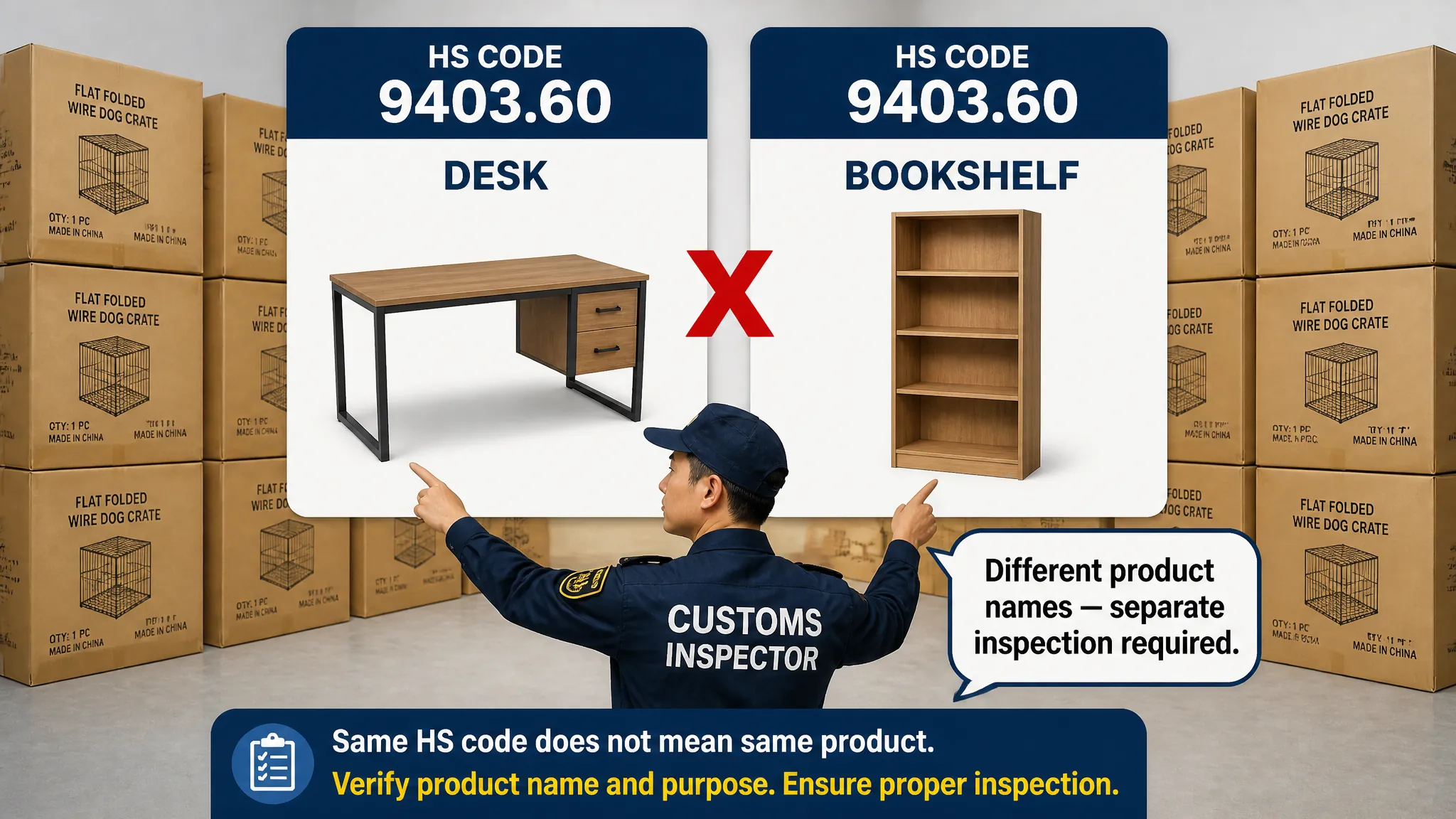
The issue: product name granularity. We had done export inspection only for the bookshelves. But the container also contained desks. To me, they were both wooden furniture under the same HS code — same material, same category, same tariff treatment. To customs, they were two distinct product names, and each required its own inspection certificate.
Customs asked: “Do you admit the error?” I didn’t know what would happen if I said no — would the container be seized? Would the fine be worse? So I admitted it was a classification oversight. The penalty: ¥2,000. Then they required a new inspection covering both product names.
The new inspection itself cost about ¥3,000 — and it wasn’t instant. Each round of inspection added days to the timeline, and every day the container sat at the port, demurrage was ticking.
Lesson #1: Same HS code does not mean same product for inspection purposes. If your packing list has “bookshelf” and “desk” as separate line items, you need inspection coverage for both — even if they share 9403.60. The HS code is about tariff classification. The product name is about inspection scope. They are two different systems, and customs enforces both.
Hold #2: One Electric Wheelchair, One Battery, Another Week Lost
After the first hold was resolved and the container was re-declared, it went through customs again. And got flagged again. Once a container has a hold on its record, the system elevates its inspection probability on re-export. We got unlucky — or rather, we got exactly what the algorithm is designed to do.
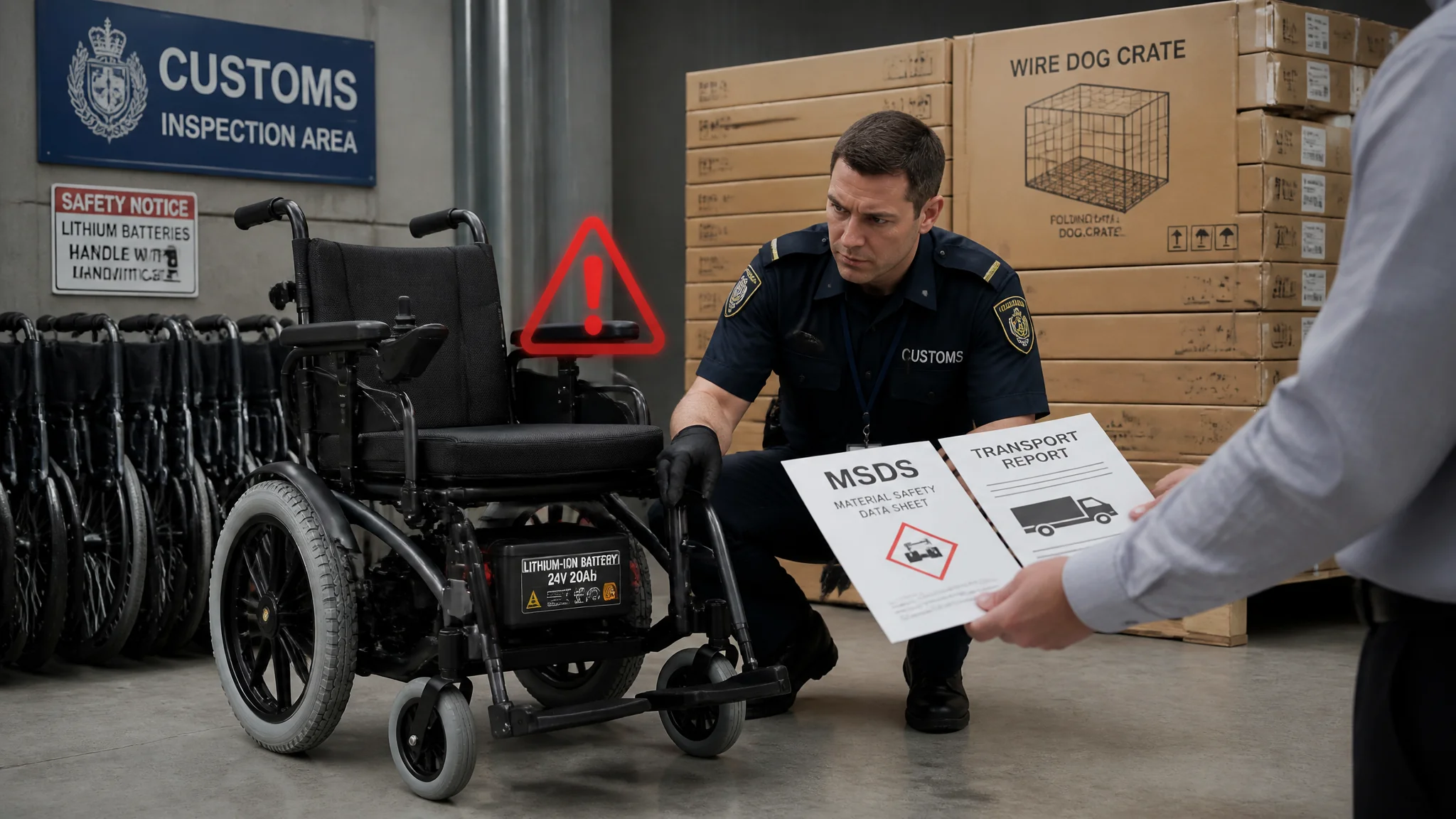
This time, the problem was the wheelchairs. We had manual wheelchairs and exactly one electric wheelchair in the container. Both were declared under HS 8713.10. Customs said: manual wheelchairs and electric wheelchairs are not the same thing. The electric one contains a lithium battery, which requires:
- MSDS (Material Safety Data Sheet) for the battery
- Sea freight transport condition report
- Separate classification for battery-containing products
It was one wheelchair. One. Out of 80+ items in a 40HQ container. But customs doesn’t care about proportions — if a regulated item is in the container, it needs the paperwork. We submitted the MSDS and transport report, re-declared, and waited again.
After the second hold was cleared, the container was inspected a third time — and finally passed. If it had failed again, the demurrage would have entered a territory I don’t want to think about. The daily rate by that point was brutal.
Lesson #2: Any product with a battery — even just one unit — changes the compliance requirements for the entire shipment. If you’re sourcing mixed products, flag battery-containing items immediately. Don’t let them blend into a generic HS code declaration. The paperwork takes days to gather, and those days are demurrage days.
The Bill: How ¥41,000 Added Up
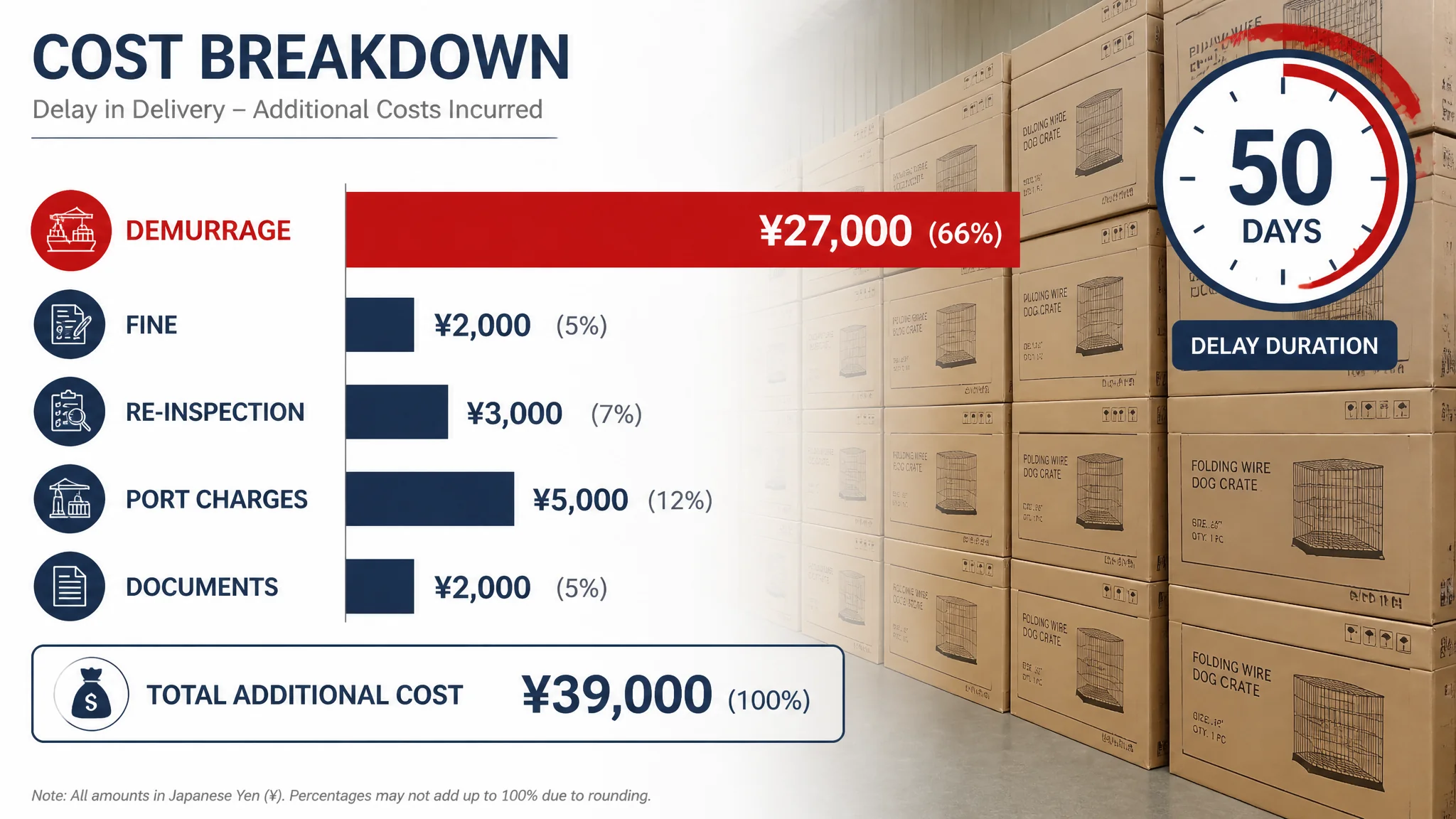
The fine and re-inspection costs were annoying. The demurrage was devastating. Here’s the breakdown:
| Cost Item | Amount (¥) | % of Total | Preventable? |
|---|---|---|---|
| Customs fine (classification error) | 2,000 | 4.9% | Yes |
| Re-inspection fees (multiple rounds) | ~3,000 | 7.3% | Yes |
| Demurrage (50 days) | ~27,000 | 65.9% | Yes |
| Additional port/handling charges | ~5,000 | 12.2% | Mostly |
| MSDS & transport report fees | ~2,000 | 4.9% | Yes |
| Other miscellaneous | ~2,000 | 4.9% | — |
| Total | ~41,000 | 100% |
Demurrage ate 66% of the total loss. The fine was ¥2,000 — annoying but manageable. The real damage was the clock. Here’s how demurrage pricing worked at Ningbo port:
| Period | Days | Daily Rate | Cumulative Cost |
|---|---|---|---|
| Free period | 1-7 | ¥0 | ¥0 |
| Tier 1 | 8-17 | ~¥200-300 | ~¥2,000-3,000 |
| Tier 2 | 18-27 | ~¥400-500 | ~¥4,000-5,000 |
| Tier 3 | 28-37 | ~¥600-800 | ~¥6,000-8,000 |
| Tier 4 | 38+ | ~¥800+ | ~¥8,000+ |
| Total (50 days) | ~27,000 |
Actual rates vary by port, carrier, and contract. The pattern is universal: the longer you wait, the more each day costs. A 7-day hold is annoying. A 50-day hold is catastrophic.
Here’s the brutal math: if we had caught both inspection issues before the first declaration, this container would have left Ningbo in late January as planned. Total extra cost: maybe ¥3,000-5,000 for additional inspection certificates up front. Instead, we paid ¥41,000. The cost of getting it right before loading was less than 15% of the cost of fixing it after.
Mixed Container Inspection Checklist: What I Do Now
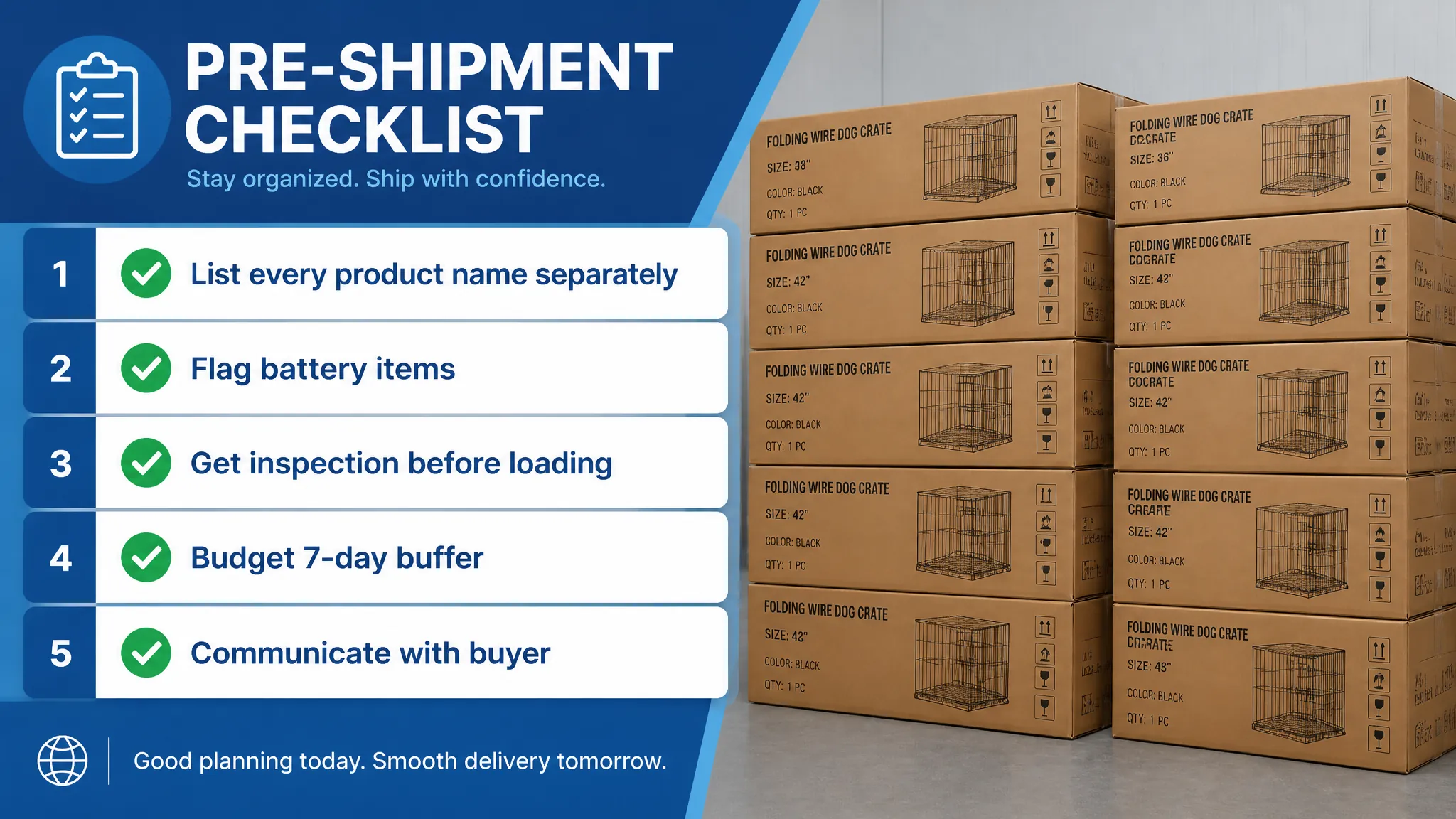
After that container finally sailed in April, I built a system. Every mixed container now goes through this checklist before booking:
Pre-Shipment Checklist for Mixed Containers
| 1. | List every product name separately. Don’t group by HS code. If your packing list has “desk” and “bookshelf” as separate line items, each needs its own inspection scope. HS code grouping is for tariff — product name grouping is for inspection. They are independent. |
| 2. | Flag battery-containing items immediately. Any product with a lithium battery — even one unit in a container of 500 items — needs MSDS, transport condition reports, and potentially separate classification. Flag it before the packing list is finalized. |
| 3. | Get inspection certificates for every distinct product name before loading. Not before sailing — before loading. Once the container door closes, you can’t add an inspection. And if customs flags you, the container sits while you scramble. |
| 4. | Budget 7 days of buffer, not 2. If a mixed container needs inspection, assume it’ll take a week. If it clears in 3 days, great — you’re ahead. If it takes 7, you’re still in the free demurrage window. |
| 5. | If customs asks “do you admit the error” — answer carefully. Admitting an error means accepting the fine but getting a path to resolution. Denying it may trigger a deeper investigation. In our case, admitting the classification oversight was the faster route, even though it cost ¥2,000. A deeper investigation could have added weeks. |
For wire dog crate buyers specifically: if you’re sending other products to your supplier’s factory for consolidation, tell them about every product that requires inspection — and confirm coverage before loading. Don’t assume the factory knows your other products. They know wire crates. They may not know that your desks and bookshelves need separate inspection certificates, or that your wheelchair has a battery. The container is one unit — a hold on the furniture holds the dog crates too.
Related Reading: Customs Clearance Series
This is a real case study that complements our customs clearance series. If you’re importing wire dog crates, start with these:
- Why Your Wire Dog Crate Shipment Gets Stuck at Customs — And How to Get It Released Fast — The 5 most common hold reasons and realistic timelines
- Do You Actually Need a Customs Broker for Wire Dog Crate Imports? — DIY vs broker cost comparison with real numbers
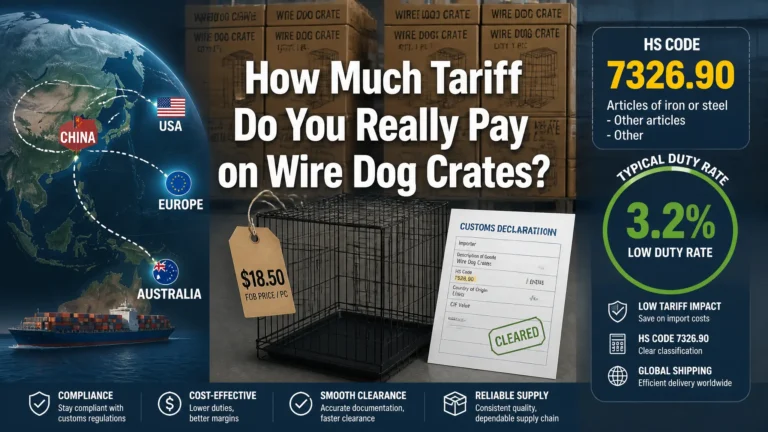
- How Much Tariff Do You Really Pay on Wire Dog Crates? — HS codes, duty rates, and landed cost breakdown
- Wire Dog Crate Import Compliance: What Triggers an Audit and How to Stay Clean — Inspection levels and audit prevention
A question we get from buyers who’ve read the customs series: “What if I’m not just importing dog crates? What if my container has mixed products?” This article answers that question. The principles from the customs series — correct HS codes, accurate documentation, pre-shipment review — still apply. But mixed containers add a layer: inspection scope must match every product name, not just every HS code.
Can I put different products in one container for export?
Yes — it’s common and saves freight. But every distinct product name on your packing list must have corresponding export inspection coverage (if required). Grouping products by HS code alone is not sufficient. Customs treats product names and HS codes as separate checks.
What happens if China export inspection fails?
The container cannot be loaded onto the vessel until the issue is resolved. You’ll need to either: re-do the inspection with correct product scope, provide missing documentation (MSDS, certificates), or in some cases, remove the non-compliant items from the container. Each day of delay incurs demurrage at a tiered rate that increases over time.
How much does demurrage cost at Chinese ports?
Demurrage is tiered: typically free for the first 7 days, then rates increase in bands (days 8-17, 18-27, 28-37, 38+). At Ningbo port for a standard 40HQ, expect roughly ¥200-300/day in the first tier, rising to ¥800+/day after 38 days. A 50-day hold can easily cost ¥25,000-30,000 in demurrage alone. The key is resolving issues within the free 7-day window.
Do electric wheelchairs need special export documentation from China?
Yes. Any product containing a lithium battery — including electric wheelchairs — requires an MSDS (Material Safety Data Sheet) and a sea freight transport condition report for the battery. Even if there’s only one electric unit in a container full of manual wheelchairs, the battery documentation is mandatory. Declaring electric and manual wheelchairs under the same HS code without noting the battery is a common customs trigger.
If customs finds an error, should I admit it?
In most cases, admitting a classification or documentation error and accepting the fine is the fastest path to resolution. Denying the error typically triggers a deeper investigation, which adds weeks of demurrage. A ¥2,000 fine resolved in 2 days is cheaper than a 14-day investigation with ¥5,000+ in demurrage. However, consult your customs broker for your specific situation — some errors have different consequences depending on severity and jurisdiction.
How do I avoid inspection issues with mixed containers?
Five rules: 1) List every product name separately on the packing list — don’t group by HS code. 2) Flag battery-containing items before finalizing the packing list. 3) Get inspection certificates for every distinct product name before loading. 4) Budget 7 days of buffer for inspection clearance. 5) Review the full packing list with your freight forwarder or customs broker before booking — they’ll spot gaps you might miss.
Related Reading
- Why Your Wire Dog Crate Shipment Gets Stuck at Customs — And How to Get It Released Fast
- Do You Actually Need a Customs Broker for Wire Dog Crate Imports?
- How Much Tariff Do You Really Pay on Wire Dog Crates?
- Wire Dog Crate Import Compliance: What Triggers an Audit and How to Stay Clean