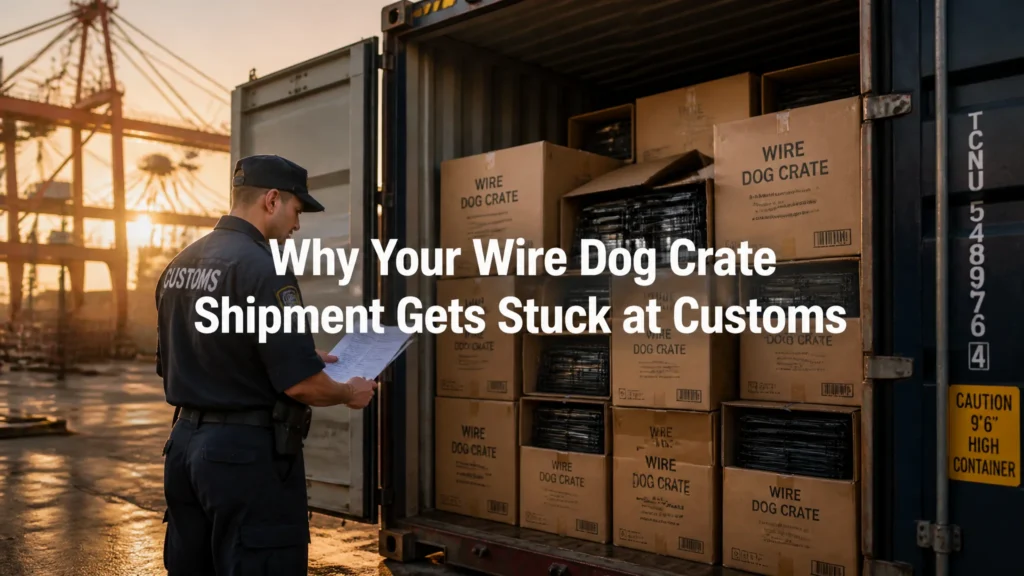
Why Your Wire Dog Crate Shipment Gets Stuck at Customs — And How to Get It Released Fast
40% of customs holds are caused by documentation errors — and 100% of them are preventable. At major ports, demurrage runs $75-150 per container per day. A two-week hold on a $25,000 shipment of wire dog crates eats 10-15% of your margin before you’ve sold a single unit.
At our factory, we ship roughly 50 containers a month to 12+ countries. Customs holds happen. Not often — maybe 3-4 containers a year — but when they do, the buyer bleeds money. The difference between a 2-day release and a 14-day hold is knowing what causes the delay and who to call.
Common Pitfalls When Dealing With Customs Holds
- Pitfall 1: Assuming the freight forwarder handles everything. The forwarder books the vessel. Customs clearance is your responsibility — or your broker’s. We’ve seen buyers wait 5 days thinking “someone” was handling it, while demurrage stacked up.
- Pitfall 2: Not having a bilingual packing list. If your supplier writes descriptions in Chinese only, the customs officer in Germany or Brazil can’t read it. That triggers a hold. Always request English documentation before the container leaves.
- Pitfall 3: Under-declaring value to save duty. Customs officers know what a 40HC of wire crates should cost. If your declared value is 40% below market, expect an intensive examination — and potential penalties far exceeding the “saved” duty.
The 5 Most Common Reasons Wire Dog Crates Get Held
After 15 years of shipping wire dog crates from Ningbo, we’ve seen the same patterns repeat. Here’s what actually triggers holds — ranked by frequency from our factory data.
| Reason | Frequency | Typical Delay | Cost Impact | Preventable? |
|---|---|---|---|---|
| Documentation errors | ~40% | 2-5 days | $150-750 | Yes — 100% |
| Random inspection | ~25% | 3-7 days | $225-1,050 | No — but manageable |
| Value discrepancy | ~15% | 5-14 days | $375-2,100 | Yes — declare honestly |
| HS code mismatch | ~12% | 3-10 days | $225-1,500 | Yes — verify before shipping |
| Missing certification | ~8% | 7-21 days | $525-3,150 | Yes — check destination rules |
Documentation errors cause nearly half of all customs holds in our experience — and every single one is preventable. The most common mistake: the packing list weight doesn’t match the bill of lading by even 2-3 kg. Customs systems flag any discrepancy automatically.
Beyond the five categories above, there’s a timing factor most buyers overlook. Ports have seasonal congestion patterns. US West Coast ports see 20-30% higher inspection volumes in Q3-Q4 (peak retail import season). European ports slow down in August (summer holidays). We’ve learned to warn buyers: if your container arrives at Rotterdam in the first week of August, add 3-5 days to every timeline estimate.
The documentation errors category deserves a closer look because it’s the one you control. Here’s what actually goes wrong: the packing list says “42-inch crate × 300 pcs” but the commercial invoice groups them as “42-inch crates — 300 units at $28 each.” To a customs officer who doesn’t know the product, “42-inch” looks like a quantity modifier, not a size designation. Solution: write dimensions and quantities on separate lines. “Product: Foldable wire dog crate, 42-inch model. Quantity: 300 pieces.” Problem solved — no ambiguity.
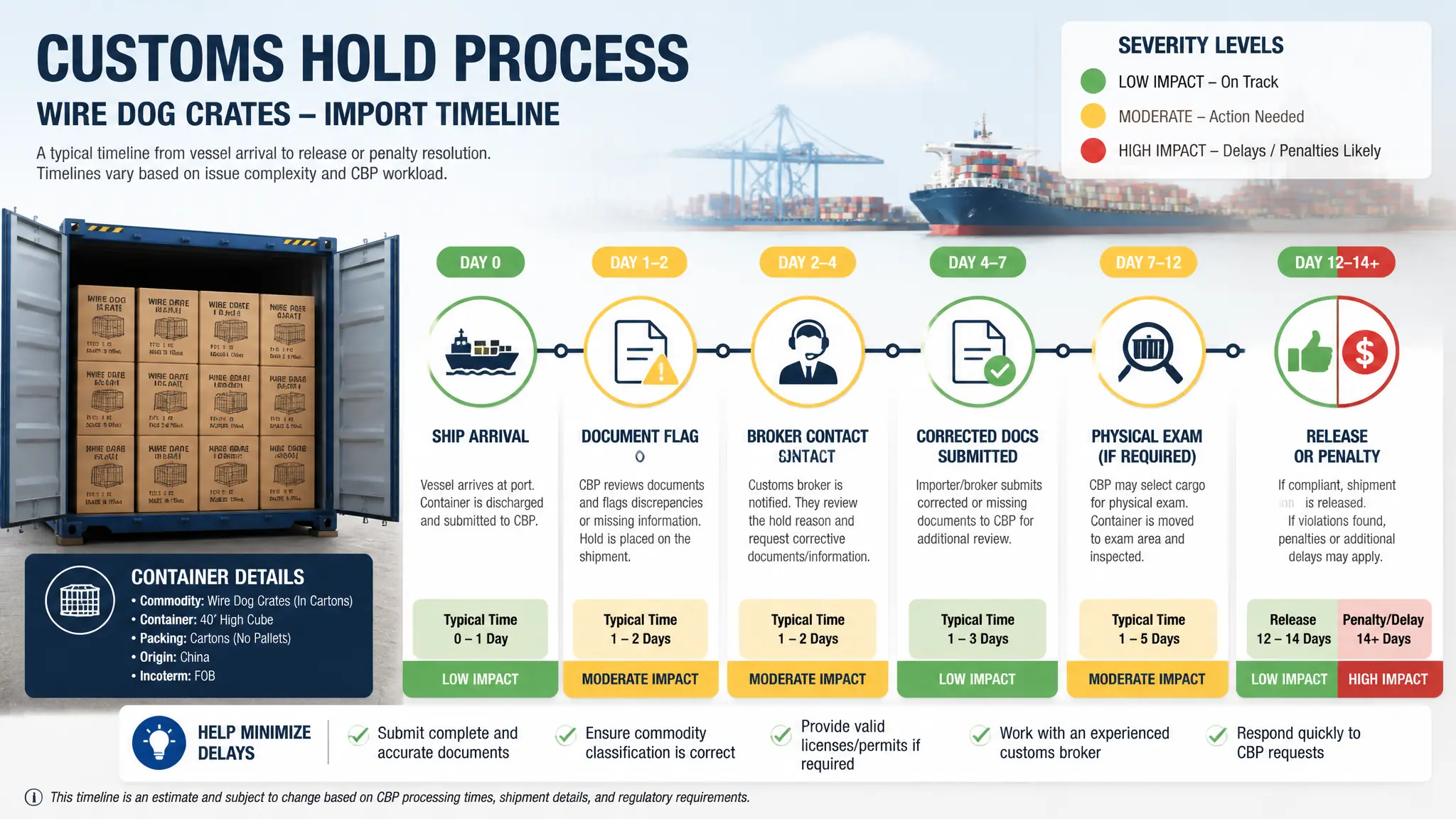
What Happens When Your Container Gets Flagged — The Timeline
When a buyer’s container gets held, they always ask the same thing: “How long?” Here’s the realistic timeline, based on what we’ve seen across 12 destination countries.
| Day | What Happens | What You Should Do |
|---|---|---|
| Day 0 | Container arrives. Customs entry filed by broker. | Nothing — this is normal. |
| Day 1 | System flags the entry for review. Broker receives CBP Form 28 (US) or equivalent. | Contact broker immediately. Ask for the exact reason. |
| Day 2-3 | If document issue: submit corrected docs. If value/classification: provide supporting evidence. | Send corrected documents within 24 hours. Every day of delay costs you. |
| Day 4-7 | Physical exam (if triggered). Container moved to CES (Centralized Examination Station). | Nothing you can do but wait. But confirm the exam scope with your broker. |
| Day 7-14 | Exam results. Release or further hold. Demurrage clock keeps ticking. | If released: arrange trucking immediately. If held: escalate to supervisor review. |
| Day 14+ | Extended hold. Customs may issue penalty notice or request additional review. | Consider legal counsel. Document everything. |
A German buyer once had a container held for 18 days at Hamburg. The issue: the factory sent a certificate of origin in Chinese, and the German customs office needed an English translation. The translation took 3 hours. The hold cost €1,350 in demurrage. That’s €450 per hour for a document that should have been bilingual from the start.
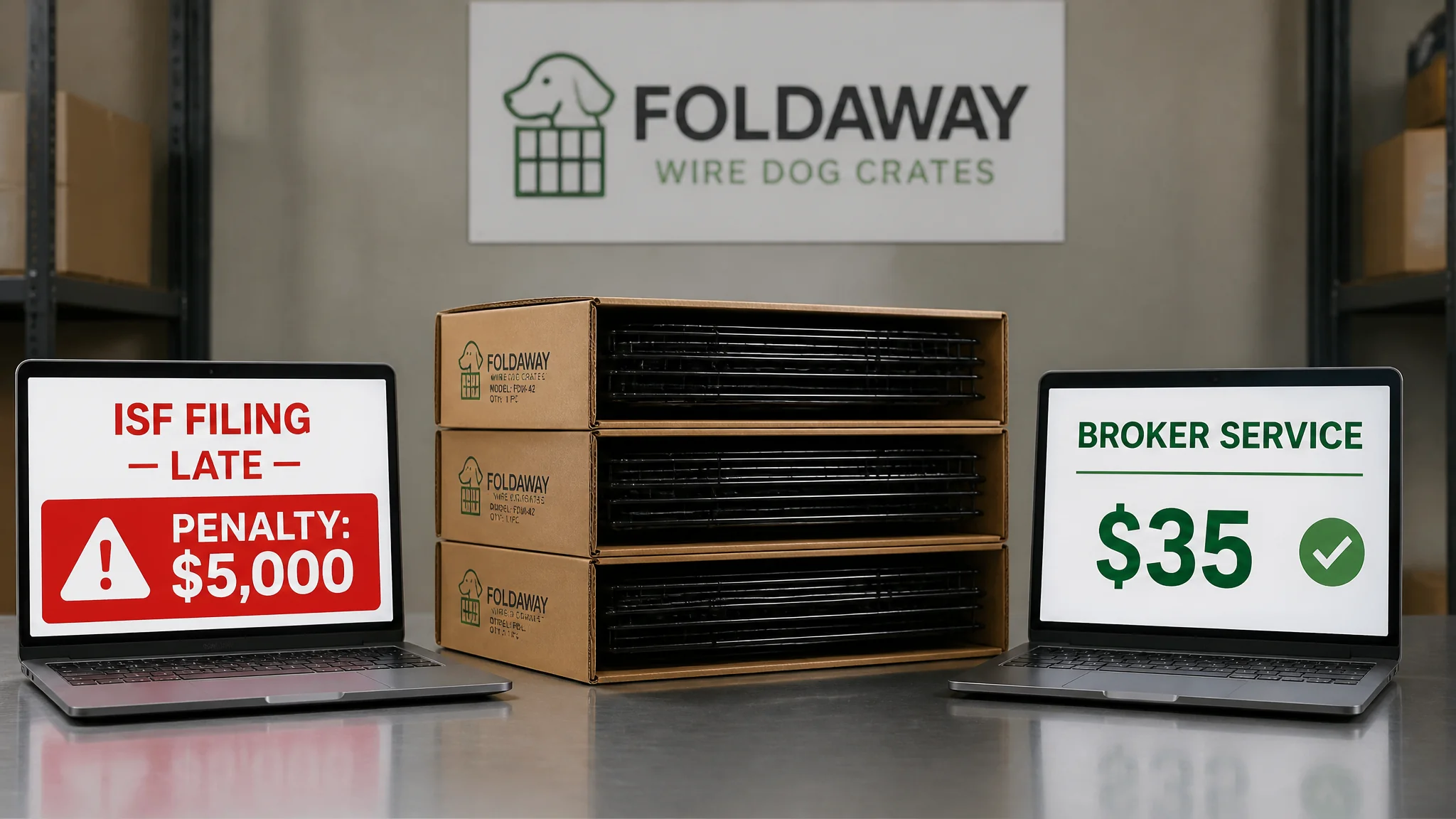
The ISF Filing Mistake That Costs $5,000-$10,000 Per Violation
If you ship to the US, ISF (Importer Security Filing, aka “10+2”) is not optional. File late, file wrong, or don’t file at all — and CBP will hit you with a penalty before your container even reaches US waters.
The ISF must be filed at least 24 hours before the vessel loads at the origin port. At our factory, we provide the packing list and commercial invoice 72 hours before loading — because we’ve learned that last-minute ISF filings are the #1 cause of US customs holds for first-time importers.
Factory insight: We had a US buyer who tried to file ISF himself to save $35. He filed 22 hours before loading — 2 hours late. CBP issued a $5,000 penalty. The broker would have charged $35-75. That’s a 7,000% return on a service he tried to skip.
ISF requires 10 data elements from the importer and 2 from the carrier. The importer’s 10 include: manufacturer name and address, seller name and address, buyer name and address, ship-to party, country of origin, and the Harmonized Tariff Schedule (HTS) number. If you’re importing wire dog crates, the HTS number must match what’s on the commercial invoice exactly.
ISF penalties aren’t the only US-specific compliance risk. If you’re importing wire dog crates for resale on Amazon, you need a Customs Bond even for shipments under $2,500 if they’re part of a commercial transaction. The bond amount is typically 10% of the entered value — so a $25,000 shipment requires a $2,500 bond minimum. Single-entry bonds cost $50-100 per shipment. Continuous bonds cost $500-800 per year and cover unlimited entries. If you import more than 5 containers a year, a continuous bond pays for itself.
One more thing about ISF that catches buyers off guard: the “manufacturer” field must match exactly across all documents. If your commercial invoice says “Cagesilo (Ningbo) Co., Ltd.” but the ISF says “Cagesilo Ningbo,” that’s a mismatch. Customs algorithms don’t do fuzzy matching — they do exact string comparison. We’ve standardized our company name across all export documents to prevent this specific issue.
How a Factory Can Help You Avoid Customs Delays Before the Shipment Leaves
Most buyers think customs clearance starts when the ship arrives. It starts when the container is loaded — and the factory plays a bigger role than most people realize.
Here’s what we do at our end to prevent holds:
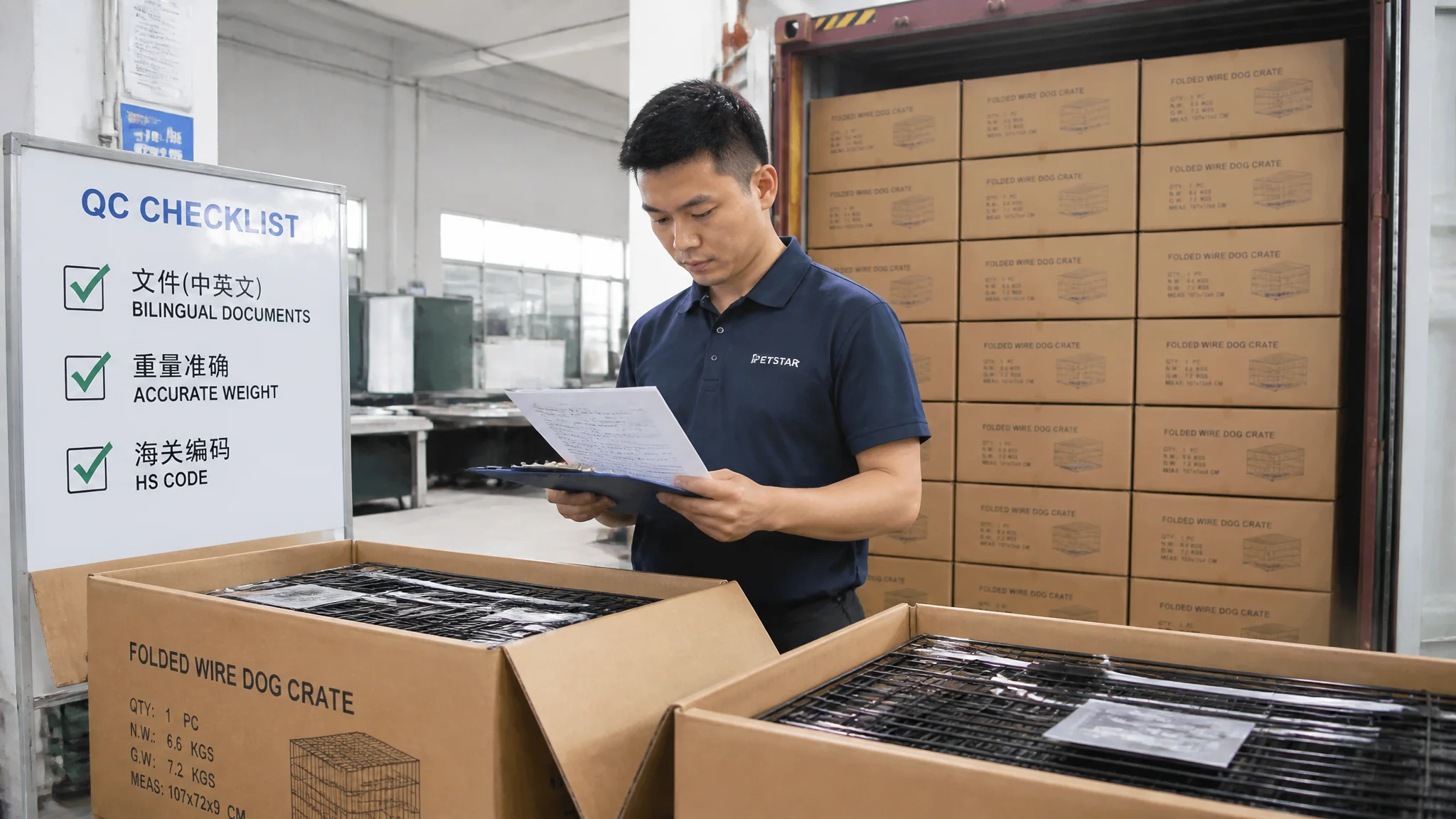
1. Bilingual documentation. Every packing list, commercial invoice, and certificate of origin we provide is in English. No buyer should have to pay for translation at the destination port. A Brazilian buyer once spent $200 getting documents translated because the original Chinese factory sent everything in Mandarin.
2. Accurate weight and count. We weigh each carton during packing and record the actual weight — not an estimate. A 2 kg discrepancy between packing list and bill of lading can trigger an automatic hold in the US, EU, and Australia. Our loading team uses a calibrated floor scale, and every carton weight goes into the system before the container door closes.
3. Pre-shipment document review. Before the container leaves our facility, we send the full document package to the buyer. If their broker spots an issue, we fix it before the vessel sails. Correcting a document at origin takes 30 minutes. Correcting it at destination takes days and costs money. We’ve been doing this for every shipment since 2019 — and our buyers’ customs hold rate dropped from ~5% to under 1%.
4. HS code alignment. We include the HS code on the commercial invoice, matched to what the buyer’s broker will file. When the factory’s code and the broker’s code match, customs has no reason to question the classification. For US-bound shipments, we typically use 7326.90.8688 (other articles of iron or steel). For EU-bound, 7326.90.98. Your broker should confirm this — but starting from the right code prevents 90% of classification disputes.
Factory insight: A UK buyer’s first shipment got held because the packing list showed “24 units” but the container actually held 24-inch crates, 300 of them. The factory wrote the size as the quantity. We now review every packing list before it leaves — and this hasn’t happened to any of our buyers since.
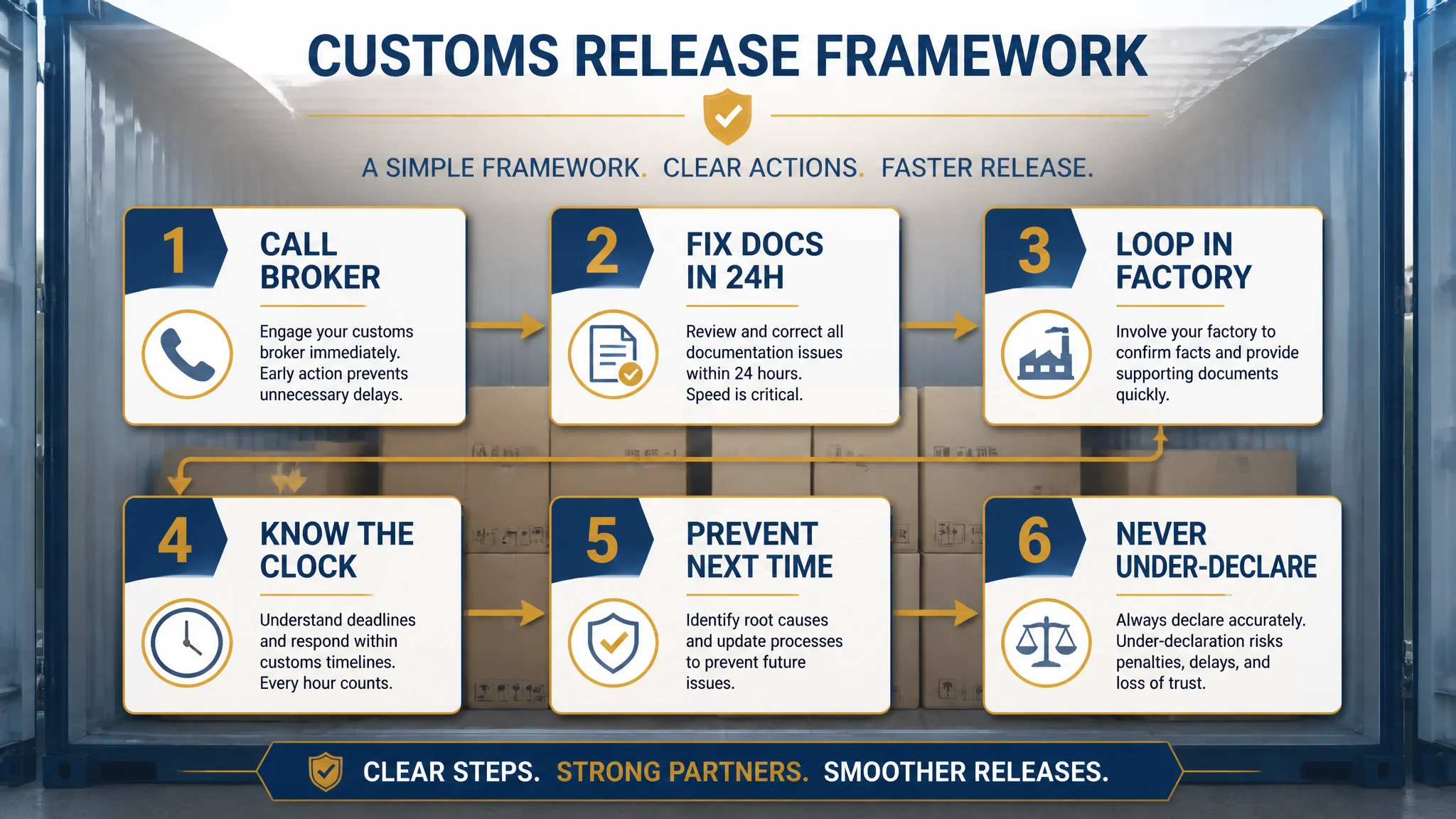
Customs Release Decision Framework
What To Do When Your Container Is Held
Call Your Broker First
Get the exact hold reason, not “it’s stuck.” Ask for the CBP/dispatch form number. $75-150/day demurrage.
Fix Docs in 24 Hours
Documentation holds are fastest to resolve. Submit corrected docs same day. Every day = $75-150 lost.
Loop In Your Factory
We can re-issue corrected invoices, packing lists, COOs. Factory errors = factory fixes. No charge.
Know the Clock
Document issues: 2-5 days. Random inspection: 3-7 days. Value dispute: 5-14 days. Plan accordingly.
Prevent on the Next One
Bilingual docs, accurate weights, pre-shipment review. We do this as standard for every container.
Never Under-Declare
Saving $200 in duty can trigger a $2,000 exam. Customs knows the market value of a 40HC of crates.
Why did my wire dog crate shipment get held at customs?
The most common reason is documentation errors — packing list weight not matching the bill of lading, or descriptions in a language the destination customs officer can’t read. At our factory, documentation issues cause roughly 40% of holds. Other reasons include random inspections (25%), value discrepancies (15%), HS code mismatches (12%), and missing certifications (8%).
How long does customs clearance take for wire dog crates?
Normal clearance: 1-2 days. Document issues: 2-5 days. Random physical inspection: 3-7 days. Value or classification disputes: 5-14 days. Missing certifications: 7-21 days. The key factor is how fast you respond — submit corrected documents within 24 hours to minimize the hold duration.
How much does a customs hold cost?
Demurrage at major ports runs $75-150 per container per day. A 5-day hold costs $375-750. A 14-day hold costs $1,050-2,100 in demurrage alone — not counting detention charges if the container isn’t returned on time, examination fees ($200-1,000), or the lost sales from delayed inventory. For a $25,000 shipment of crates, a 10-day hold can eat 10-15% of your margin.
What is ISF filing and do I need it for wire dog crate imports?
ISF (Importer Security Filing, “10+2”) is mandatory for all ocean shipments to the US. It must be filed at least 24 hours before the vessel loads at the origin port. Late or inaccurate filings trigger $5,000-10,000 penalties. At our factory, we provide packing lists and invoices 72 hours before loading so your broker has time to file correctly.
Can the factory help if my shipment is stuck at customs?
Yes. If the hold is due to documentation — wrong weight, missing information, language issues — the factory can re-issue corrected documents immediately. If it’s a product-related issue (labeling, certification), we can provide compliance documentation. We’ve helped buyers resolve holds in the US, Germany, Brazil, and Australia within 48 hours by providing corrected paperwork.
How do I prevent customs holds on my next shipment?
Three things: 1) Request bilingual (English) documentation from your factory before the container leaves. 2) Verify that the packing list weight matches the bill of lading exactly. 3) Have your broker review documents before the vessel sails. At our facility, we do all three as standard — and our buyers’ customs hold rate is under 1% of shipments.
Related Reading
- Do You Actually Need a Customs Broker for Wire Dog Crate Imports? The Real Cost of DIY vs. Professional
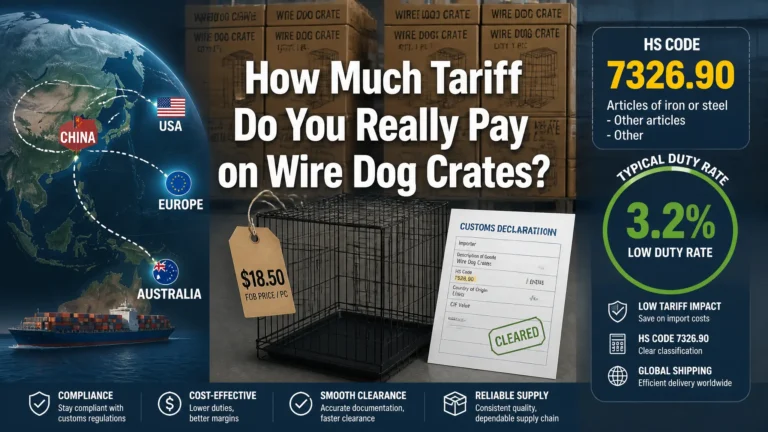
- How Much Tariff Do You Really Pay on Wire Dog Crates? HS Codes, Duty Rates, and Hidden Fees
- Wire Dog Crate Import Compliance: What Triggers an Audit and How to Stay Clean
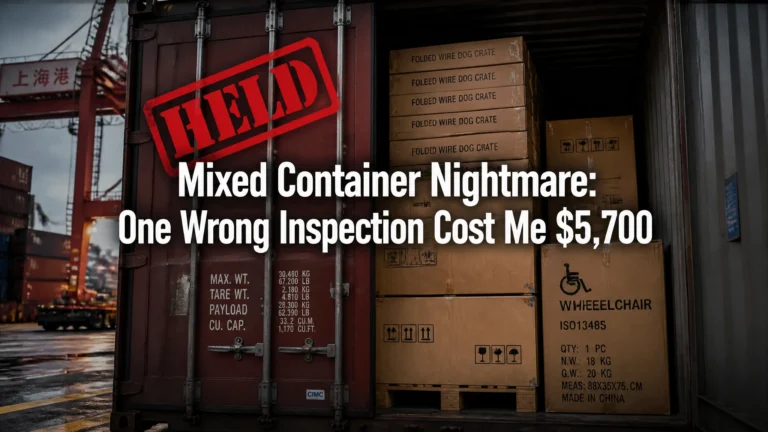
- Real Case: Mixed Container Nightmare — How One Wrong Inspection Cost ¥41,000 in Demurrage
A question we get often: “What if I have a shipment going to multiple countries in one container?” This is called a consolidated shipment, and it creates customs complexity because each destination country’s portion needs its own entry, its own HS code verification, and potentially its own certificate of origin. The rule is simple: one container, one destination, one customs entry. Splitting a container across two countries means two customs processes running in parallel — and if either one gets held, the entire container is delayed because customs won’t release partial loads. If you need to serve multiple markets, order separate containers or use a regional distribution hub. The freight savings from consolidation almost never offset the customs risk.
Finally, keep a customs clearance log — just like a shipment log but focused on clearance events. Record the date the container arrived, the date it cleared, any holds and their reasons, the demurrage incurred (if any), and what you did to resolve it. After 12 months of logging, you’ll see patterns: maybe your Q3 shipments always take longer (port congestion), or containers to a specific port always get flagged (officer behavior). One of our buyers discovered through his log that containers arriving on Thursdays cleared 2 days slower than Tuesday arrivals — he shifted his booking schedule and saved an average of $300 per container in demurrage.
External References